Clear Sky Science · en
Efficacy of GLP-1 analog peptides, semaglutide, tirzepatide, and retatrutide on MC4R deficient obesity and their comparison
Why this matters for people struggling with weight
Obesity is often blamed on willpower, but for many people, biology stacks the deck. Some rare forms of severe, early-onset obesity are caused by glitches in the brain’s appetite-control circuits, especially a protein called MC4R that helps signal when to stop eating. This study asks a pressing question: can today’s powerful weight-loss drugs, originally designed for more common obesity, also help people whose MC4R pathway is damaged?
A broken appetite brake in the brain
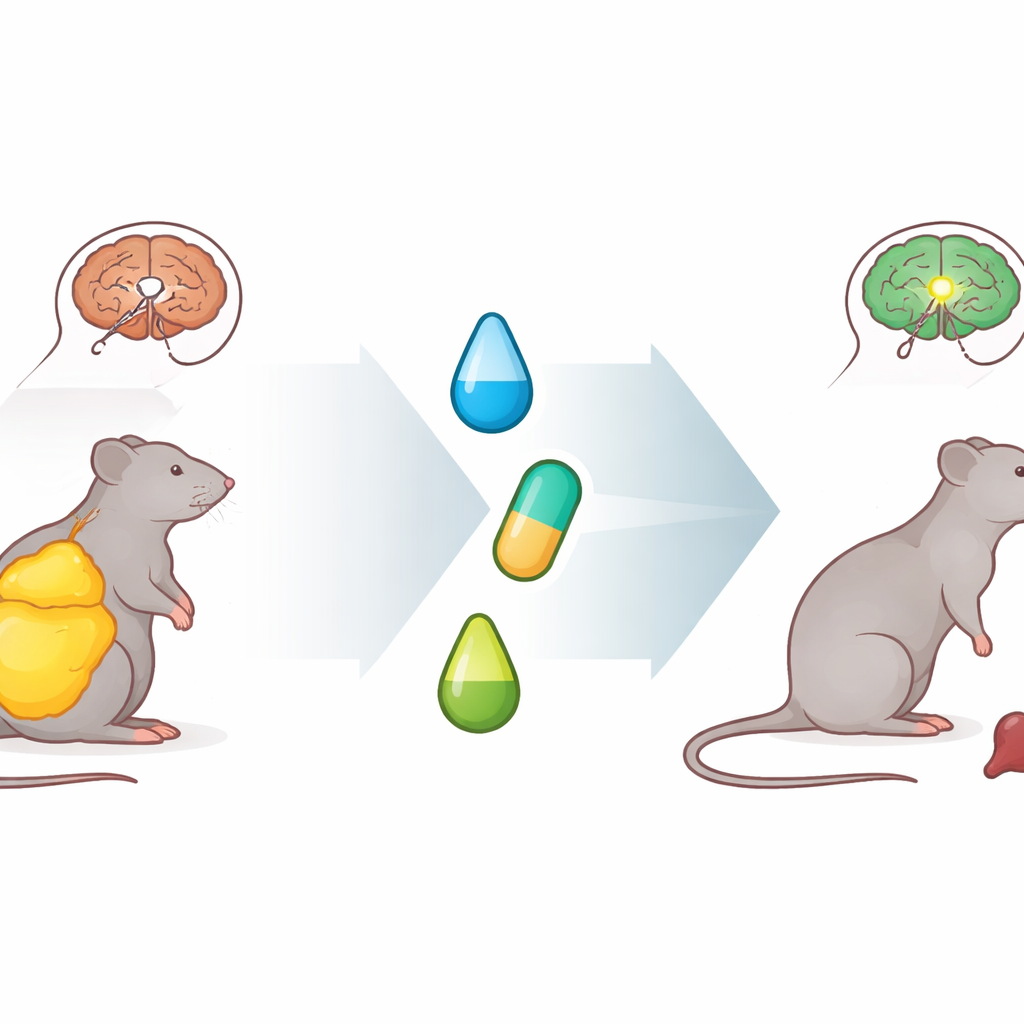
MC4R acts like a brake pedal in the brain’s feeding center, helping balance signals that say “eat” and “you’ve had enough.” When the MC4R system or its upstream partners fail, the result is relentless hunger, rapid weight gain, and serious health problems such as fatty liver and insulin resistance. The researchers used mice completely lacking MC4R, a close parallel to people with rare genetic disorders that knock out this pathway. These mice were much heavier than normal mice, ate more food, carried far more body fat, and showed signs of liver damage and poor blood sugar control—mirroring what doctors see in affected patients.
Testing three modern weight-loss drugs
The team focused on three injectable drugs: semaglutide, tirzepatide, and retatrutide. All are based on GLP-1, a hormone that normally helps the brain and gut communicate about food intake, but tirzepatide and retatrutide also act on additional hormone receptors to boost their effects. For three weeks, obese MC4R-deficient mice received daily doses of one of these drugs, while a comparison group received only saline. The scientists tracked body weight and food intake over time, and used whole-body scanning techniques to measure fat and muscle, along with detailed blood tests and gene activity readouts from the liver and fat tissue.
Strong weight loss despite the broken pathway
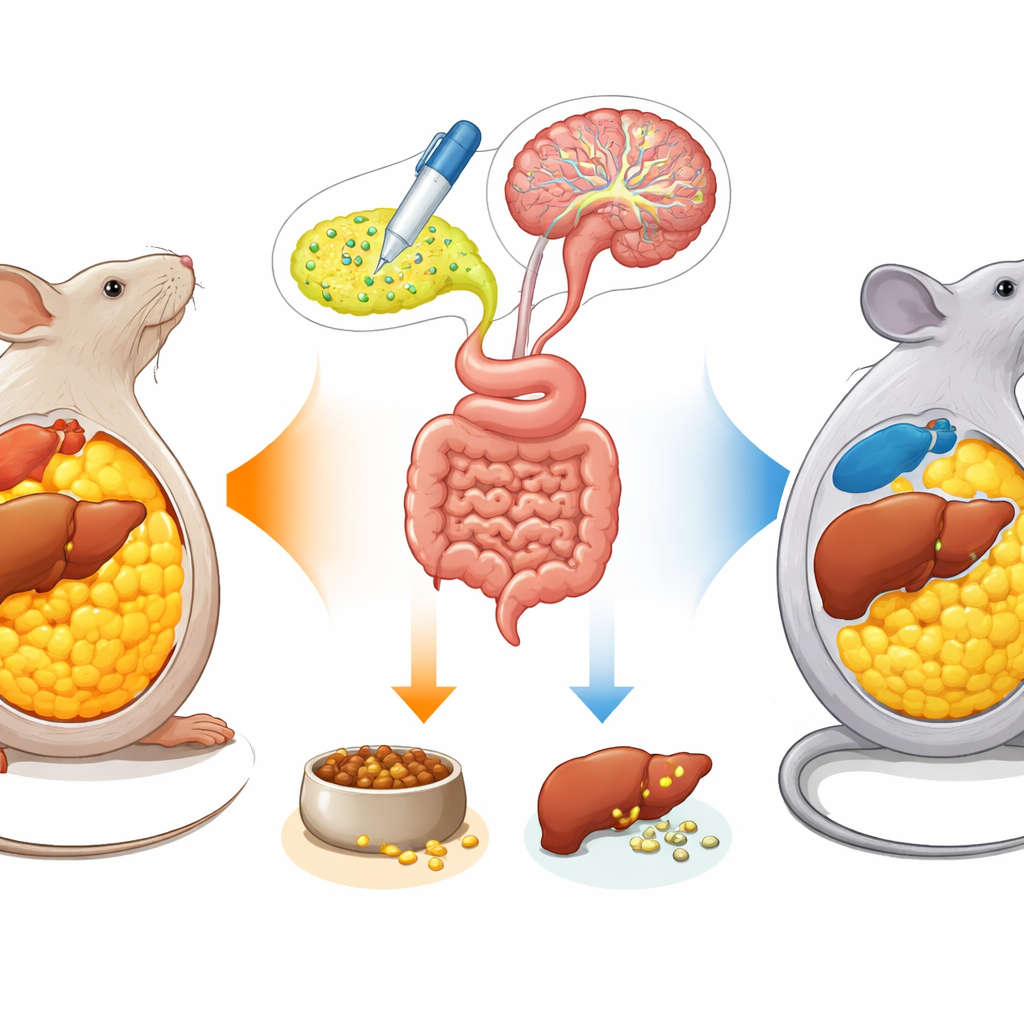
All three drugs produced impressive weight loss in the MC4R-deficient mice, even though the usual MC4R-controlled “brake” was missing. On average, semaglutide cut body weight by about one-fifth, retatrutide by about one-quarter, and tirzepatide by nearly one-third, mainly by sharply reducing how much the animals ate. Echo-MRI and CT scans showed that these drugs shrank both total fat and deep belly fat, and also reduced an enlarged, fatty liver and oversized hearts. Blood tests revealed broad metabolic improvements: lower insulin levels and insulin resistance, and lower fats and cholesterol in the bloodstream, particularly with tirzepatide, which often showed the strongest changes.
Benefits and trade-offs inside the body
Peering under the hood, the researchers found that these drugs dialed down liver genes that drive fat production, helping to ease fatty liver, but did not measurably calm inflammatory gene signals in the liver or white fat. Importantly, the drugs also reduced lean mass, including muscle, echoing concerns from human trials that rapid, drug-induced weight loss may erode muscle as well as fat. Detailed measurements of several leg muscles showed a general trend toward smaller muscles, with a significant drop in one slow-twitch muscle for retatrutide. Energy expenditure—how many calories the mice burned—also fell across all drugs, and tirzepatide uniquely pushed metabolism toward burning more fat, as indicated by a lower respiratory quotient.
What this could mean for future treatments
These findings show that GLP-1–based drugs can still deliver strong weight loss and metabolic benefits even when a major brain appetite pathway, MC4R, is out of action. That suggests people with rare MC4R- or POMC-related forms of obesity, including some with syndromes like Prader–Willi, might benefit from these medications, not just from specialized MC4R-targeting drugs. At the same time, the drop in muscle mass and energy use warns that long-term treatment will need careful monitoring—and perhaps combination strategies that protect or build muscle—to make weight loss healthier and more sustainable.
Citation: Hitaka, K., Sugawara, T., Matsumoto, M. et al. Efficacy of GLP-1 analog peptides, semaglutide, tirzepatide, and retatrutide on MC4R deficient obesity and their comparison. Int J Obes 50, 928–937 (2026). https://doi.org/10.1038/s41366-026-02025-2
Keywords: GLP-1 analogs, MC4R deficiency, genetic obesity, tirzepatide, semaglutide