Clear Sky Science · en
A comprehensive overview of lighting guidelines for museums
Why the Light on Art Matters
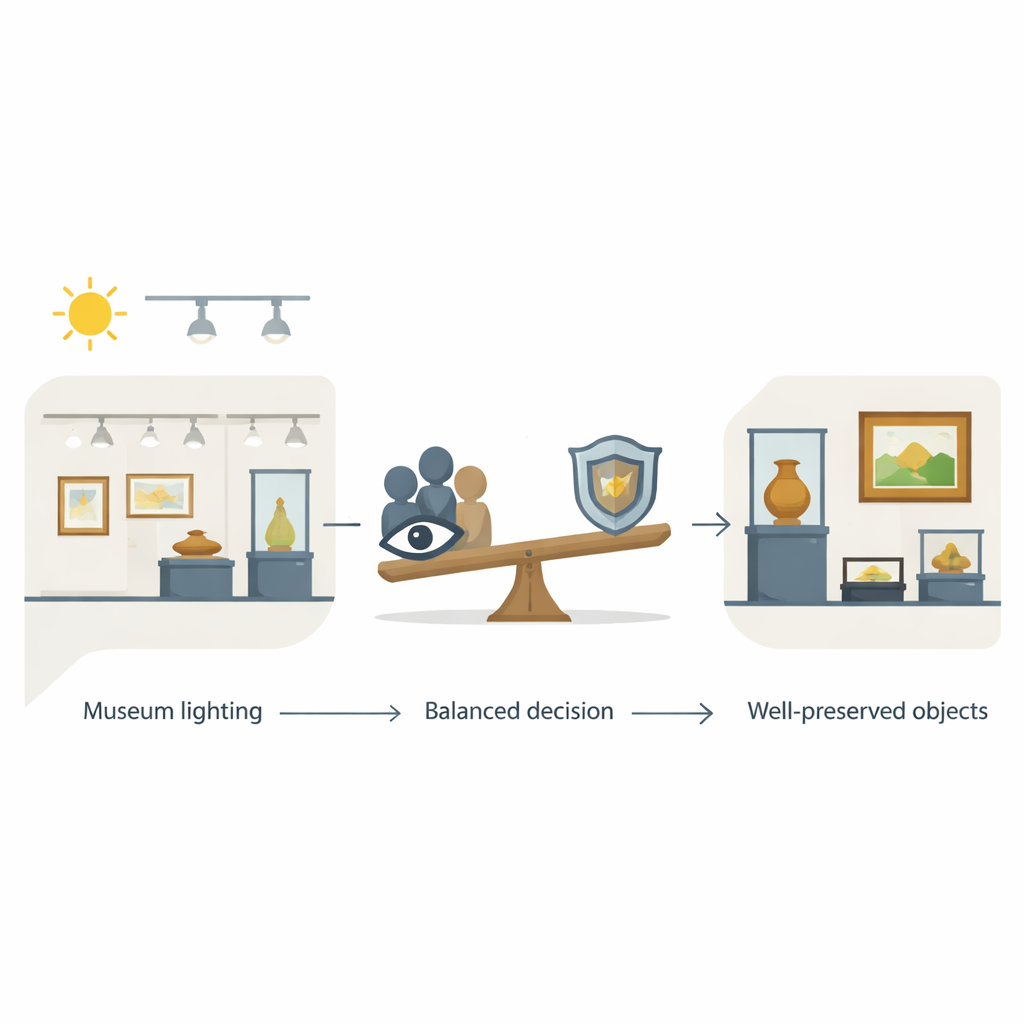
Museum visitors rarely think about it, but every time we admire a watercolor, a photograph, or a centuries‑old textile, light is quietly changing it. Too much light can fade colors and weaken materials; too little and we can’t see the work at all. This article reviews how museums around the world have tried to solve that puzzle using lighting guidelines—rules that decide how bright galleries may be, how long objects can stay on view, and how new tools like microfading tests and artificial intelligence might shape the future of seeing art without destroying it.
From Early Warnings to Simple Rules
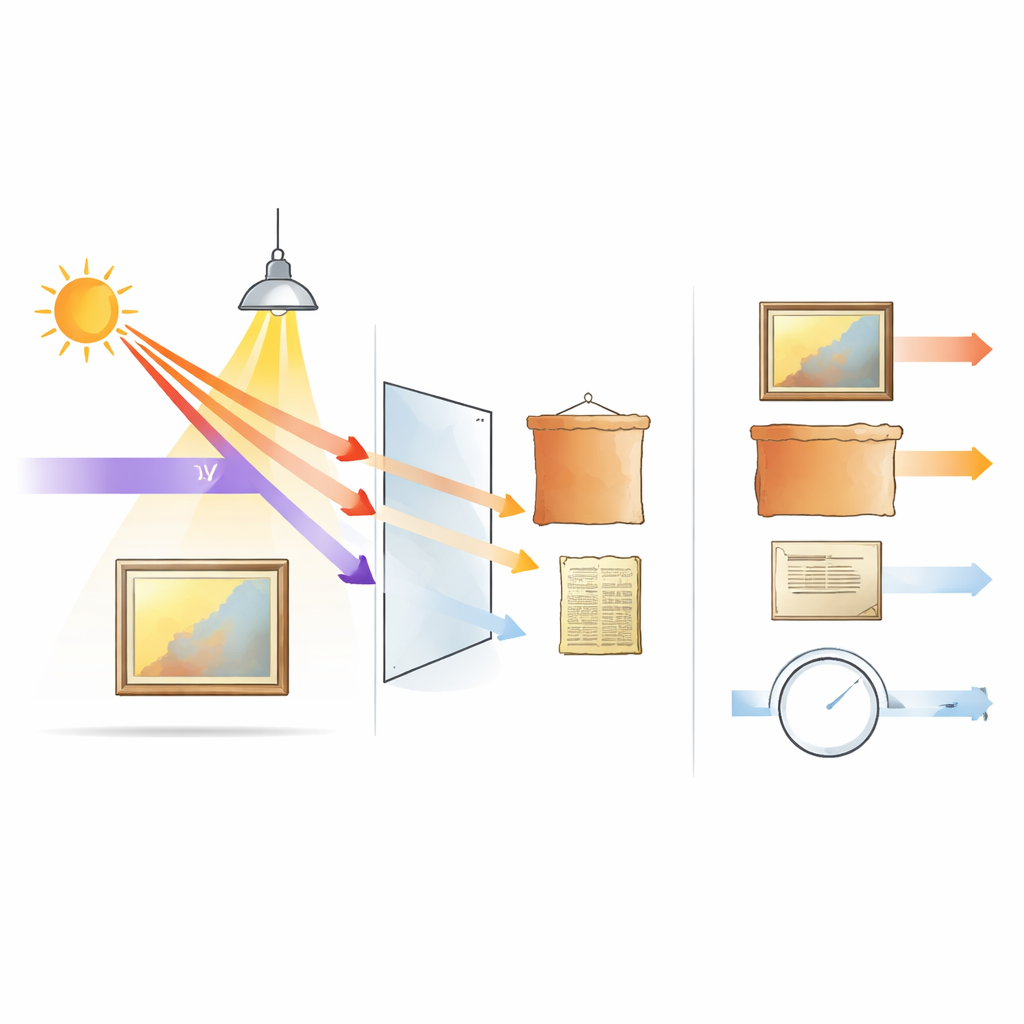
Concerns about light damage go back to the 18th and 19th centuries, when early scientists noticed paints and dyes changing under strong illumination. By the mid‑1900s, researchers such as Garry Thomson and Robert Feller turned scattered experiments into practical advice. They identified key strategies: filter out harmful ultraviolet rays, lower the brightness, shorten the time on display, and cut down the bluest, most energetic parts of the spectrum. Thomson’s most famous proposal—keeping very sensitive works at around 50 lux, a fairly dim level of light—became a cornerstone of museum practice. Over time, standards bodies and major museums turned these ideas into guidelines that staff could apply consistently instead of arguing case by case.
How Museums Sort Fragile from Robust
Central to these guidelines is the idea that not all objects react to light in the same way. Organic materials like paper, textiles, and some pigments are much more vulnerable than stone or metal. To rank this sensitivity, many institutions rely on the “Blue Wool” scale: strips of blue‑dyed wool that fade at known rates. Objects are grouped into a handful of categories—originally three, later often four, and in some cases five or six—roughly matching the behavior of these standards. More categories allow finer control but also demand more work: each object has to be assigned to a group, ideally based on real material data. Where that information is missing, conservators must fall back on experience and rough assumptions about what an object is made of.
Balancing What We See with What Survives
Guidelines do not just set light levels; they also limit total exposure over time. Here the crucial quantity is lux‑hours: brightness multiplied by how long the lights are on. Museums combine this with notions such as the “just perceptible” change in color—the smallest shift the human eye can reliably notice. Studies using gray scales and controlled viewing conditions suggest that a subtle change happens at a very small numerical threshold, but deciding how much change is acceptable over decades is more of an ethical and cultural question than a scientific one. Different museums assume different lifespans and tolerances: some aim for only a barely visible change in 50 years, while others accept more change in exchange for keeping fragile works on view more often. Risk‑based approaches now encourage institutions to set their own targets explicitly, weighing access, visibility, and longevity rather than following a single rigid formula.
Measuring, Testing, and Using New Tools
Classifying objects accurately is vital because mistakes can cut a work’s life short by centuries. Traditional tests examine sample materials, but they do not always match the complex, aged, or layered surfaces of real artworks. A newer method, microfading, shines a tiny but intense light spot on the object itself to see how quickly it fades, helping distinguish extremely sensitive pieces from sturdier ones. However, questions remain about how well very short, bright tests predict slow change under gallery conditions. At the same time, sensors now record light levels in detail, and large museums are beginning to link this information with collection databases. The article argues that with enough well‑organized data, artificial intelligence could help refine sensitivity categories, predict risk, and even adjust lighting automatically based on visitor presence and object vulnerability.
Looking Ahead: Flexible Rules, Shared Responsibility
The review concludes that there will never be a one‑size‑fits‑all answer to museum lighting. The classic 50‑lux value, and the exposure limits developed from it, are best seen as practical benchmarks, not sacred numbers. Museums must keep negotiating between the needs of viewers today and the rights of future audiences to see the same works with their colors intact. That means knowing their collections well, documenting decisions, and being transparent about the trade‑offs they accept. New technologies—from microfading devices to AI‑driven lighting systems—can support smarter, more tailored choices, but they cannot replace human judgment about what matters most in each object. In the end, the light that lets us see art should be treated as a carefully budgeted resource, spent deliberately to preserve both the physical works and the experiences they make possible.
Citation: Prestel, T. A comprehensive overview of lighting guidelines for museums. npj Herit. Sci. 14, 285 (2026). https://doi.org/10.1038/s40494-026-02547-y
Keywords: museum lighting, art preservation, light damage, cultural heritage, conservation guidelines