Clear Sky Science · en
CatBoost-SHAP analysis decodes spatial synergies driving prehistoric architectural elongation on the Loess Plateau
Why Ancient Floor Plans Still Matter Today
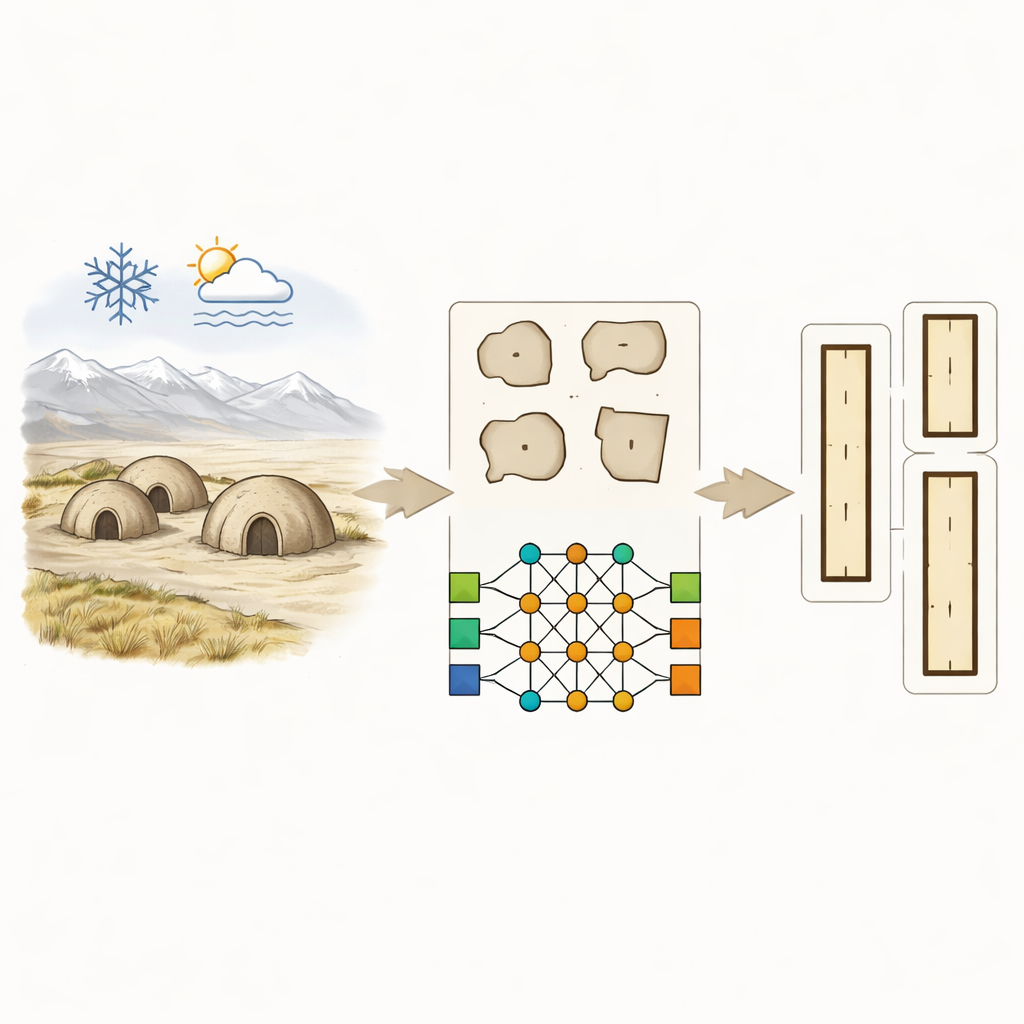
Long before blueprints and building codes, people living on China’s Loess Plateau were already solving tough design problems: cold winters, cramped space, and changing family life. Their houses quietly recorded how communities organized work, warmth, privacy, and status. This article shows how modern artificial intelligence can read those ancient floor plans like a hidden script, revealing why many simple round homes gradually stretched into longer, rectangular dwellings—and what that says about the birth of more complex societies.
Houses as Clues to Early Community Life
Prehistoric homes on the Loess Plateau, built between roughly 5000 and 2000 BCE, were more than makeshift shelters. Their shapes, doorways, and fireplaces embodied ideas about family size, social roles, and everyday routines. Archaeologists have long noticed a broad shift from compact, circular houses to more elongated rectangular ones across the Old World, but the reasons behind this change were hard to pin down. Past studies often relied on hand-drawn plans and broad descriptions, making it difficult to compare many sites and to detect subtle patterns in how interior features—like hearths, entrances, and room dividers—worked together.
Turning Old Plans into Data
The research team gathered detailed plans of 103 prehistoric dwellings from 47 sites across the Loess Plateau, carefully re-drawing and encoding each one into a structured data set. Instead of simply measuring size and shape, they treated every interior element as a potential clue: how many hearths were present, whether they were central or off to one side, if the entrance was sunken into the ground or at floor level, whether it faced the sun or not, and how walls or partitions divided space. The key outcome they tracked was how elongated a house was—its length compared to its width. Using a statistically defined threshold, they sorted homes into two broad types: “normative” compact layouts and “elongated” ones that stretched significantly along one axis.
Letting an AI Model Learn the Hidden Rules
To uncover the underlying “spatial grammar” of these houses, the authors used a machine-learning method called CatBoost and then applied a powerful explanation tool known as SHAP. Instead of treating the model as a black box, SHAP quantifies how much each feature—such as doorway direction or hearth form—pushes a given dwelling toward being classified as elongated or not. Through extensive cross-checking and repeated tests, the model showed reliable performance, suggesting that it was capturing general rules rather than memorizing quirks of individual sites. The analysis revealed that hearth design had the strongest overall influence, closely followed by doorway orientation and doorway type. Features related to internal partitions and overall house size also played important supporting roles.
When Elements Work Together, Houses Stretch
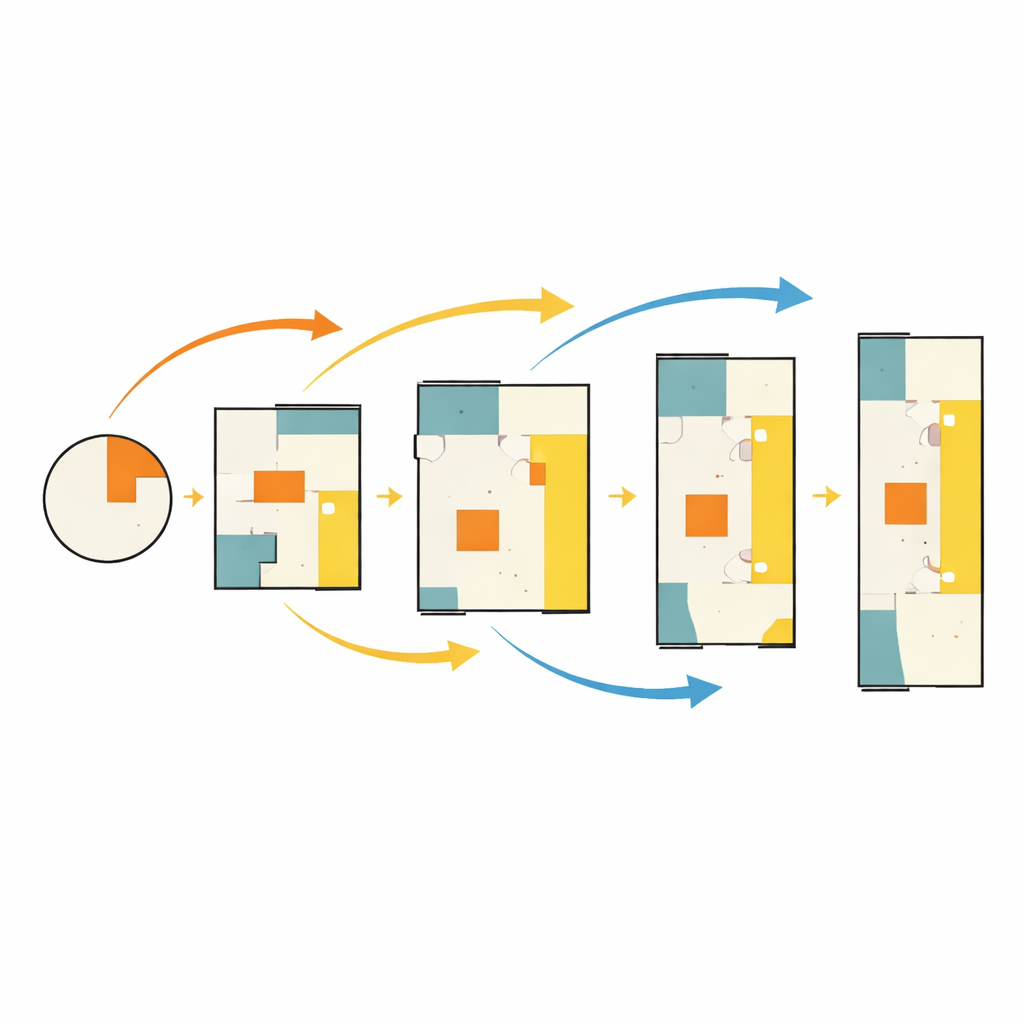
Beyond ranking single features, the study focused on how combinations of elements worked in synergy. The clearest pattern came from doorways: when entrances were both sunken and oriented away from the usual sun-facing direction, the model strongly associated the house with an elongated plan. This pairing hints at a compensating strategy—sunken entrances may have helped preserve heat in less favorable orientations, making longer designs viable in a harsh climate. Another important set of interactions linked boundary size, hearth position, and central partitions. Medium-sized houses were especially prone to become elongated when hearths moved off-center and internal separations lined up along a central axis, creating a sequence of spaces from more public to more private. Complex hearths—such as combinations of pit and wall hearths—also pushed houses toward stretched forms, likely reflecting more specialized tasks and zones within the home.
What This Reveals About Early Social Change
Put simply, the study argues that long houses on the Loess Plateau did not arise just because people built bigger structures. Instead, elongation marked a tipping point in how space was organized: more specialized hearths, deeper entrance zones, and stronger internal divisions all signaled growing household complexity and shifting social roles. By translating centuries-old, hand-drawn floor plans into machine-readable patterns, the authors show that ancient builders used subtle spatial strategies—balancing warmth, defense, privacy, and work—to reshape their homes. The result is a new, replicable way to read built heritage as evidence for how everyday architecture quietly tracked the rise of more complex communities.
Citation: Du, K., Chen, J., Li, Y. et al. CatBoost-SHAP analysis decodes spatial synergies driving prehistoric architectural elongation on the Loess Plateau. npj Herit. Sci. 14, 250 (2026). https://doi.org/10.1038/s40494-026-02538-z
Keywords: prehistoric dwellings, Loess Plateau, architectural evolution, explainable AI, archaeology