Clear Sky Science · en
Impact of vacuum nitrogen sterilization on the microbial community structure of paper-based cultural relics
Why Old Papers Need Invisible Bodyguards
From handwritten plans to ration coupons, paper documents quietly hold pieces of our shared history. But these fragile records are under constant attack from an unseen enemy: microbes that feed on paper’s fibers and leave stains, holes, and crumbling edges behind. This study asks a practical question for museums and archives worldwide: when we seal precious papers in a vacuum chamber and flood them with nitrogen gas to kill microbes, what really happens to the tiny living world on their surface—and does it make the papers safer in the long run?
Old Documents and Their Hidden Stains
The researchers focused on three very different paper relics from a museum in China’s former Central Soviet Area: a manuscript from the 1970s, a political booklet from 1949, and a food coupon from 1972. Under the microscope, each showed patches of yellowish or dark brown staining, sometimes with tiny particles and fuzzy textures—visual traces of microbial growth and its by‑products. Although all three items were kept under controlled temperature and humidity, their surfaces still harbored rich microbial communities, attracted by paper’s mix of cellulose, hemicellulose, and lignin, which together form an all‑you‑can‑eat buffet for bacteria and fungi.
Putting History in a Gas Chamber (Safely)
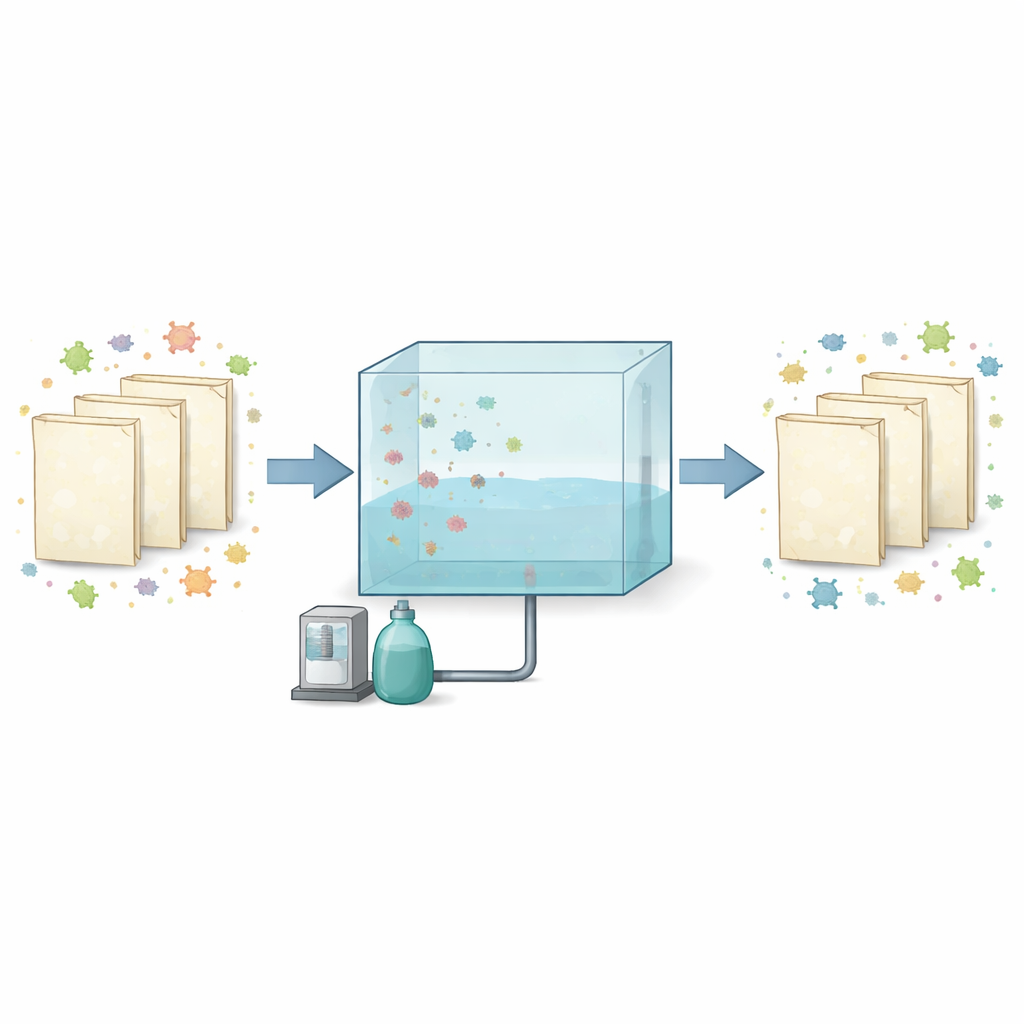
To see how vacuum nitrogen treatment alters these microscopic communities, the team placed the relics in a special chamber. First, they pulled the air pressure down and held it low for two days, stripping away oxygen and drying out microbial cells. Then they introduced high‑purity nitrogen at elevated pressure for a day before venting the system. This process is designed to stop microbial metabolism and damage cell structures, while leaving paper fibers and printing inks unharmed—unlike some traditional sterilization methods that can be toxic or physically damaging to heritage materials.
Reading the Microbial Census by DNA
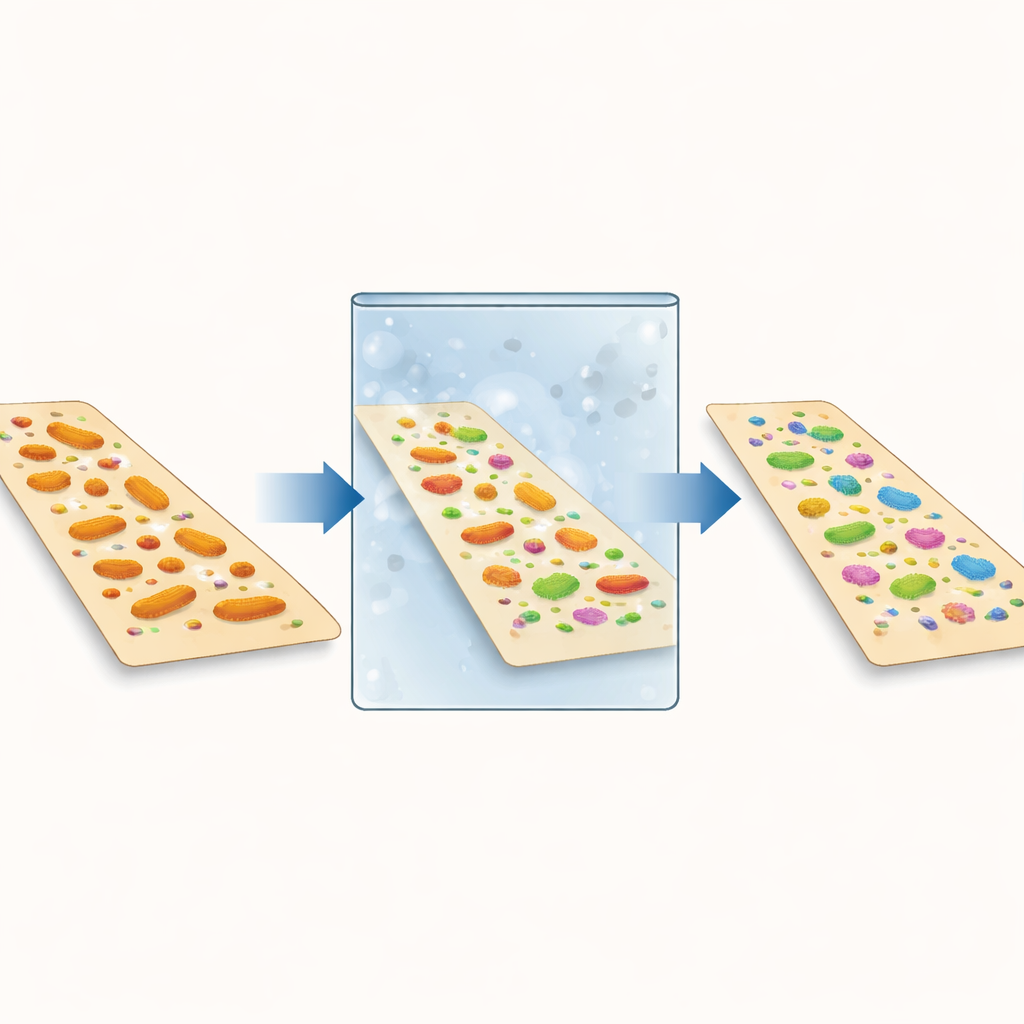
Instead of culturing a few microbes in dishes, the researchers used high‑throughput DNA sequencing to take a broad census of bacteria and fungi on each relic, both before treatment and 60 days afterward. This approach let them detect many species that are difficult or impossible to grow in the lab. They found that nitrogen sterilization shook up the microbial community rather than wiping it clean. Certain bacteria that once dominated the surface—including groups known for breaking down cellulose and weakening paper—lost ground. Other bacteria that tolerate low‑oxygen conditions, armed with sturdy cell walls and flexible metabolism, became more common. Overall, bacterial diversity increased, and the community became more even, with no single group overwhelmingly in control.
Fungi Change Jobs, Not Just Faces
The fungal side of the story showed an equally important shift. Before treatment, the paper was mainly colonized by fast‑growing fungi that live by digesting dead material—exactly the sort of organisms that can chew through paper fibers. After nitrogen sterilization, a different set of fungi rose to prominence, many from groups that usually form partnerships with plant roots and show strong stress resistance. Using bioinformatics tools, the team inferred that the dominant fungal lifestyle had shifted away from aggressive decomposition toward modes less focused on breaking down cellulose and lignin. At the same time, there were signs of more fermentation, spore formation, and other survival strategies, suggesting that the community had entered a more dormant, less destructive state.
What This Means for Saving Fragile Paper
For a lay observer, the key message is that vacuum nitrogen treatment does not leave paper sterile and lifeless. Instead, it reshapes the invisible ecosystem on the surface, reducing oxygen‑hungry microbes that actively attack paper and favoring hardier, low‑oxygen‑tolerant species that are less likely to cause rapid damage. The method appears gentle on the artifacts themselves while pushing the microbial community toward a calmer, more stable balance. The authors argue that nitrogen sterilization is a valuable tool for protecting paper relics, especially when combined with other measures such as careful climate control. Understanding how the microbial cast of characters changes after treatment helps conservators design strategies that keep history’s paper witnesses standing for generations to come.
Citation: Miao, B., Dong, J., Zhu, Z. et al. Impact of vacuum nitrogen sterilization on the microbial community structure of paper-based cultural relics. npj Herit. Sci. 14, 277 (2026). https://doi.org/10.1038/s40494-026-02531-6
Keywords: paper conservation, vacuum nitrogen sterilization, microbial communities, cultural heritage, biodeterioration