Clear Sky Science · en
Pilot study on sustainable antimicrobial chitosan-membranes for stone conservation: efficacy of natural compounds on baroque limestones from southeastern Sicily
Saving historic stone from silent invaders
Historic churches, palaces and city squares in southern Europe often glow with pale limestone, but up close their surfaces can be streaked with dark films of bacteria and other tiny life forms. Conservators have long fought these "living" stains with harsh chemicals that can harm people, the environment and sometimes the stone itself. This study explores a gentler, more targeted way to keep microbes at bay using thin, temporary sheets made from natural materials.
Why microbes are a problem for stone
Limestone is widely used in monuments because it is easy to carve and locally available, but its porous nature makes it vulnerable to damage. Water, pollution and temperature swings all play a part, yet microscopic organisms are especially troublesome. Bacteria, algae, fungi and lichens can settle into pores and rough spots, forming colorful films and crusts that slowly weaken the stone. In Sicily’s Val di Noto, whose baroque towns are on the UNESCO World Heritage list, three local limestones are particularly exposed to this kind of slow biological attack.
From harsh chemicals to natural helpers
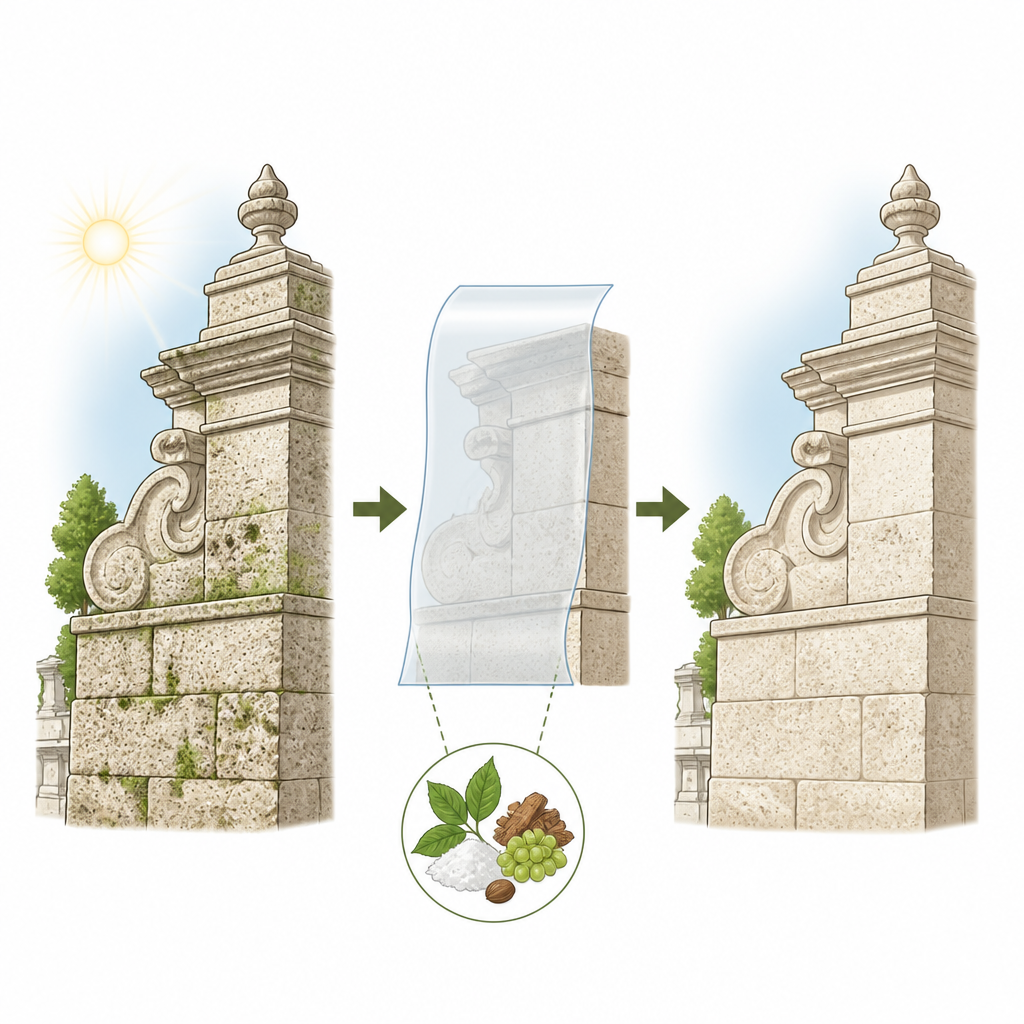
Conservators have traditionally relied on strong chemical biocides, including alcohols and synthetic salts, to clear away this growth. These products work, but they can linger in the environment, irritate workers and even encourage microbes to develop resistance. In response to tighter European regulations and growing awareness of these risks, researchers are turning to plant-derived substances such as essential oils. Compounds like thymol from thyme and limonene from citrus peels can disrupt microbial membranes, yet they break down more readily and are generally less harmful when used carefully. The challenge is that they evaporate quickly, so their effect on stone surfaces tends to be short-lived.
A removable natural "bandage" for stone
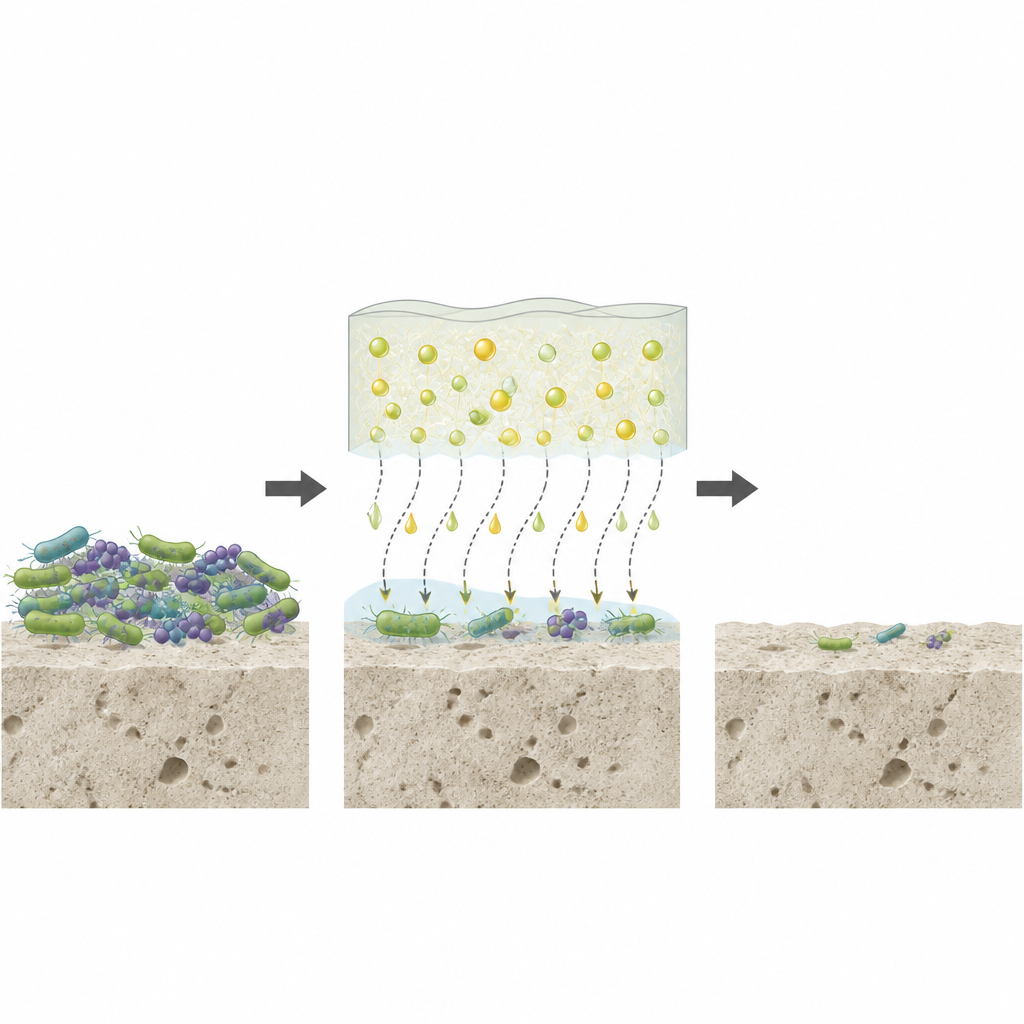
The team behind this study designed a delivery system built around chitosan, a biopolymer obtained from the shells of crustaceans. They cast thin membranes of chitosan and blended in either thymol or limonene at different concentrations. These flexible sheets are meant to be laid over stone surfaces for a limited time, acting like a bandage that holds the natural compounds close to the microbes while keeping the stone itself from becoming too wet. After treatment, the membrane is peeled away, leaving no lasting coating behind. The researchers first confirmed, using laboratory techniques, that thymol and limonene were successfully incorporated into the chitosan and that the membranes had suitable thickness, surface structure and wetting behavior for use on stone.
Testing what works on microbes and real stone
The scientists then tested how well the membranes stopped the growth of Escherichia coli, a standard laboratory bacterium used here as a careful first model for stone-colonizing microbes. Plain chitosan sheets had no effect, but adding limonene produced a modest antibacterial zone that increased with higher dose. Thymol was much more active: membranes with 4 percent and 6 percent thymol created large clear zones around them and maintained this effect for up to two months, despite the volatile nature of the compound. The team went further by applying the membranes to small blocks of the three Sicilian limestones that had been artificially inoculated with E. coli. Here again, thymol-rich membranes, especially at 6 percent, completely suppressed bacterial growth on all stone types, while limonene worked only in some cases and at higher concentration. The stone’s own texture and porosity influenced how well the treatment performed, underlining that no single recipe will suit every monument.
What this means for future conservation
For non-specialists, the key message is that it may be possible to protect treasured stone buildings with temporary, peel-away sheets loaded with plant-based antimicrobial ingredients instead of relying on aggressive chemicals. This pilot study does not claim to have found the perfect formula, nor does it replace the careful on-site testing that real monuments require. It does, however, show that chitosan membranes enriched with thymol can deliver a controlled, long-lasting antibacterial effect while remaining removable and potentially kinder to both stone and environment. With further refinement and testing on actual heritage sites and their native microbial communities, such membranes could become a useful addition to the conservator’s toolkit for safeguarding our shared stone heritage.
Citation: Cirone, M., Galiano, F., Bellizzi, D. et al. Pilot study on sustainable antimicrobial chitosan-membranes for stone conservation: efficacy of natural compounds on baroque limestones from southeastern Sicily. npj Herit. Sci. 14, 302 (2026). https://doi.org/10.1038/s40494-026-02468-w
Keywords: stone conservation, cultural heritage, chitosan membrane, essential oils, antimicrobial treatment