Clear Sky Science · en
Synergistic nitrogen-sulfur metabolism driving biodeterioration revealed by metagenomic and DNA-SIP analyses at the Chen Cihong residence
Why Stone Monuments Slowly Crumble
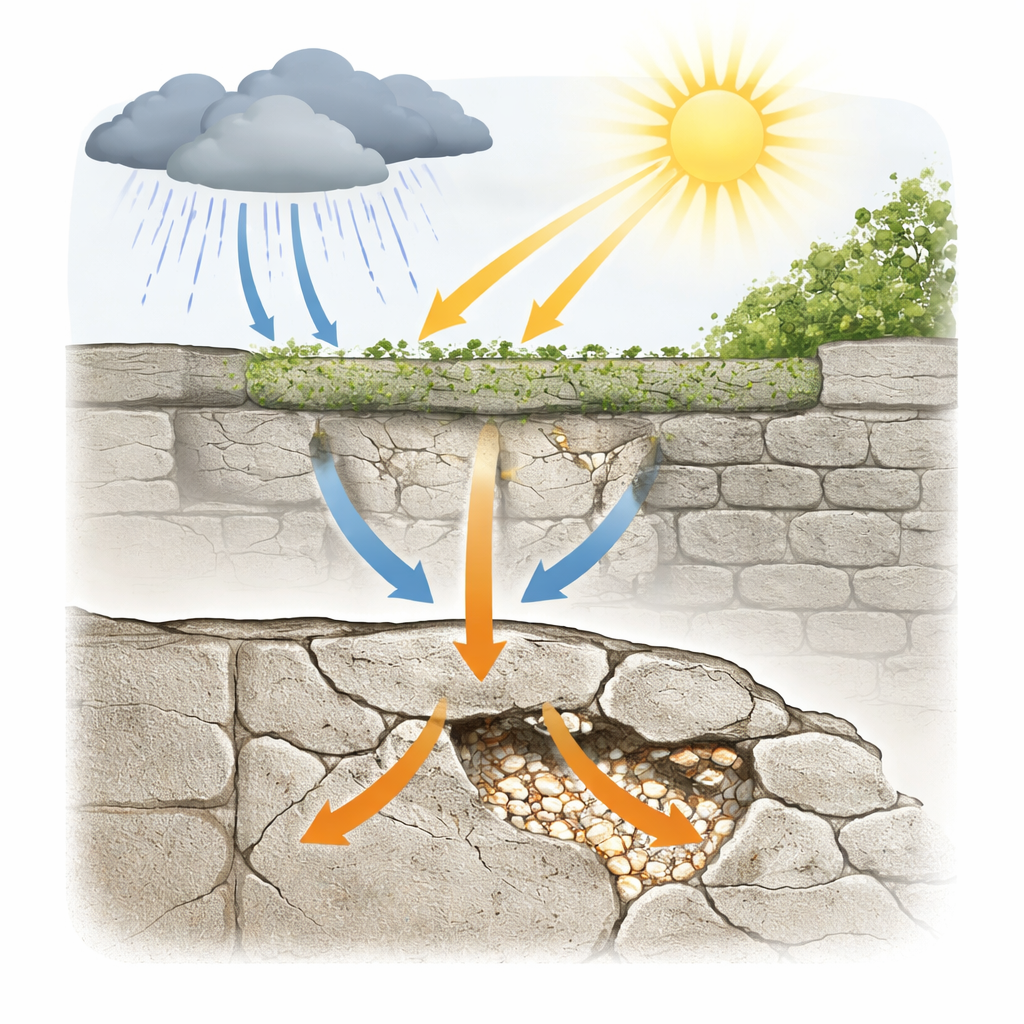
From ancient temples to century-old townhouses, many beloved stone buildings are quietly being eaten away from within. This study looks at the Former Residence of Chen Cihong, a historic mansion complex in southern China, to uncover how invisible communities of microbes living on the stone surface can speed up cracking, flaking, and loss of carvings. By following how these microbes handle two common elements—nitrogen and sulfur—the researchers reveal a hidden chemical engine that turns rain and air into acids and salts that slowly destroy the stone.
Tiny Films on Old Walls
Anyone walking through the Chen Cihong residence can see dark films and stains on the stone, tiles, glass, and wood. These patches are biofilms: thin, slimy layers formed by bacteria, fungi, and other microbes. The team sampled biofilms from several spots, especially weather‑exposed granite balconies. They measured moisture, acidity, and dissolved ions such as nitrate and sulfate, then used DNA sequencing to identify which microbes lived there. Stone surfaces, particularly one upper‑floor sample, hosted especially rich communities of bacteria that specialize in using nitrogen compounds, hinting that key chemical reactions were happening right where the stone meets the air.
The Hidden Nitrogen Loop
To see what these microbes were actually doing, the researchers used a clever tracking method with a heavy form of nitrogen, known as 15N. They grew stone biofilms in the lab with labeled ammonia and then separated out the DNA that incorporated this heavy nitrogen, showing which microbes were actively using it. They also tracked how the labeled nitrogen shifted into nitrite and nitrate over time. The results showed that microbes on the stone were busily turning ammonia into more oxidized forms of nitrogen—a chain of reactions often called nitrification—while other microbes were converting nitrate into gases that escape to the air, a process known as denitrification. A third pathway, called DNRA, recycled nitrate back to ammonia. Together, these steps form an internal nitrogen loop that continually regenerates the compounds needed to keep the reactions going and to keep producing aggressive dissolved salts inside the stone.
When Nitrogen Meets Sulfur
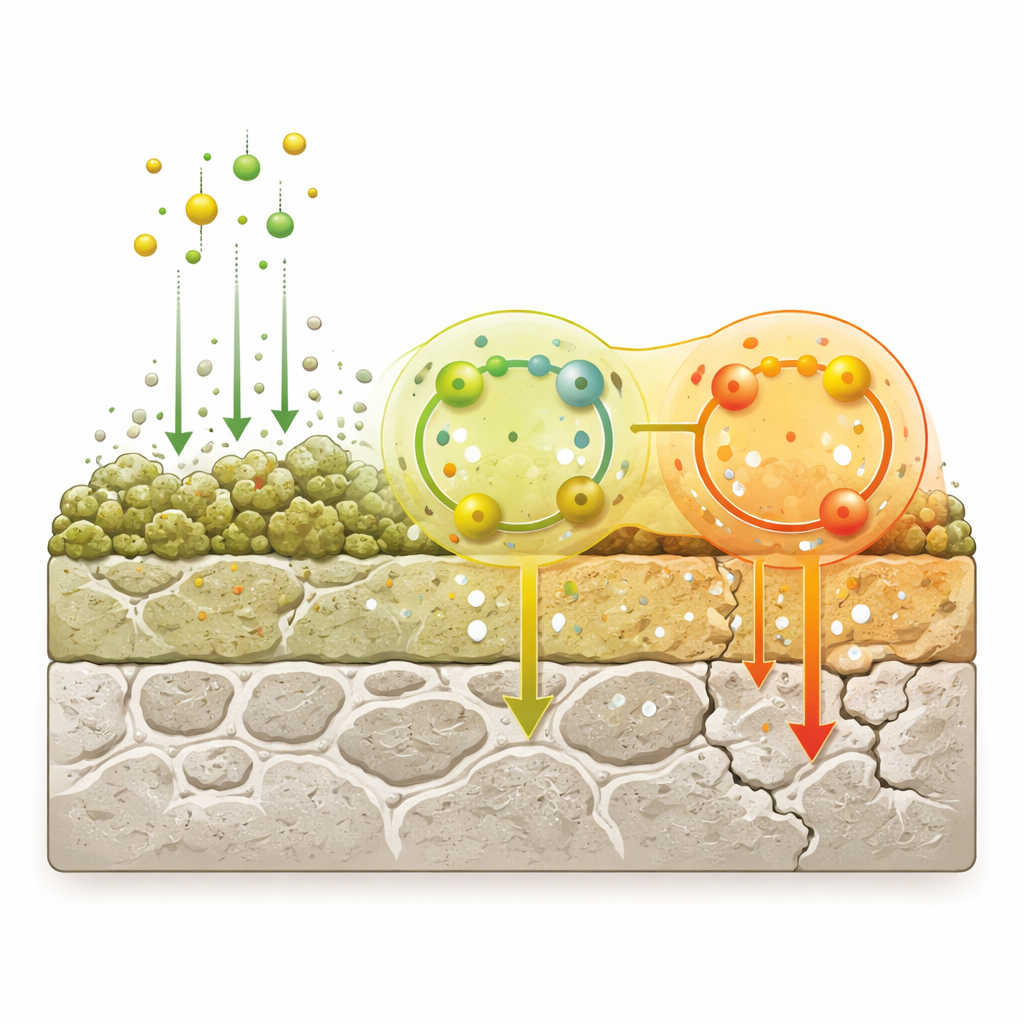
Metagenomic analysis—that is, reconstructing the genetic toolkits of the microbes directly from environmental DNA—revealed something more: many of the most important microbial groups carried genes for both denitrification and sulfur oxidation. That means the same biofilms that manipulate nitrogen can also strip electrons from sulfur compounds, producing sulfate. Sulfate easily combines with calcium and magnesium locked in the stone to form minerals like gypsum. As these salts grow and crystallize in tiny pores, they push the rock apart from the inside, causing cracks and surface peeling. The study suggests that nitrogen compounds produced by nitrification serve as “fuel acceptors” for microbes that oxidize sulfur, linking the two cycles into a powerful, self-reinforcing engine of acid formation and salt buildup.
A Slow but Powerful Internal Attack
The authors show that this coupled nitrogen–sulfur chemistry is not just a curiosity; it likely underlies much of the long‑term weakening of the Chen Cihong stonework. In wet periods, nitrate and sulfate formed by the biofilms are drawn into the stone with seeping water. In dry periods, they crystallize, increasing internal pressure and driving cracks to grow. Denitrification can sometimes reduce the load of nitrate and slightly ease acidity, but in practice it tends to be incomplete and still contributes to chemical changes that harm the stone. DNRA, by feeding ammonia back into the system, helps maintain the cycle for years or decades.
Guiding Smarter Protection
For conservators, the message is that simply cleaning surfaces is not enough. The study provides a framework for targeting the specific metabolic pathways that drive damage, such as selectively slowing ammonia‑oxidizing microbes or breaking the nitrogen loop by removing accumulated nitrate. Any such intervention must be gentle and carefully tested, because these microbial communities are complex and the stone itself is irreplaceable. Nonetheless, by mapping how nitrogen and sulfur cycles intertwine on the surface of a single historic residence, this work offers a clear roadmap for protecting stone heritage worldwide from an invisible yet relentless biological attack.
Citation: Liang, X., Gao, X., Xie, C. et al. Synergistic nitrogen-sulfur metabolism driving biodeterioration revealed by metagenomic and DNA-SIP analyses at the Chen Cihong residence. npj Herit. Sci. 14, 236 (2026). https://doi.org/10.1038/s40494-026-02467-x
Keywords: stone biodeterioration, microbial biofilms, nitrogen cycle, sulfur oxidation, cultural heritage conservation