Clear Sky Science · en
Blood as the mirror and modulator of aging: mechanistic insights and rejuvenation strategies
Why our blood matters as we grow older
Most of us think of aging as wear and tear inside our organs, but this review highlights a different view: our blood itself helps steer how we age. The mix of proteins, fats, immune cells, and tiny particles floating in our circulation does not just report on our health, it actively nudges our bodies toward decline or repair. By learning to read and gently retune this inner “river,” scientists hope to slow age-related diseases and extend the years we live in good health.
The story our blood can tell about aging
Using powerful measurement tools, researchers are now mapping thousands of blood proteins and small molecules in large groups of people. They find that certain patterns of proteins can estimate a person’s “biological age,” often more accurately than the calendar suggests. Some protein sets point to faster aging in specific organs, such as the brain, heart, kidneys, or immune system, and predict future risks like dementia, heart failure, or frailty. In many studies, people with “younger” profiles in their brain and immune markers live longer and stay healthier, showing that blood offers a window into how different parts of the body age at their own pace.
Small blood molecules and immune cells as aging clues
Beyond proteins, shifting levels of blood metabolites also track aging. Antioxidants and energy helpers tend to fall with age, while other compounds linked to stress and damage increase. Large population studies show that certain lipids, amino acids, and nucleic acid fragments are tied to either shorter or longer life, and can help build clocks that estimate how fast someone is aging. At the same time, the mix of immune cells in blood changes dramatically: fresh, flexible T and B cells decline, while worn-out or overactive cells rise, feeding a background haze of chronic inflammation. Even sugar decorations on antibodies shift in ways that make them more inflammatory, and in animal studies these antibodies can directly drive fat tissue scarring and metabolic decline.
How young blood can refresh old tissues
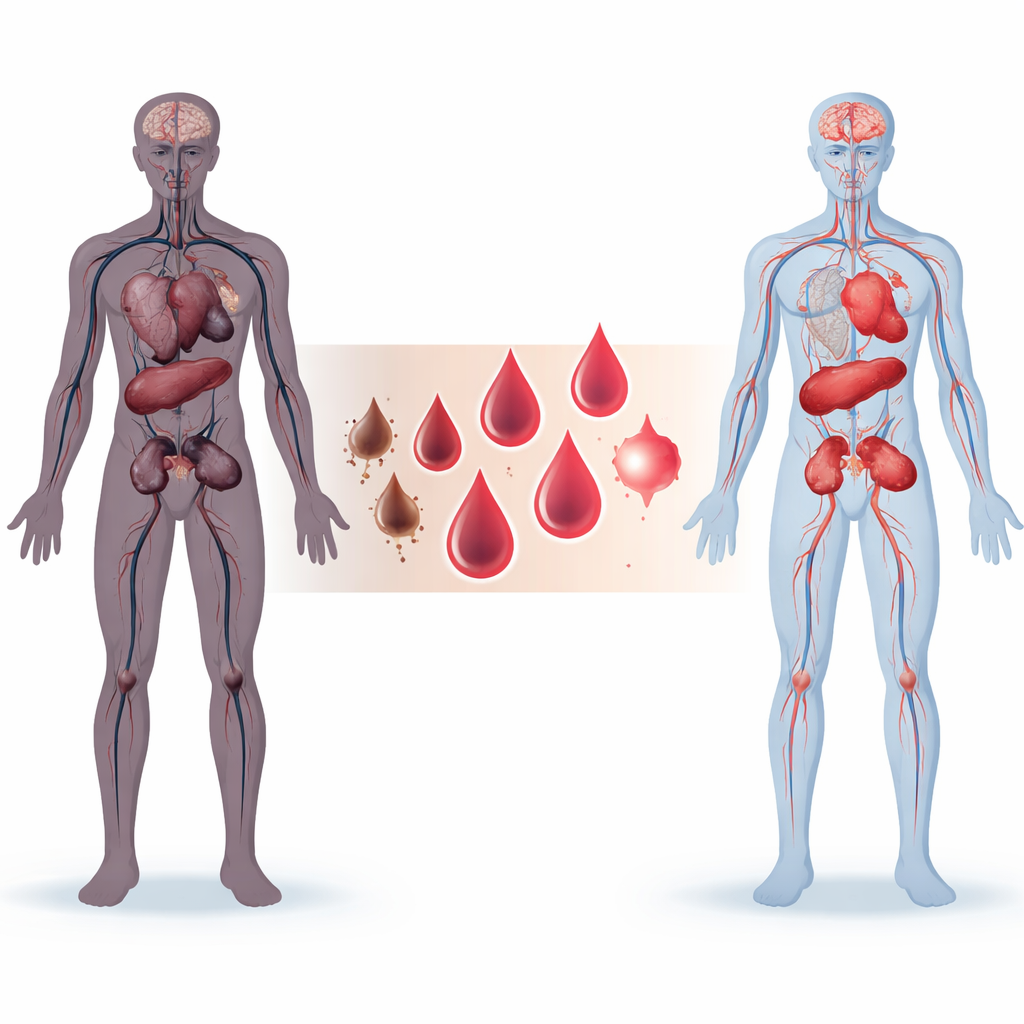
Experiments that connect the circulation of young and old animals, or that simply give old animals plasma from the young, show that blood can reset aging programs across many organs. In these models, elderly mice regain stem cell activity in muscle, liver, and brain, improve memory and learning, and show healthier hearts, kidneys, and intestines. Detailed analyses reveal that young blood can dial back epigenetic clocks, boost mitochondrial energy production, and calm harmful inflammation. Tiny vesicles released into the bloodstream by young animals, packed with microRNAs, appear to be one powerful carrier of these effects, improving frailty scores and lifespan when given to older mice.
Taking away harmful factors by diluting old blood
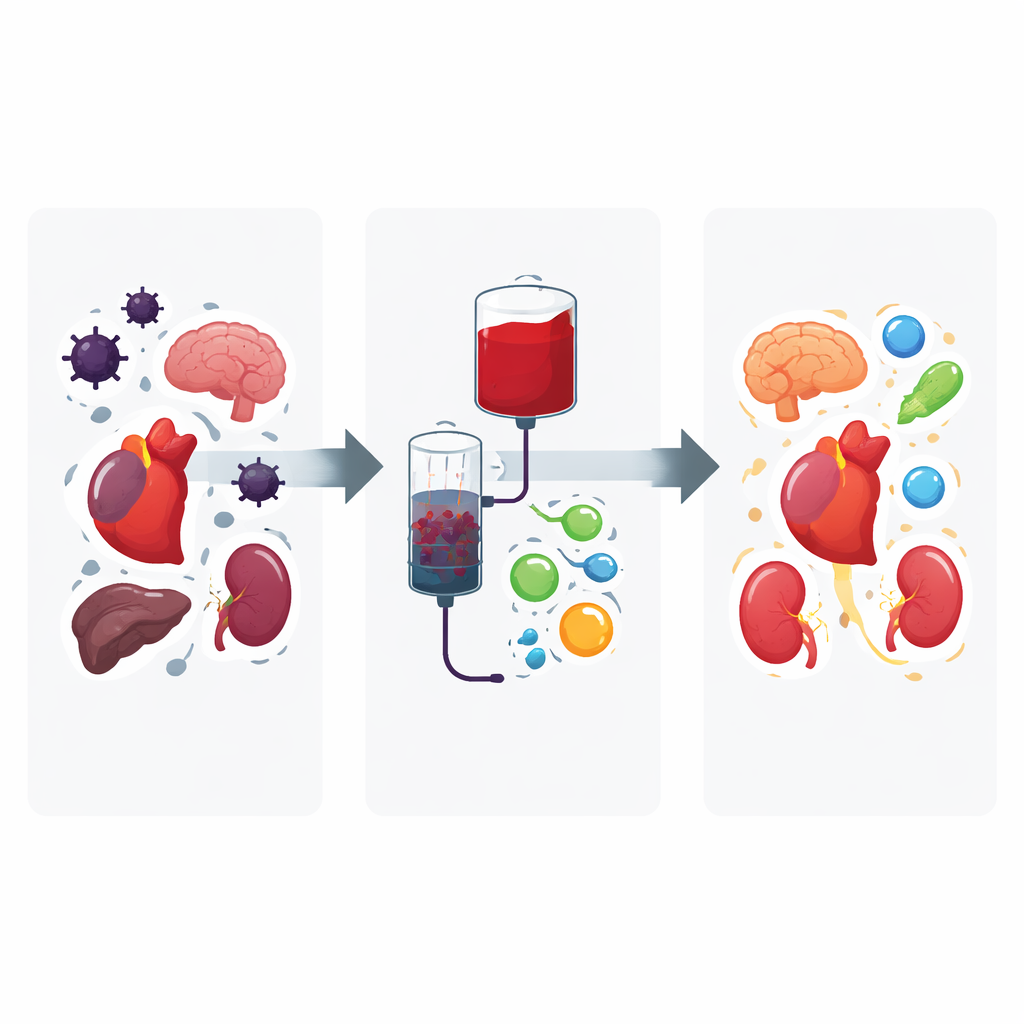
Remarkably, benefits are not limited to adding youthful components. Simply diluting or exchanging a portion of old plasma with a neutral solution in mice can improve muscle repair, reduce fat buildup and scarring in the liver, revive nerve cell growth, and sharpen memory. These procedures lower blood levels of pro-aging signals and reset key communication pathways that control inflammation and stress responses. Early clinical studies of plasma exchange in people, including those with Alzheimer’s disease, hint at improved protein profiles, calmer immune activity, and slower loss of brain structure and function, although larger and longer trials are still needed.
What this means for future anti-aging therapies
Taken together, the research paints blood as both a mirror and a steering wheel for aging. Its shifting mix of proteins, small molecules, and immune cells records how each organ is faring and can forecast disease risk. At the same time, carefully altering that mix, either by adding helpful factors from young plasma or vesicles, or by removing harmful components through dilution or exchange, can nudge old tissues toward a more youthful state in animal models and early human studies. For lay readers, the key message is that aging is not fixed; by understanding and gently tuning the signals carried in our blood, medicine may one day extend the portion of life spent healthy and independent.
Citation: Kim, E., Kang, J.S. & Yang, Y.R. Blood as the mirror and modulator of aging: mechanistic insights and rejuvenation strategies. Exp Mol Med 58, 1053–1062 (2026). https://doi.org/10.1038/s12276-026-01688-1
Keywords: blood and aging, plasma rejuvenation, immune aging, biological age clock, healthspan