Clear Sky Science · en
Role of the hippocampus in systems consolidation of remote fear memory
Why our brains remember scary moments
Everyone has memories of frightening experiences that feel vivid, even years later—a near accident on the road, a bad fall, or a sudden loud explosion. This article explores how the brain stores and reshapes those scary moments over time. It focuses on a small, seahorse‑shaped structure called the hippocampus and asks whether it simply hands off long‑term fear memories to the outer wrinkled surface of the brain, the cortex, or whether it continues to play a guiding role long after the event.
How fear memories travel through the brain
Scientists once thought that new memories are first handled by the hippocampus and then permanently moved to the cortex, much like files being transferred from a computer’s working memory to a long‑term archive. This idea, called the standard view of consolidation, suggested that recent memories rely on the hippocampus, whereas older “remote” memories depend only on the cortex. Clinical cases of people with hippocampal damage, who could recall childhood events but struggled with new learning, seemed to support this picture. However, animal studies revealed that damaging or temporarily silencing the hippocampus can also distort or weaken older fear memories, hinting that the story is more complex. 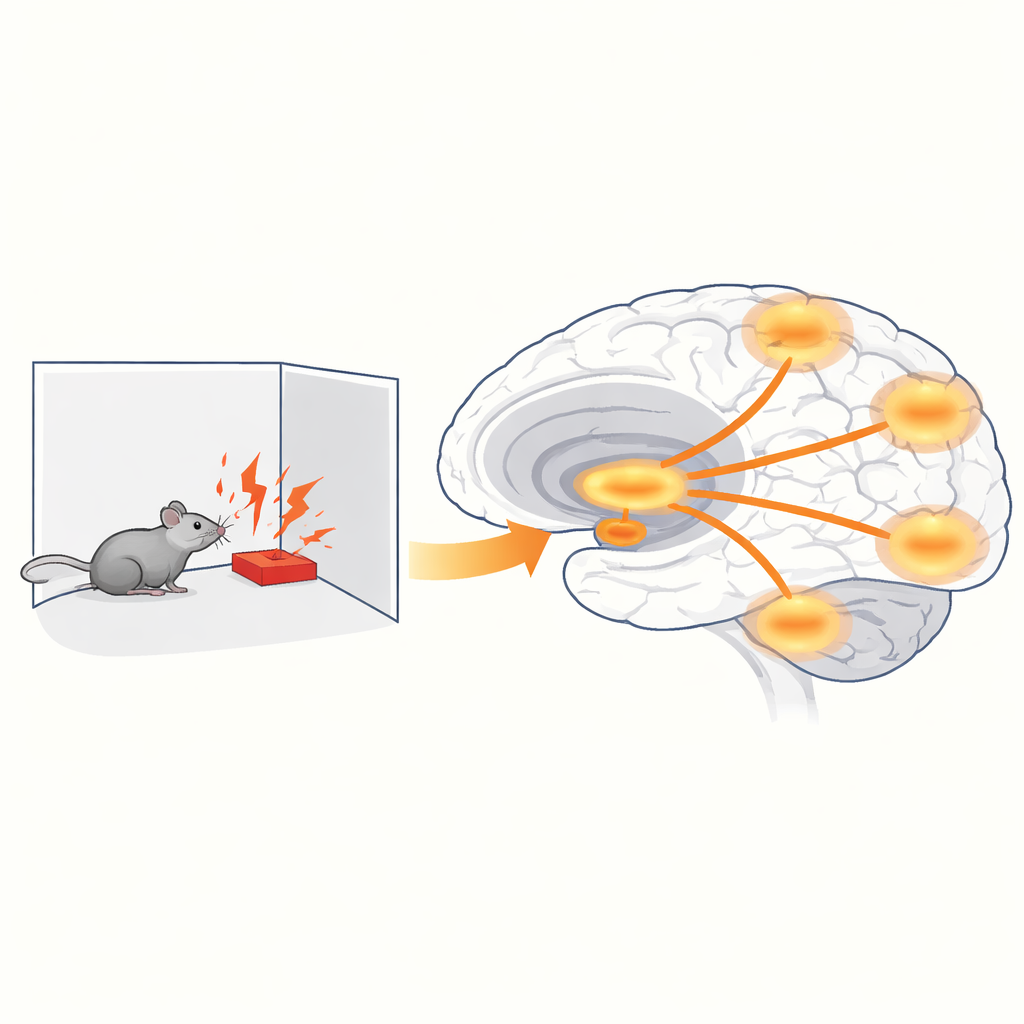
Different ways to think about memory storage
Newer theories propose a continuing partnership between the hippocampus and cortex, rather than a clean handoff. One line of thinking argues that the hippocampus always carries the rich, detailed version of an experience, while the cortex keeps a more generalized outline; the two cooperate whenever we recall an event. Another framework suggests that the hippocampus acts like an index or pointer: a small set of cells there can reactivate a larger pattern spread across the cortex, helping to reconstruct the memory. Together, these ideas portray remote memory as a dynamic network: over time, more cortical areas join in, but the hippocampus still contributes precision and coordination during recall.
Hidden helpers inside memory cells
Beneath this large‑scale dialogue, the article highlights molecular and structural changes inside hippocampal cells that support long‑lasting fear memories. Certain signaling proteins, such as CREB and receptors that respond to stress hormones, become more active even weeks after learning and are tied to how strongly an animal freezes when it is reminded of a fearful setting. Other molecules help remodel tiny contact points between neurons, grow new spines, or generate new nerve cells, all of which help stabilize remote memories. Chemical tags on DNA and on the proteins that package it—epigenetic marks—also shift after learning. These marks can tune which genes stay active for days to weeks, influencing how long a fear memory persists and how strongly hippocampal cells drive distant cortical partners. 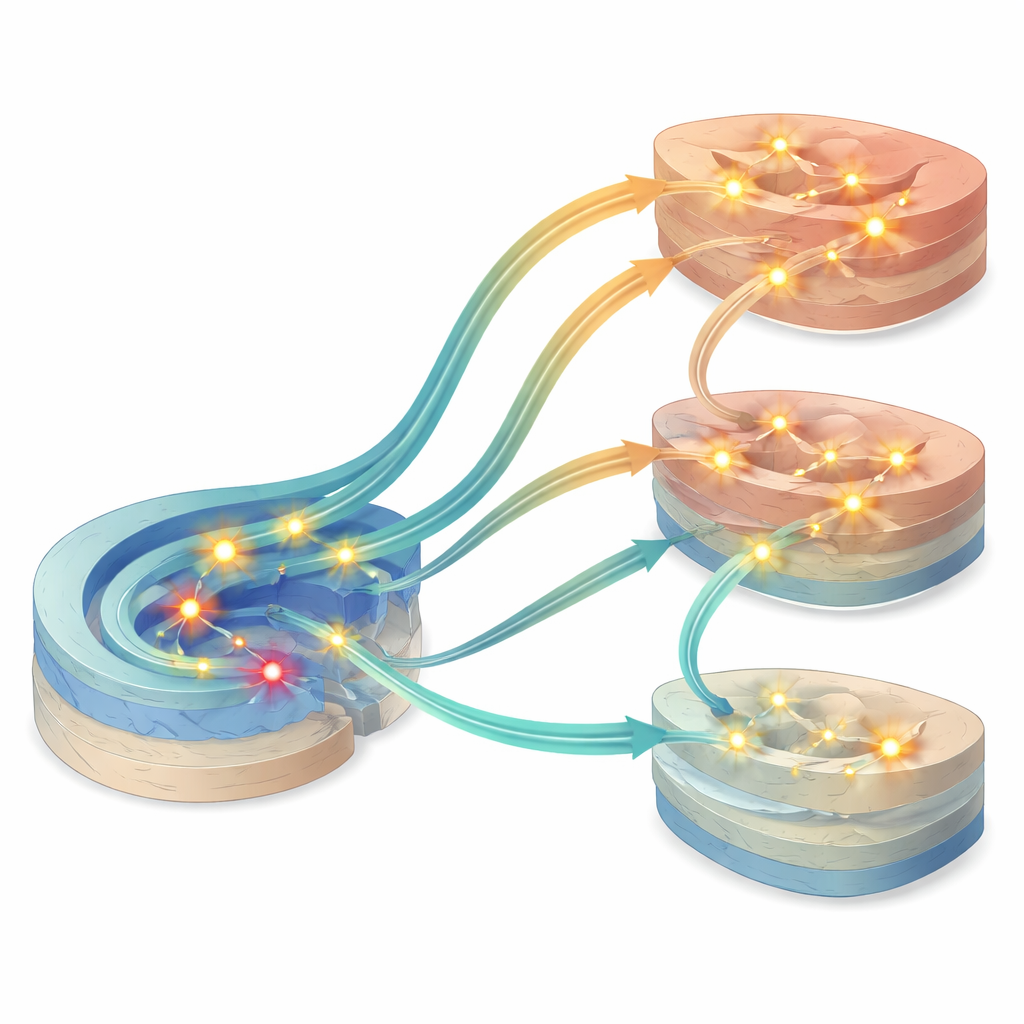
Conversations between brain regions
The authors then follow the routes by which the hippocampus talks to different parts of the cortex as fear memories age. Connections to the medial prefrontal cortex and the anterior cingulate cortex grow stronger over time and are crucial when an old fear memory is recalled. Another region, the retrosplenial cortex, helps blend spatial and sensory details and can sometimes retrieve a fear memory even when the hippocampus is quiet. Brain‑wave recordings during waking and sleep show tightly timed rhythms linking these regions, especially brief bursts of activity in the hippocampus that align with patterns in the cortex. These coordinated pulses are thought to help “replay” experiences, gradually weaving the memory into broader cortical networks.
Why fear can spread to new situations
As fear memories are redistributed across the brain, their content can slowly change. Early on, the hippocampus keeps similar experiences neatly separated, so that fear is tied to a specific place or situation. If this separation is weakened, animals begin to freeze in new but somewhat similar environments. Over longer periods, cortical regions such as the anterior cingulate cortex and ventral hippocampus become more important, and fear responses tend to generalize to a wider range of contexts. This spreading of fear may be useful for survival, but when it becomes excessive it resembles what happens in anxiety disorders and post‑traumatic stress disorder, where reminders that only faintly resemble the original trauma can trigger powerful reactions.
What this means for understanding fear
Overall, the article concludes that the hippocampus is not a short‑term relay that simply hands off fear memories and then steps aside. Instead, it remains engaged for weeks or longer, shaping how memories are stored across the cortex and how precisely they are recalled. This ongoing partnership helps explain both the durability of strong fear memories and their tendency to become less specific and more generalized over time. By uncovering the circuits, molecules and brain rhythms that keep remote fear memories alive, this work may eventually guide new approaches to easing harmful overgeneralized fear while preserving the useful lessons that past dangers can teach.
Citation: Park, H., Kaang, BK. Role of the hippocampus in systems consolidation of remote fear memory. Exp Mol Med 58, 1010–1016 (2026). https://doi.org/10.1038/s12276-026-01680-9
Keywords: fear memory, hippocampus, memory consolidation, engram cells, fear generalization