Clear Sky Science · en
Regulation of PKM2 expression and function by GLIS3 during metabolic reprogramming in polycystic kidneys
Why Kidney Energy Use Matters
Polycystic kidney disease is best known for the fluid-filled sacs that slowly crowd out healthy tissue, but hidden beneath these cysts is a dramatic shift in how kidney cells make energy. This study explores how a little-known DNA-binding protein, GLIS3, helps young kidneys switch from a “fast but wasteful” way of burning sugar to a “slow and efficient” mode—and how failure of this switch can fuel cyst growth. By uncovering a key metabolic enzyme that goes into overdrive when GLIS3 is missing, the work points to a promising drug target that could one day help slow or prevent cystic kidney disease.
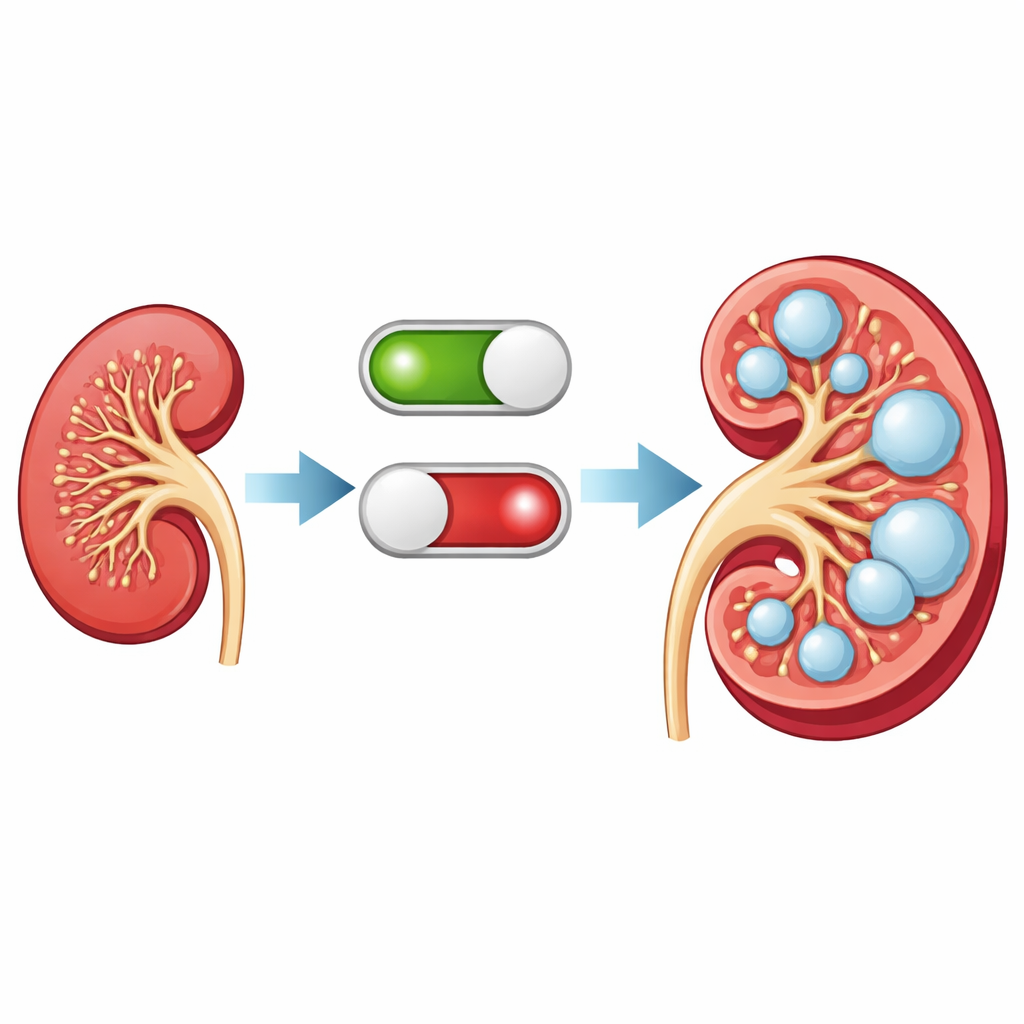
The Kidney’s Energy Switch
As kidneys mature after birth, their cells normally shift from relying mainly on quick sugar burning to using oxygen-driven energy production in their many mitochondria. In polycystic kidney disease, that transition is blunted, and the cells stay hooked on a cancer-like pattern of sugar use that produces lactate and supports rapid growth. The researchers focused on GLIS3, a DNA-regulating protein already known to be essential for healthy kidney development. Mice that lack GLIS3 develop severe, early-onset cysts, suggesting that GLIS3 might be a master switch for the kidney’s energy program.
How a Gene Regulator Skews Sugar Use
To see which genes GLIS3 controls, the team compared kidney tissue from normal and GLIS3-deficient mice using genome-wide RNA profiling and DNA-binding maps. When GLIS3 was missing, many genes that drive the breakdown of glucose were turned up, while several genes that help build new sugar from smaller molecules were turned down. GLIS3 was found directly attached to control regions of these genes, often alongside another kidney regulator called HNF-1B. This pattern shows that GLIS3 normally keeps the balance between energy-hungry and energy-saving pathways, and its loss nudges cells toward a more glycolytic, growth-prone state.
A Sugar Enzyme with Two Personalities
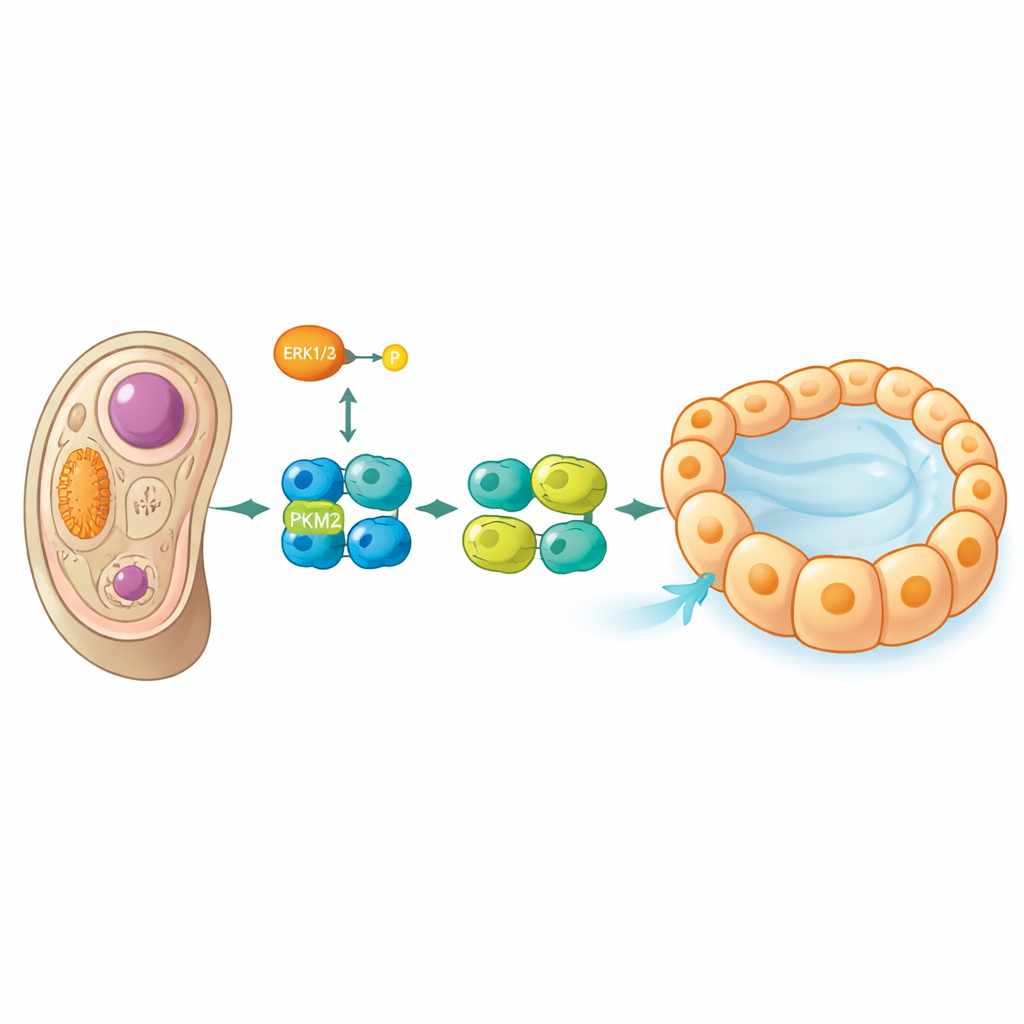
One enzyme, PKM2, emerged as a central player. The gene that encodes it can be spliced into two versions, PKM1 and PKM2, with very different behaviors. PKM2 is unusually flexible: in one form it supports efficient energy production, but in another it favors lactate output and cell growth. GLIS3-deficient kidneys produced more of the PKM2 version and relatively less PKM1, especially in the ducts that later become cystic. The PKM2 protein was also modified at two key sites, changes known to push it into a form that clusters in dimers, moves into the nucleus, boosts glycolysis, and promotes cell proliferation.
From Cell Behavior to Cyst Growth
These molecular shifts had tangible effects on cell behavior. Kidney epithelial cells taken from GLIS3-deficient mice formed larger, more rapidly growing spheroids—miniature 3D cyst models—than cells from healthy animals and showed higher glycolytic activity and lactate production. When the researchers reduced PKM2 levels with small interfering RNA, or blocked its activity with a specialized compound called 3K, the spheroids shrank and their glycolytic output dropped toward normal. Treating GLIS3-deficient mice with the same PKM2 inhibitor for just one week led to smaller kidneys, fewer and smaller cysts, and lower levels of early kidney injury markers, all without yet affecting overall filtration function.
What This Means for Future Treatments
To a lay observer, this work shows that cystic kidney disease is not only a structural problem but also a metabolic one. GLIS3 acts like a guardian of the kidney’s energy choice during a critical developmental window. When that guardian is lost, PKM2 is pushed into a growth-favoring mode, keeping cells locked into sugar-burning patterns that encourage cysts to expand. By dialing back PKM2, either genetically or with a drug, the researchers could slow cyst growth in cells and in mice. While much work remains before such strategies reach patients, the study highlights PKM2 as a promising lever for therapies aimed at the energy engine that drives cystic kidney disease rather than just its outward lesions.
Citation: Collier, J.B., Kang, H.S., Grimm, S.A. et al. Regulation of PKM2 expression and function by GLIS3 during metabolic reprogramming in polycystic kidneys. Exp Mol Med 58, 932–941 (2026). https://doi.org/10.1038/s12276-026-01676-5
Keywords: polycystic kidney disease, GLIS3, PKM2, kidney metabolism, aerobic glycolysis