Clear Sky Science · en
NRIP1 disrupts ERα signal in Sjögren’s disease via AQP5 suppression and MYC-driven salivary dysfunction
Why this matters for dry mouth and autoimmunity
Sjögren’s disease is an autoimmune condition best known for causing chronically dry eyes and dry mouth, but the underlying reasons why the salivary glands stop working have remained murky. This study uncovers a hormone-related switch inside salivary gland cells that may explain why the disease is especially common in older women and points to a new molecular target that could one day help restore natural saliva production instead of merely masking dryness.
A hormone safety net that fails with age
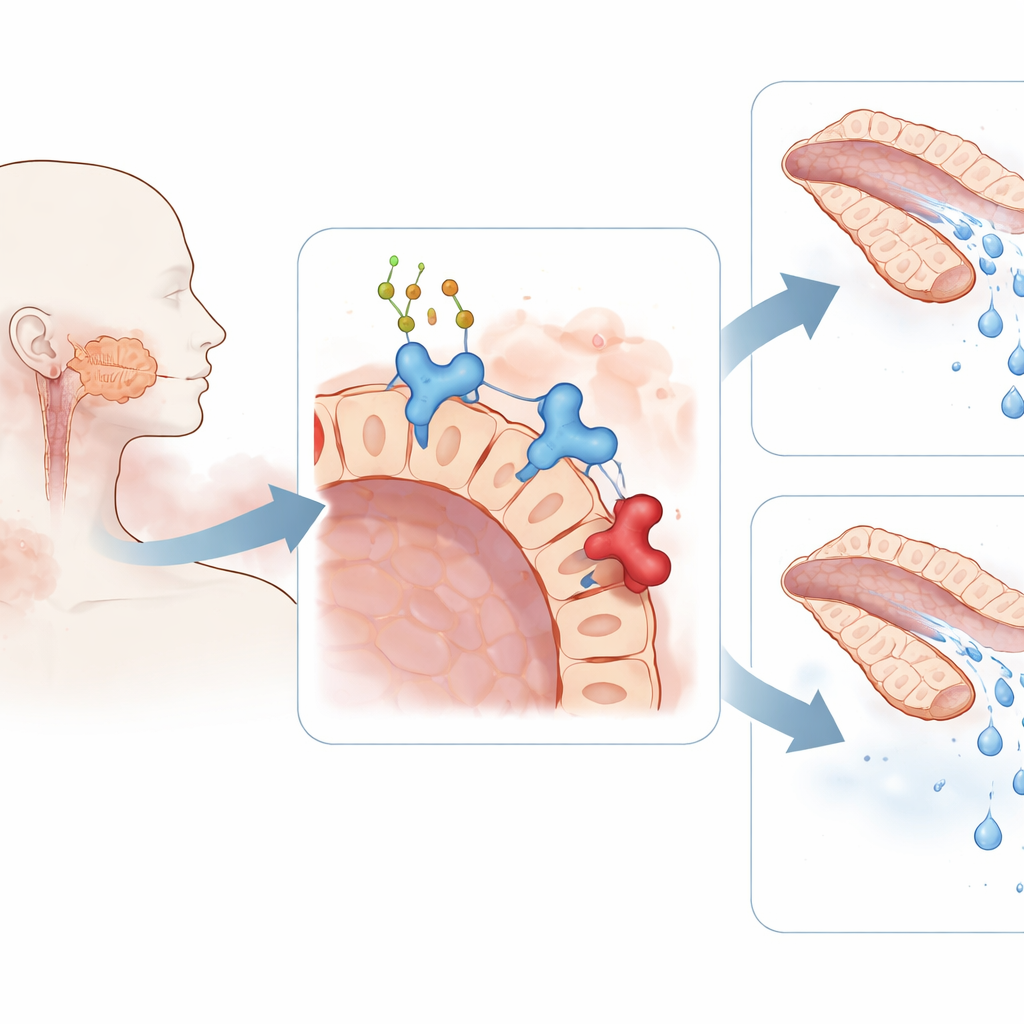
Salivary glands rely on the female hormone estrogen to keep their lining cells alive and secreting fluid. Estrogen acts through a protein called a receptor inside these cells, which then turns on or off specific genes. In healthy glands, this signal supports the production of a water channel protein that lets saliva flow and helps guard against cell death. After menopause, estrogen levels fall, and in Sjögren’s disease this decline is accompanied by chronic inflammation. The authors reasoned that together, low hormone levels and inflammation might rewire this receptor’s behavior in a way that harms the gland.
A molecular partner that flips the switch
By analyzing gene activity in two different mouse models that mimic Sjögren’s disease, and in human salivary tissue, the team homed in on a protein called NRIP1. This protein normally helps hormone receptors control gene expression. In diseased glands, NRIP1 levels were strikingly higher, especially inside the nuclei of salivary epithelial cells. The researchers showed that NRIP1 physically binds to the estrogen receptor and forms a complex that appears only under inflammatory or low-estrogen conditions. In multiple datasets, the set of genes influenced by NRIP1 overlapped almost completely with those controlled by the receptor itself, suggesting that NRIP1 effectively takes over the steering wheel of estrogen signaling.
Shutting the water gate and pushing cells toward death
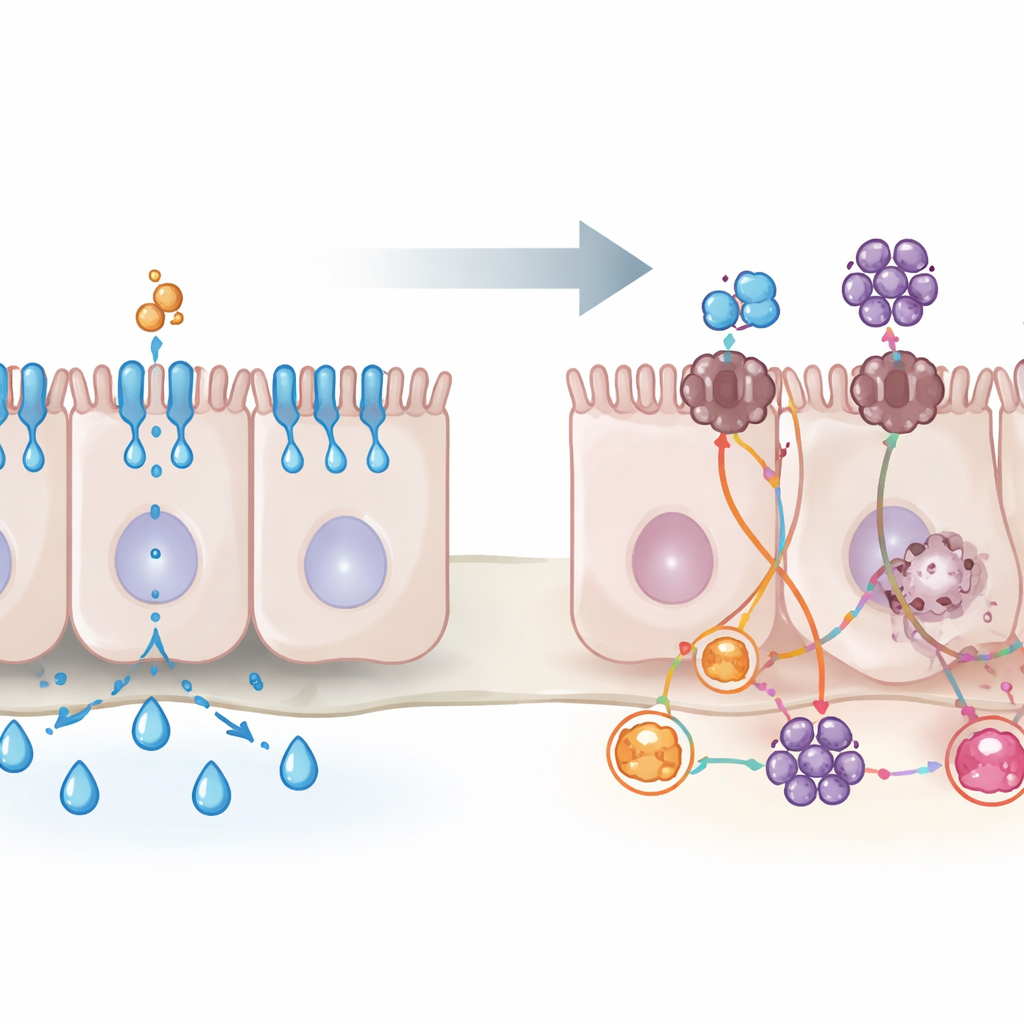
The study then asked what this hijacked signal actually does inside salivary cells. One key gene encodes AQP5, a channel that lets water pass into the ducts and is essential for saliva secretion. In both mice and patients with Sjögren’s disease, AQP5 levels were reduced, and this drop was tightly linked to high NRIP1. Lab experiments revealed that the NRIP1–receptor complex latches onto specific control sites in the AQP5 gene and dampens its activity, reducing water flow through the cells. At the same time, the complex boosts production of MYC, a powerful growth and stress regulator. Elevated MYC in turn switches on networks of genes that promote programmed cell death, disturb immune balance and alter cell metabolism, further weakening the gland.
Evidence from engineered mice and computer models
To test how central NRIP1 is to the disease process, the researchers created mice that lacked the Nrip1 gene and then removed their ovaries to mimic menopause. Ordinary ovariectomized mice developed classic signs of Sjögren’s-like disease: poor saliva output, increased drinking, immune cell invasion of the glands and blood autoantibodies. In sharp contrast, mice without Nrip1 were largely protected—saliva flow and gland structure were preserved, and autoantibody levels fell. Computer-based structural modeling added a mechanistic clue: NRIP1 and estrogen both target the same region of the receptor. When NRIP1 binds, it displaces estrogen from its pocket and lowers the receptor’s ability to respond to the hormone, consistent with a competitive blockade.
What this means for people with Sjögren’s disease
Together, the findings outline a coherent story: in the inflamed, low-estrogen environment typical of Sjögren’s disease, NRIP1 rises and binds the estrogen receptor, preventing normal hormone signaling. This altered complex silences the water channel that is critical for saliva production and simultaneously activates MYC-driven pathways that kill salivary cells and twist their immune and metabolic behavior. In mice, removing NRIP1 prevents these changes and protects against dry-mouth features. While more work is needed before human treatments arise, NRIP1 now stands out as both a promising marker for diagnosis and a potential drug target to help restore natural salivary gland function.
Citation: Chen, B., Pathak, J.L., Qin, X. et al. NRIP1 disrupts ERα signal in Sjögren’s disease via AQP5 suppression and MYC-driven salivary dysfunction. Exp Mol Med 58, 898–916 (2026). https://doi.org/10.1038/s12276-026-01671-w
Keywords: Sjögren’s disease, salivary gland, estrogen signaling, NRIP1, MYC