Clear Sky Science · en
Navigating the two worlds of academic and public communication: the case of sociologists in Germany during the COVID-19 pandemic
Why this matters for everyday life
The COVID-19 pandemic did not just test hospitals and governments; it also tested how experts speak to the public. In Germany, sociologists were suddenly asked to explain how lockdowns, school closures, and new rules were reshaping daily life. This study looks at who actually spoke up in newspapers and on the radio, who published slower, in-depth research, and how closely these two groups overlapped. The answers reveal a surprising gap between the sociologists we heard in the media and those who quietly built the long-term evidence base.
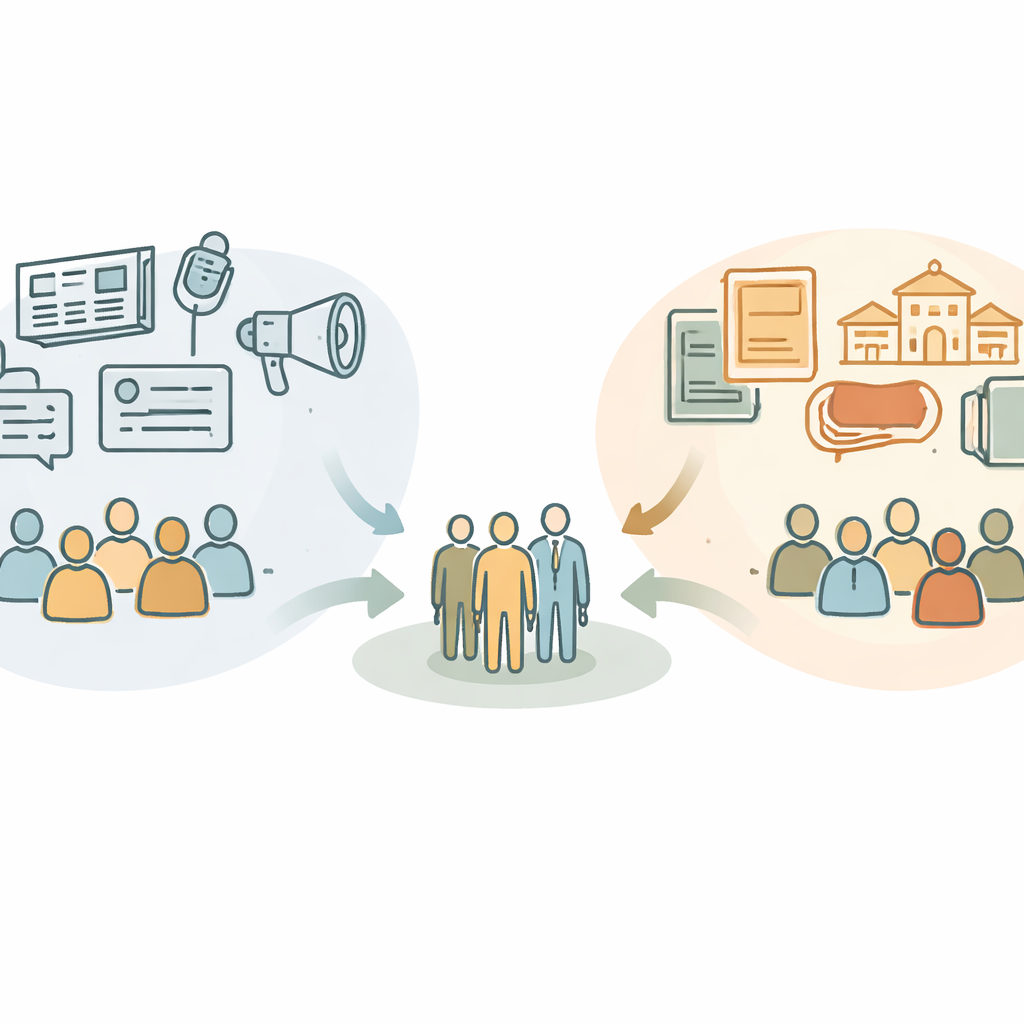
Two different worlds of talking about society
The authors collected two large datasets: more than a thousand media pieces (interviews, guest articles, citations, and mentions) from 2020–2021, and over fifteen hundred academic contributions (journal articles, book chapters, monographs, and edited volumes) from 2020–2023. They treated communication with journalists and the public as one "world" and formal academic publishing as another. Instead of assuming that media commentary simply flows out of previous research, they asked to what extent the same people appeared in both worlds when it came to COVID-19.
When timing and channels don’t match
The timing of activity in the two worlds looked very different. Media contributions by sociologists shot up in early 2020, peaking in the second quarter of that year when people were desperate for orientation. Academic publications, however, mostly appeared later, with numbers climbing only from late 2020 and peaking in early 2023. This lag is understandable: proper studies and peer review take time, especially in the social sciences. What is striking is that those who appeared early and often in the media generally did not later publish much specialized COVID-19 research—and those who did publish heavily on COVID-19 were rarely visible in the early public debate.
Who the public saw versus who did the studies
Looking at who spoke in each world, the authors found clear social patterns. In the media, professors dominated: roughly seven to nine out of ten frequently quoted sociologists held a professorship, and most were older men. These highly visible figures often worked in broad areas such as general sociology, macro-level social analysis, or social theory—well suited for offering sweeping diagnoses of the crisis. In academic publishing, by contrast, the group was more mixed: many authors were younger researchers without professorial titles, and they worked on a wide variety of empirical topics, from education and inequality to family life and political responses. Gender balance was roughly equal among one-time academic contributors, though men became more dominant among the most prolific authors.
A hidden divide between public voice and research effort
When the datasets were merged, only a small minority—66 sociologists, about four percent of the total—had both at least one media contribution and at least one COVID-19 research publication. Statistical analysis even showed a strong negative relationship: those with many media appearances typically had few or no academic COVID-19 publications, and those with many publications were rarely present in the news. In other words, public commentary and research activity did not reinforce each other; they tended to be carried out by different people. This challenges the familiar picture in which experts first do in-depth research and then simply "translate" their findings for the public.
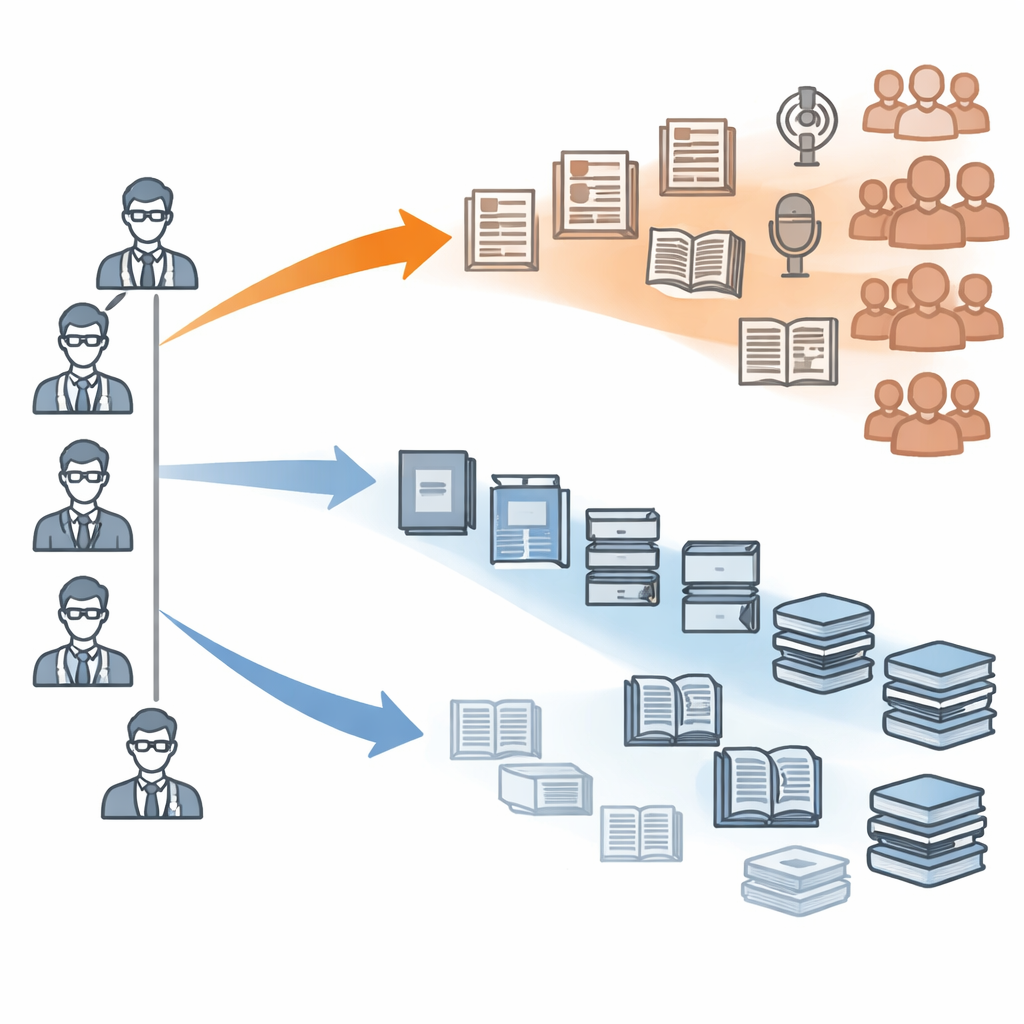
Rethinking what counts as expertise
For readers, the main takeaway is that “expert” voices in a fast-moving crisis do not always come from the same people who later write the detailed studies. Under the pressure and uncertainty of COVID-19, sociologists often spoke publicly before formal research could catch up, and some seem to have developed their insights mainly in the public arena rather than through standard academic channels. The authors argue that this post-crisis reality calls for a more nuanced view of expertise—one that recognizes both the value and the risks of rapid public commentary, and that pays attention to how different forms of sociological work, public and academic, can complement rather than ignore each other in future emergencies.
Citation: Tönsfeuerborn, T., Hauck, K., Volle, J. et al. Navigating the two worlds of academic and public communication: the case of sociologists in Germany during the COVID-19 pandemic. Humanit Soc Sci Commun 13, 355 (2026). https://doi.org/10.1057/s41599-026-07033-1
Keywords: science communication, sociology, COVID-19, expertise, media and academia