Clear Sky Science · en
Observed changes in social-emotional and moral development following creative drama activities in primary school children
Why Playacting Matters for Growing Minds
Many adults remember school as a place of tests and textbooks, but the friendships, hurts, and little acts of kindness may have shaped them just as much. This study looks at a simple question with big implications: can guided playacting—known as creative drama—help primary school children become more understanding, better at handling feelings, and fairer in their everyday lives? By following a small group of children through a short drama program, the research explores how pretending together can nurture the “soft skills” that support lifelong well‑being.
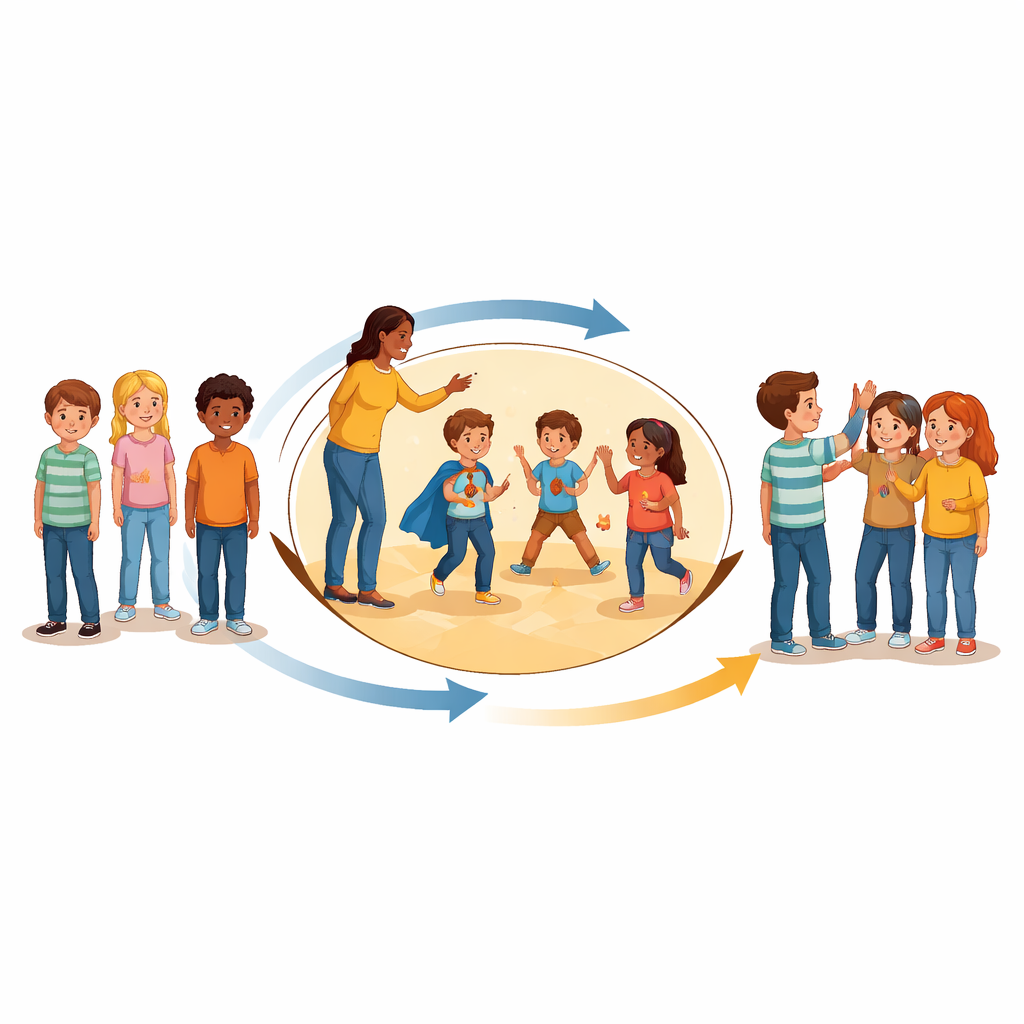
From Quiet Feelings to Everyday Skills
Social and emotional skills are often invisible. They include knowing how you feel, calming yourself when upset, reading others’ emotions, and working out disagreements. Moral development adds another layer: learning what is fair, why honesty matters, and how our choices affect other people. These abilities shape how children join in at school, build friendships, and handle challenges. When they are neglected, children may struggle with behavior, learning, or loneliness. The study argues that schools should care about these inner abilities as much as reading and math, and that creative drama offers a natural way to practice them.
Turning the Classroom into a Safe Stage
Creative drama is not about polished performances or costumes; it is about small groups of children exploring imagined situations together. In this project, 15 volunteers aged 8 to 11 took part in a 20‑hour drama program over ten days at a university children’s library. Guided by a facilitator, they acted out everyday scenes and simple dilemmas—such as sharing, following rules, or noticing someone’s feelings—using role‑playing, improvisation, and switching perspectives. The goal was to create a safe space where children could try out different roles, express emotions freely, and see how others might think or feel, all without fear of getting it “wrong.”
Measuring Changes Beyond the Stage
To find out whether these playful sessions made a difference, the researcher used a questionnaire that asks about behaviors like helping, honesty, self‑control, and respect at home and at school. Children filled it in before and after the drama program. On average, their scores rose sharply after the sessions, and their answers became more similar to one another, suggesting that the group as a whole moved toward stronger social‑emotional and moral skills. Interviews added color to the numbers: children said they felt happier and freer, learned to be more patient, understood the importance of helping others, and became more aware of their friends’ and family members’ feelings and rights.
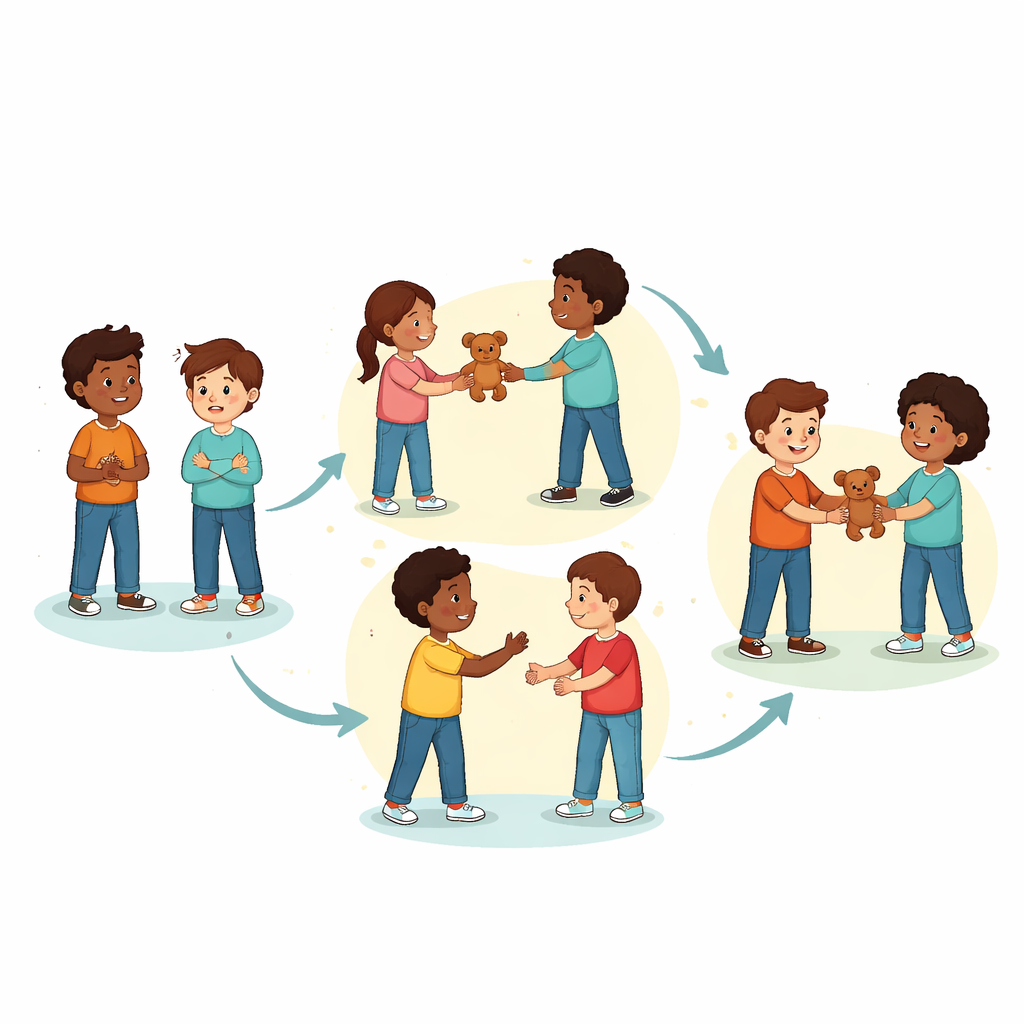
Same Play, Similar Benefits for Girls and Boys
The study also asked whether boys and girls benefited differently. The overall gains in social and moral scores were similar for both, suggesting that creative drama can be an inclusive tool in mixed classrooms. When researchers looked more closely at age and grade, they saw hints that children at different school levels might respond in slightly different ways, and that the mix of boys and girls in a class could shape group dynamics. This points to the value of adapting activities to children’s developmental stage, while keeping the core elements of active participation, perspective‑taking, and emotional reflection.
What These Findings Mean for Schools and Families
Although the study involved only a small group and lacked a comparison class, the results suggest that a short, low‑cost drama program can help children become calmer, kinder, and more aware of fairness in daily life. Children themselves reported that they were more likely to share, obey rules, listen to family members, and value their friends after the activities. For teachers and parents, the message is straightforward: giving children structured chances to “try on” other people’s shoes through imaginative play is more than entertainment. It is a practical way to strengthen the emotional and moral foundations they need to grow into caring, responsible adults.
Citation: Cam Turkan, C. Observed changes in social-emotional and moral development following creative drama activities in primary school children. Humanit Soc Sci Commun 13, 308 (2026). https://doi.org/10.1057/s41599-026-06983-w
Keywords: creative drama, social-emotional learning, moral development, primary education, empathy in children