Clear Sky Science · en
Why do electoral systems change? Accounting for parties, institutions and voters: evidence from the deviant case of Italy
Why voting rules keep changing
When we think about elections, we usually picture parties, leaders, and campaign slogans. But behind every vote lies a set of rules that quietly decides how ballots turn into seats and who really wins power. This article uses the unusual story of Italy to show that changing those rules is not just a game played by politicians. Instead, it is the result of a tug-of-war among parties, ordinary citizens, and powerful institutions such as courts and technocratic governments.
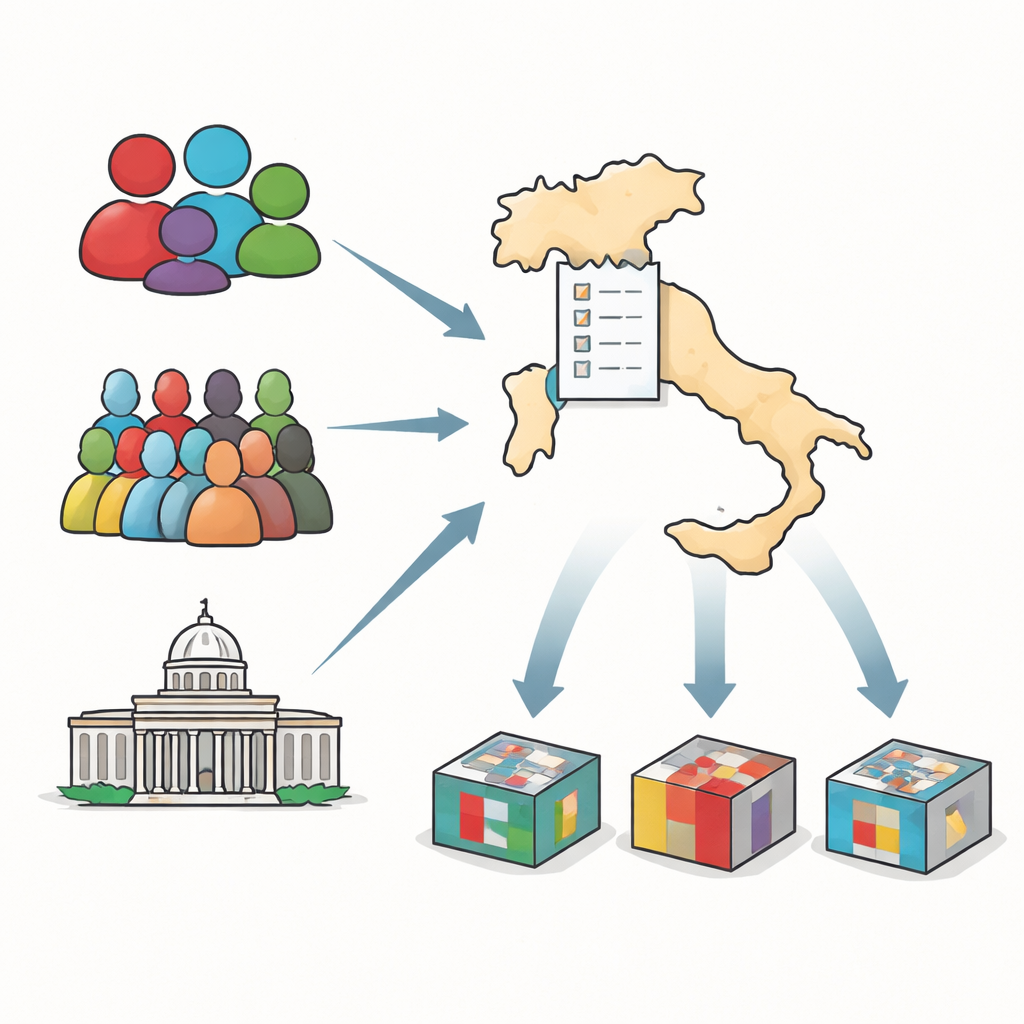
When simple explanations fall short
Many classic theories claim that parties redesign electoral rules mainly to suit their own strength. In simple terms, when politics narrows to two big blocs, parties tend to prefer winner-takes-most rules; when many parties compete, they lean toward systems that share seats more evenly. Italy, however, defies this logic. Over just twenty-five years, the country shifted three times between different voting systems—purely proportional, heavily majoritarian, and various “mixed” formulas—without these changes lining up neatly with the number of parties. This mismatch makes Italy a useful test case: if party-centered theories cannot explain its path, something important is missing.
Three kinds of players shaping the rules
The article argues that electoral rules change through the combined actions of three sets of actors. Political parties naturally try to redesign the system in ways that protect or expand their seats, especially when new parties emerge or old ones crumble. Voters, however, are not passive. Through referendums, protest, and changing support for parties, they can demand clearer winners, punish self-serving reforms, or push back against rules seen as unfair. Finally, institutions—above all the Constitutional Court and occasional technocratic cabinets—act as referees. They can strike down extreme reforms, steer change toward compromise, or serve as catalysts in times of crisis.
Italy’s waves of reform
The first major shift came in the early 1990s, when sweeping corruption scandals shattered the old party system. Enraged citizens backed referendums that called for more decisive outcomes, while judges exposed wrongdoing and a technocratic government stepped in. The result was a mixed-majoritarian system introduced in 1993, designed to produce clearer governments without fully abandoning proportionality. A decade later, under a dominant right‑wing leader, reform followed a different script. Party elites, worried about strategic loopholes in the existing rules, pushed through a new law in 2005 that looked proportional on paper but granted a big seat bonus to whichever party or coalition came first—an elite-driven change with little direct citizen input.
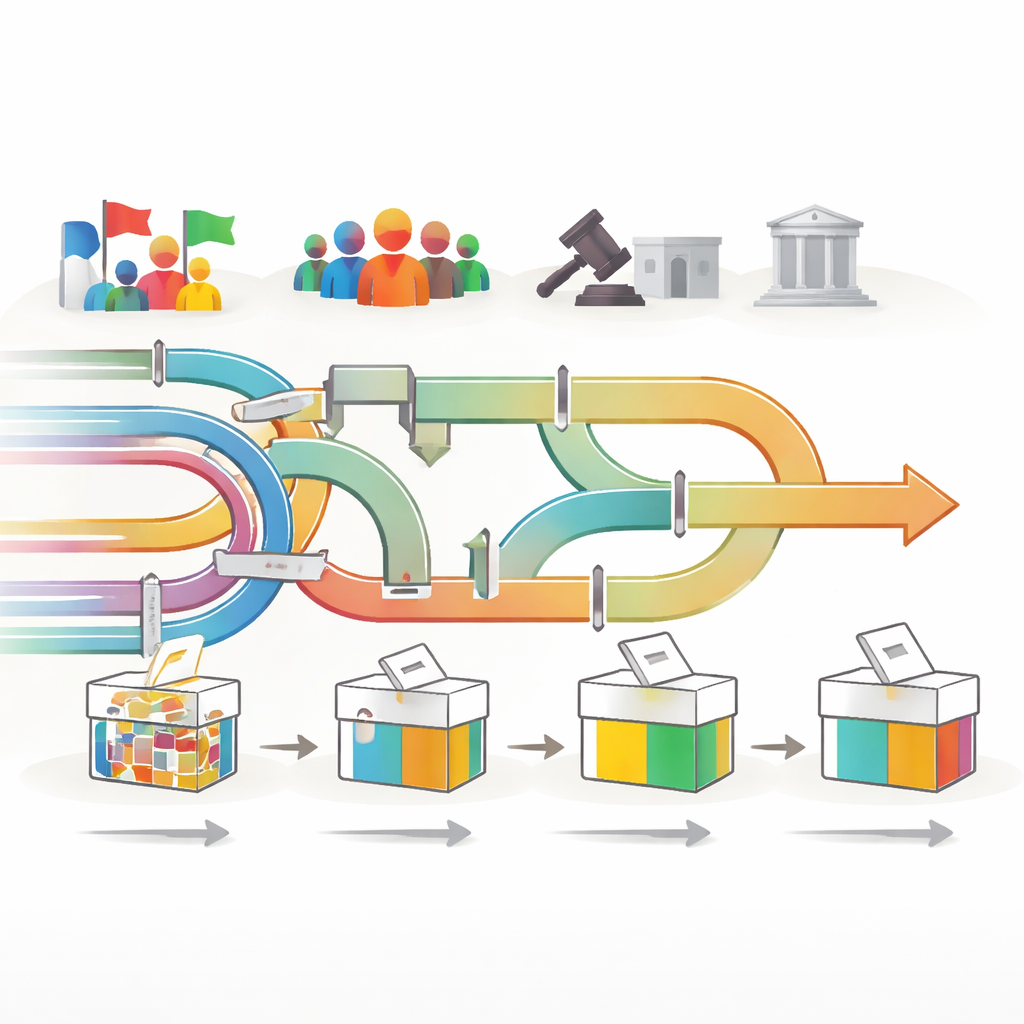
Courts, protest, and the drift toward mixed systems
The 2005 law eventually backfired. It sharpened polarization, helped fuel the rise of new challengers such as the Five Star Movement, and was later partly struck down as unconstitutional because it distorted representation and denied voters the chance to choose individual candidates. Court rulings, combined with public discontent and the growth of new parties, forced another round of bargaining. No side could impose either a fully proportional or a strongly majoritarian system that would survive both judicial review and public scrutiny. The outcome in 2017 was yet another mixed formula, blending district races with proportional lists and reflecting a fragile balance between competition, legitimacy, and legal limits.
What this teaches us about democracy
In plain terms, the article shows that changing electoral rules is rarely a simple choice between “fair sharing” and “strong government.” In Italy, parties do try to tilt the field, but citizens and institutions constantly push back, narrowing what is politically and constitutionally possible. This push-and-pull has made pure systems—either fully proportional or fully majoritarian—unlikely futures. Instead, hybrid arrangements keep returning as the only workable middle ground. The Italian case suggests that in modern democracies, lasting electoral rules emerge not from one actor’s preferences, but from uneasy compromises among parties seeking advantage, voters demanding fairness, and institutions guarding the basic rules of the game.
Citation: Di Biagio, A. Why do electoral systems change? Accounting for parties, institutions and voters: evidence from the deviant case of Italy. Humanit Soc Sci Commun 13, 329 (2026). https://doi.org/10.1057/s41599-026-06937-2
Keywords: electoral reform, Italian politics, voting systems, party competition, constitutional courts