Clear Sky Science · en
Sustained attention in learning: what can Hollywood cinema teach us about the design of educational videos?
Why Movies Matter for Online Learning
Anyone who has ever zoned out during a long online lecture knows that watching an educational video is not the same as watching a gripping movie. This article asks a simple but powerful question: if Hollywood has spent more than a century learning how to hold our attention and guide our eyes, can those same tricks help teachers make better learning videos? By looking at research on how people understand films and combining it with findings from educational psychology, the authors outline practical ways to design videos that are both engaging and genuinely helpful for learning. 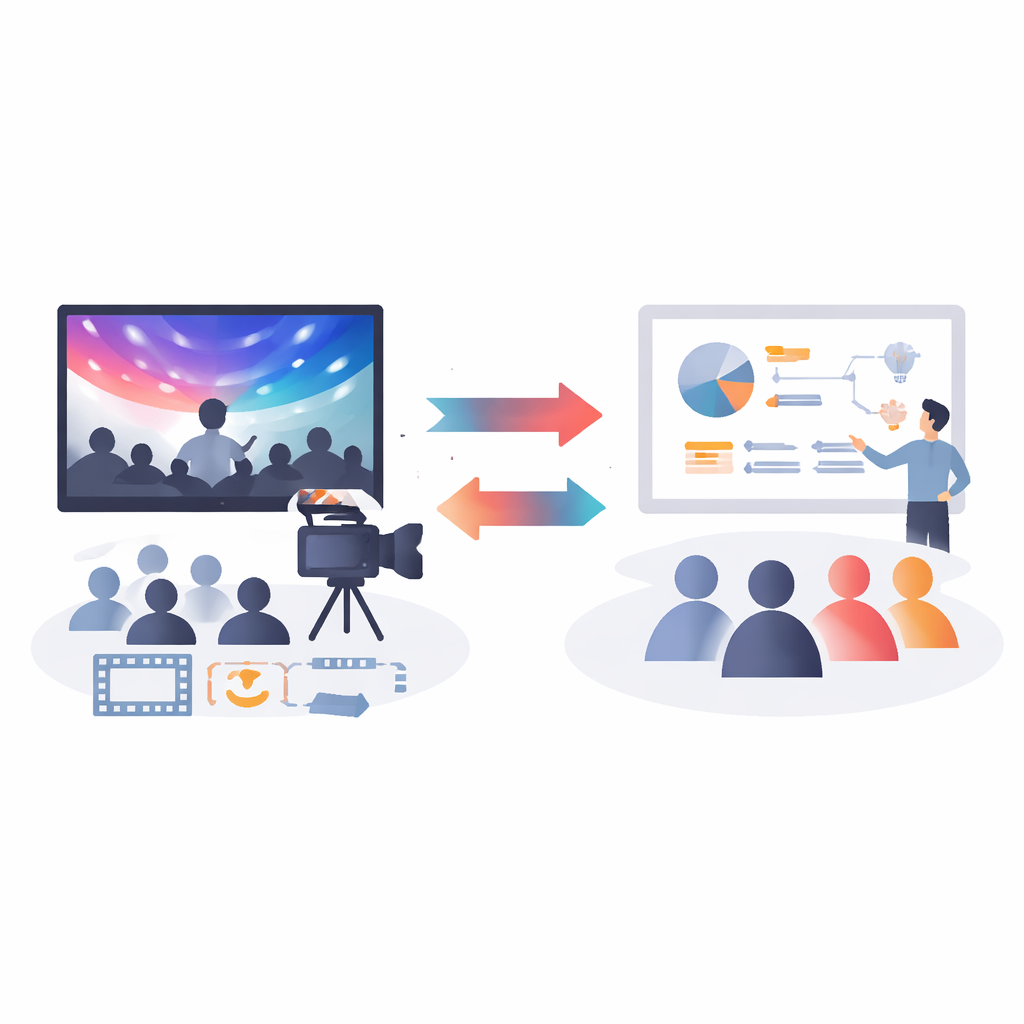
From the Cinema to the Classroom Screen
The authors start by noting that educational videos exploded in use during the COVID-19 pandemic, but their design still leans mostly on classroom-based learning theories. At the same time, film researchers have carefully studied how viewers follow fast-cut, visually complex Hollywood movies without getting lost. Both movies and lessons face similar challenges: information flows quickly, pictures and spoken words must be processed together, and attention easily drifts. The paper argues that these shared problems make film research a rich, largely untapped source of ideas for improving educational video design.
Keeping Eyes and Minds on Track
One major theme is attention. Studies show that people often lose focus after just a few minutes of online video, and their minds wander even if the video keeps playing. Hollywood confronts this by carefully controlling shot length, brightness, motion, and cuts. Shorter shots and changes at meaningful moments help pull viewers back in and mark natural “events” in the story. Educational research has similar ideas under names like “segmenting” and “signaling,” which recommend breaking material into small chunks and highlighting key information. The authors suggest that teachers can borrow film-inspired techniques—such as adjusting shot length to match difficulty, using subtle changes in contrast or movement to draw the eye, and respecting stable screen directions—to make lessons easier to follow without cluttering the screen with arrows and labels. 
Using People on Screen to Spark Connection
Another focus is the social side of learning. Many instructional videos now include a visible instructor, based on the belief that eye contact, gestures, and facial expressions foster a sense of connection and deeper thinking. Research results are mixed: sometimes an on-screen teacher helps retention; other times the face distracts from important diagrams. Film studies help clarify when and how these social cues work best. Techniques such as close-ups, deliberate gaze direction, and camera perspective are used in movies to make viewers feel close to characters or to see through their eyes. Applied thoughtfully, similar techniques in educational videos—like an instructor briefly looking into the camera to “address” learners, pointing or looking at crucial parts of a graphic, or switching to a first-person view for hands-on tasks—can guide attention and create a warm sense of presence without overwhelming the visuals.
Stories, Feelings, and Familiar Faces
The paper also highlights the role of storytelling and ongoing relationships with on-screen figures. Narratives in documentaries and films help people organize events in time, understand cause and effect, and remember key details. When educational videos wrap abstract ideas inside short, well-chosen stories that directly support the content, they can boost both interest and memory. Meanwhile, film and media research on “parasocial” relationships—one-sided bonds viewers feel with familiar characters—suggests that repeatedly seeing the same instructor over a course may build trust and motivation. The authors caution that social elements must be balanced with clarity: a giant talking head that covers important diagrams, or energetic but irrelevant anecdotes, can actually harm learning.
What This Means for Better Learning Videos
In everyday terms, the article concludes that good educational videos should feel as carefully crafted as a solid movie scene, but with learning—not entertainment—as the main goal. Simple film-style choices can make a big difference: keep camera positions consistent so viewers do not get disoriented, pace cuts to match how hard the material is, use gentle visual changes to point to what matters, and let instructors use gaze, gestures, and occasional close-ups to connect with students. The authors also call for shared libraries of example videos and raw footage so researchers and teachers can build on each other’s work. By blending Hollywood’s know-how about attention and emotion with established learning principles, educators can design videos that are both captivating to watch and effective for understanding.
Citation: Candan Şimşek, A., Merkt, M., Sondermann, C. et al. Sustained attention in learning: what can Hollywood cinema teach us about the design of educational videos?. Humanit Soc Sci Commun 13, 300 (2026). https://doi.org/10.1057/s41599-026-06917-6
Keywords: educational videos, film techniques, online learning, student engagement, multimedia learning