Clear Sky Science · en
An innovative non-formal learning model based on nature and science: content, pedagogy and continuous professional development
Learning Beyond the Classroom Walls
Many of us remember school as rows of desks, thick textbooks, and long lectures. Yet some of our most vivid learning memories come from outside—turning over rocks, visiting museums, or camping under the stars. This article explores a new way of organizing such experiences, called nature and science-based out-of-school learning environments. The authors ask a simple but powerful question: how can we turn everyday encounters with nature and community spaces into a systematic, high-quality part of education for both students and teachers?
Why Nature Matters for Growing Minds
Researchers have steadily shown that being outdoors does far more than offer a break from class. Time in forests, gardens, parks, and other open spaces helps children notice patterns in the world, ask their own questions, and connect school subjects to everyday life. Compared with traditional lessons that lean heavily on memorization, nature-based activities improve curiosity, memory, and problem-solving, while also supporting emotional well-being and social skills. Students who frequently explore outside are more likely to care about the environment and act to protect it, suggesting that early experiences in nature can shape attitudes for life.
What Counts as Learning Outside School
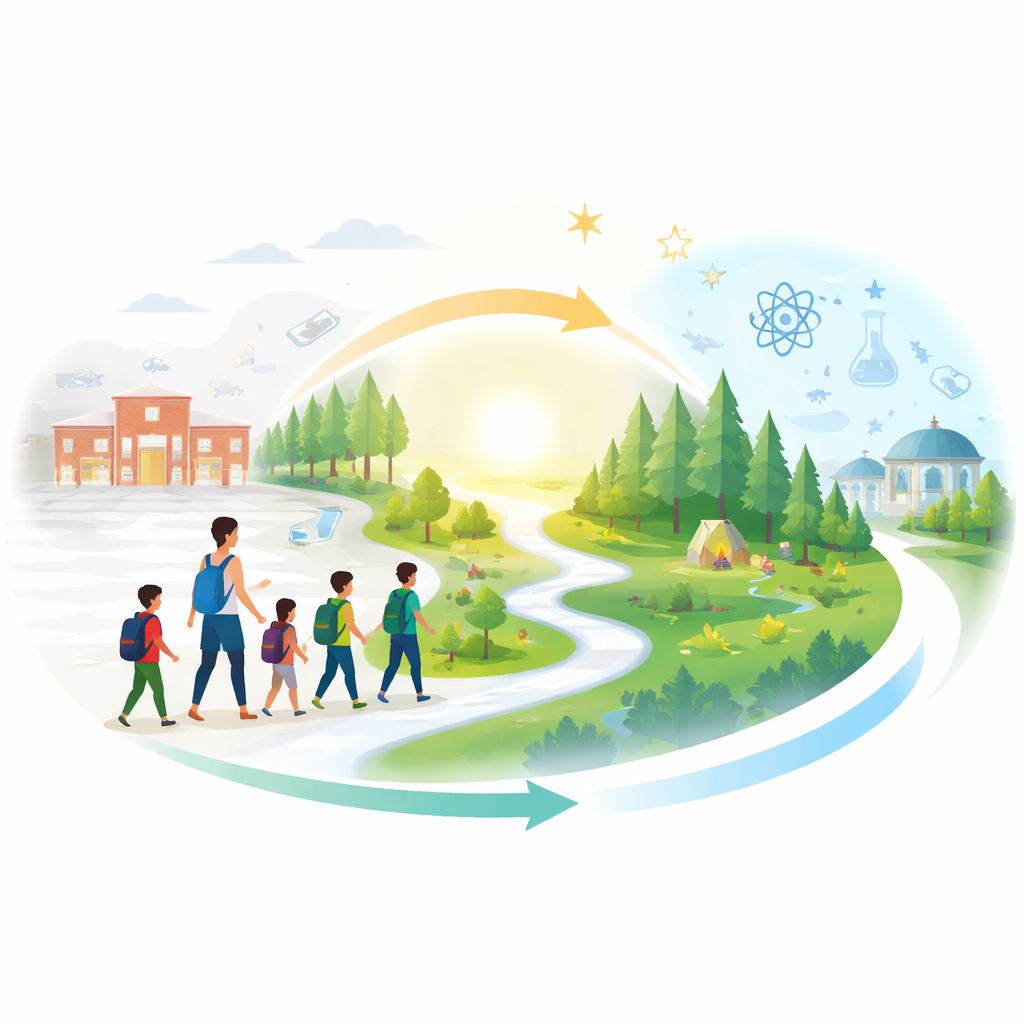
Out-of-school learning is not limited to field trips a few times a year. In the model described here—shortened to NaSOSLE—it covers after-school clubs, weekend and summer programs, visits to nature reserves, science and history museums, botanical gardens, rivers, and even carefully designed digital spaces. What unites these places is that learning happens through doing: observing, experimenting, playing, and discussing with others. Experts involved in the study agreed that good programs are student-centered, give children freedom to explore, and complement what happens in regular classes rather than replace it.
Designing Rich Experiences: Content and Teaching
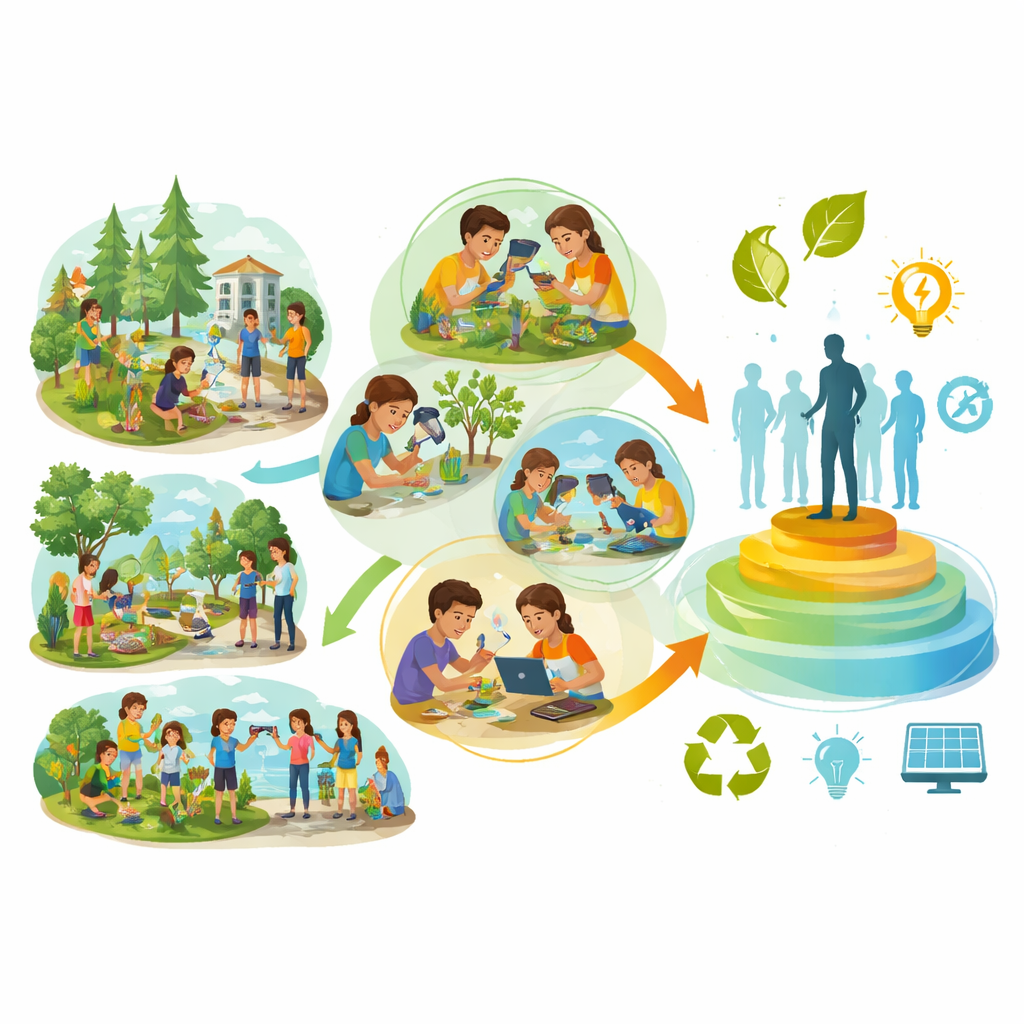
The authors worked with mentor teachers, educators, and academics to pin down what should be taught and how. They found strong agreement that content should revolve around real-world issues such as sustainability, pollution, energy use, recycling, and the relationships between people, technology, and nature. Lessons should weave together different school subjects instead of treating them separately. Equally important is the teaching style: successful activities rely on inquiry, hands-on projects, collaboration, games, storytelling, and time for reflection. Everyday objects in nature form the core materials, backed up by simple tools like magnifiers and microscopes, and—when helpful—carefully chosen digital devices.
Helping Teachers Grow Alongside Students
For outdoor programs to thrive, teachers need more than enthusiasm; they need support to plan, lead, and adapt activities in unfamiliar settings. The study highlights continuous professional development as a third pillar of the NaSOSLE framework. Well-designed training helps teachers practice managing groups outside, link activities to curriculum goals, and design “before-during-after” sequences that deepen learning. It also strengthens their professional identity, builds confidence to experiment with new methods, and encourages leadership beyond the classroom. New technologies such as augmented and virtual reality, mobile tools, and artificial intelligence can enrich these efforts, provided they enhance rather than distract from direct experiences with the natural world.
Reimagining School as a Larger Learning World
By systematically collecting and comparing expert opinions, the authors arrive at a clear conclusion: nature and science-based out-of-school environments are not an optional extra, but a central ingredient of modern education. When content focuses on real environmental and social challenges, teaching invites genuine exploration, and teachers continue to develop their skills, students gain stronger understanding, motivation, and care for the world around them. In simple terms, the article argues that learning works best when school spills outdoors—into parks, museums, and digital tools that connect back to living landscapes—so that children and educators learn together, not just about nature, but with it.
Citation: Kaya, V.H., Bulut, M.A. & Göçen, A. An innovative non-formal learning model based on nature and science: content, pedagogy and continuous professional development. Humanit Soc Sci Commun 13, 352 (2026). https://doi.org/10.1057/s41599-026-06823-x
Keywords: outdoor learning, nature-based education, science education, teacher professional development, non-formal learning