Clear Sky Science · en
Beyond words: emoji patterns in cross-cultural branding
Why Emojis Matter for Everyday Messages
From group chats to brand posts, emojis have become a shortcut for showing how we feel without typing long sentences. This article looks at what happens when global brands use emojis to talk to people in different cultures, focusing on Turkish- and English-speaking users on the social media platform X (formerly Twitter). The authors ask a simple but important question: are emojis really a universal language, or do their meanings shift with culture in ways that marketers need to understand?

How the Study Looked at Real Online Talk
To answer this, the researchers collected millions of brand posts and user replies from 33 major global brands—ranging from food and fashion to tech and finance—shared in Turkish and in English between 2016 and 2021. Instead of running small lab experiments, they watched how people actually behaved online over five years. They counted how often emojis appeared, how many different ones were used, which specific emojis were favorites, and how those emojis tended to sit next to emotion words such as those linked to happiness, anger, or sadness. This allowed them to compare not only which emojis people chose, but also what emotional “flavor” those emojis carried in each language context.
How Often and How Widely Emojis Are Used
The first finding concerns basic habits. Most posts in both languages did not use any emojis at all. But when brands did use emojis, they were more likely to include them in Turkish posts than in English posts. Turkish brand messages tended to add a single emoji as a light emotional touch, while English-speaking users, once they started using emojis, were more likely to string several together. When the team looked at diversity—the size of each group’s “emoji vocabulary”—English-language communication used a somewhat broader range of emojis overall. Yet over time, both Turkish and English streams showed a similar pattern: the variety of emojis slowly shrank, with users and brands leaning more and more on a smaller, shared set of symbols.
Shared Favorites but Different Feelings
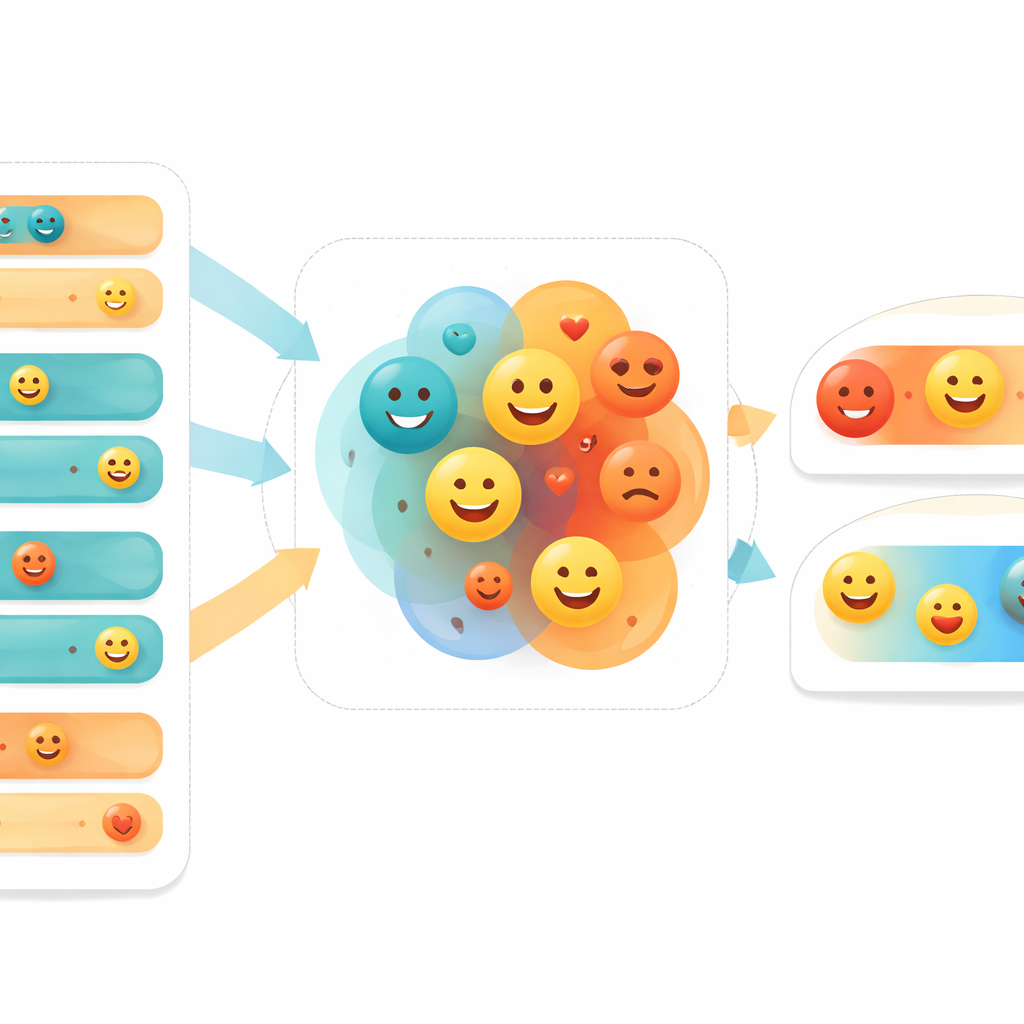
Next, the study examined which emojis were most popular and how similar those choices were across the two language groups. The most frequently used emojis—especially cheerful faces and heart-like shapes—turned out to overlap strongly between Turkish and English, and this overlap increased over time. Less common emojis, by contrast, looked more culture-specific. This suggests that a global “core set” of emojis is emerging for brand communication, even as the long tail of rarely used symbols remains more local and idiosyncratic. But similarity in choice did not mean similarity in meaning. By tracking which emotion words tended to appear with which emojis, the authors showed that many of the same symbols carried different emotional shadings across cultures, particularly for positive and neutral emojis.
What the Hidden Emotions Reveal
To probe those hidden differences, the researchers mapped each popular emoji onto six basic emotions—happiness, sadness, anger, fear, disgust, and surprise—based on which kinds of words it most often appeared alongside. They found that emojis linked to negative feelings, such as anger or sadness, behaved relatively similarly in Turkish and English posts: when people were upset, they tended to use the same “sad” or “angry” faces in fairly comparable ways. Positive and neutral emojis were another story. A heart or smiling face that looked warm and joyful in English contexts might show up in Turkish posts in more bittersweet or mixed emotional situations, sometimes sitting next to words tied to sadness or disgust. Seemingly playful or ambiguous emojis also shifted meaning more strongly between the two cultures, reflecting differences in humor, irony, and social norms.
What This Means for Brands and Everyday Users
Put together, the study argues that emojis form a “shared but culturally distinct” visual language. There is good evidence for a global core of popular emojis that brands can safely use across markets to signal basic friendliness or warmth. At the same time, the emotional nuances attached to those same symbols can differ widely, especially for positive and neutral feelings. For global brand managers, this means that simply copying an emoji strategy from one country to another can backfire if local audiences read the tone differently. The authors conclude that emojis are powerful tools for emotional branding—but to use them well, companies must pair global consistency with local cultural insight, treating emojis not as a one-size-fits-all alphabet, but as a flexible set of signals that need to be tuned to each audience.
Citation: Tanaltay, A., Ozturkcan, S. & Kasap, N. Beyond words: emoji patterns in cross-cultural branding. Humanit Soc Sci Commun 13, 299 (2026). https://doi.org/10.1057/s41599-026-06821-z
Keywords: emoji branding, cross-cultural marketing, social media communication, digital emotions, Turkish and English users