Clear Sky Science · en
Testing safe haven properties of digital and financial assets: wavelet coherence insights from G7 banking sector indices during crises
Why this matters for everyday savers
When the world is hit by a pandemic, a war, or the sudden failure of a big bank, ordinary savers are left wondering where their money is truly safe. This study looks at how familiar assets like gold and newer ones like Bitcoin and gold-backed cryptocurrencies behaved during three recent shocks: COVID‑19, the Russia–Ukraine war, and the collapse of Silicon Valley Bank (SVB). By tracking how these assets moved alongside major banking stock indexes from the G7 countries, the authors ask a simple question with big implications: which assets actually helped protect investors when banks were under stress?
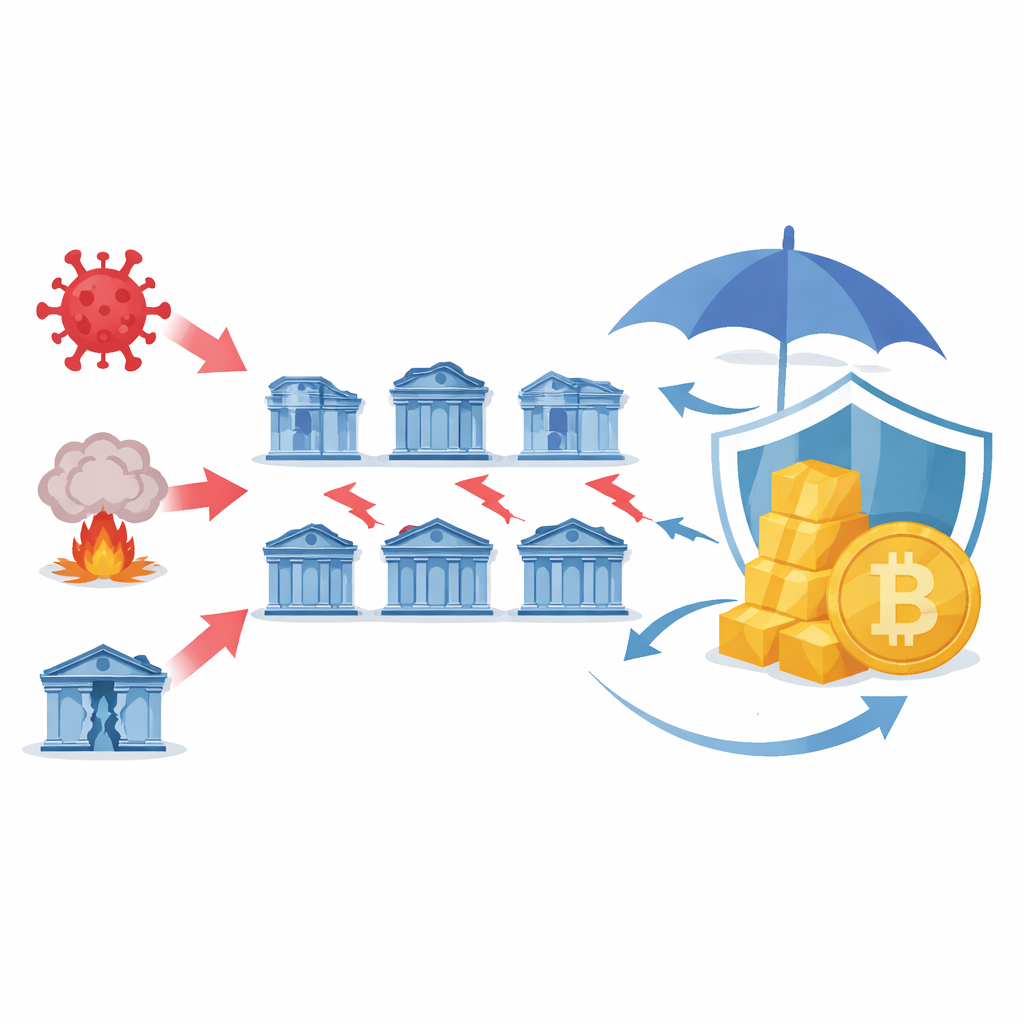
Banks under pressure in a turbulent world
Modern economies rely on banks to keep money flowing, from household savings to business loans. But banks are tightly linked to one another, so trouble in one can quickly spread across the system. Over the last few years, the G7 banking sector has been shaken by three very different shocks. The COVID‑19 pandemic disrupted economies worldwide. The Russia–Ukraine war unsettled markets and especially hit European banks with ties to the region. Then came the SVB collapse in 2023, which sparked fears of a wider banking crisis and triggered sharp falls in U.S. and European bank shares. These events created a real-world laboratory to see which assets investors could turn to as refuges from banking turmoil.
Old safe choices and new digital shelters
Traditionally, investors seeking safety have turned to gold, which has a long history as a store of value in uncertain times. In the past decade, however, digital assets have joined the mix. Bitcoin, the first major cryptocurrency, is appealing because it is decentralized and not issued by any government or bank. Even newer are gold‑backed cryptocurrencies, such as DGX and PAXG, which are digital tokens linked to physical gold held in reserve. In theory, these hybrids promise the stability of gold plus the flexibility of blockchain technology. The authors focus on how all four assets—gold, Bitcoin, DGX, and PAXG—moved in relation to bank stocks in the United States, Canada, the United Kingdom, Japan, France, Germany, and Italy.
How the authors read the market’s heartbeat
Rather than looking only at simple, fixed correlations, the study uses a technique called wavelet coherence to examine how relationships between assets change across both time and investment horizons. In plain terms, this method lets the authors see whether an asset moves with or against bank stocks, and whether that behavior is short‑lived or long‑lasting. If an asset tends to move in the opposite direction to banks during crises, it can act as a “safe haven,” softening losses. If it simply does not move very closely with banks, it may still serve as a “diversifier,” spreading risk but not necessarily rising when banks fall.
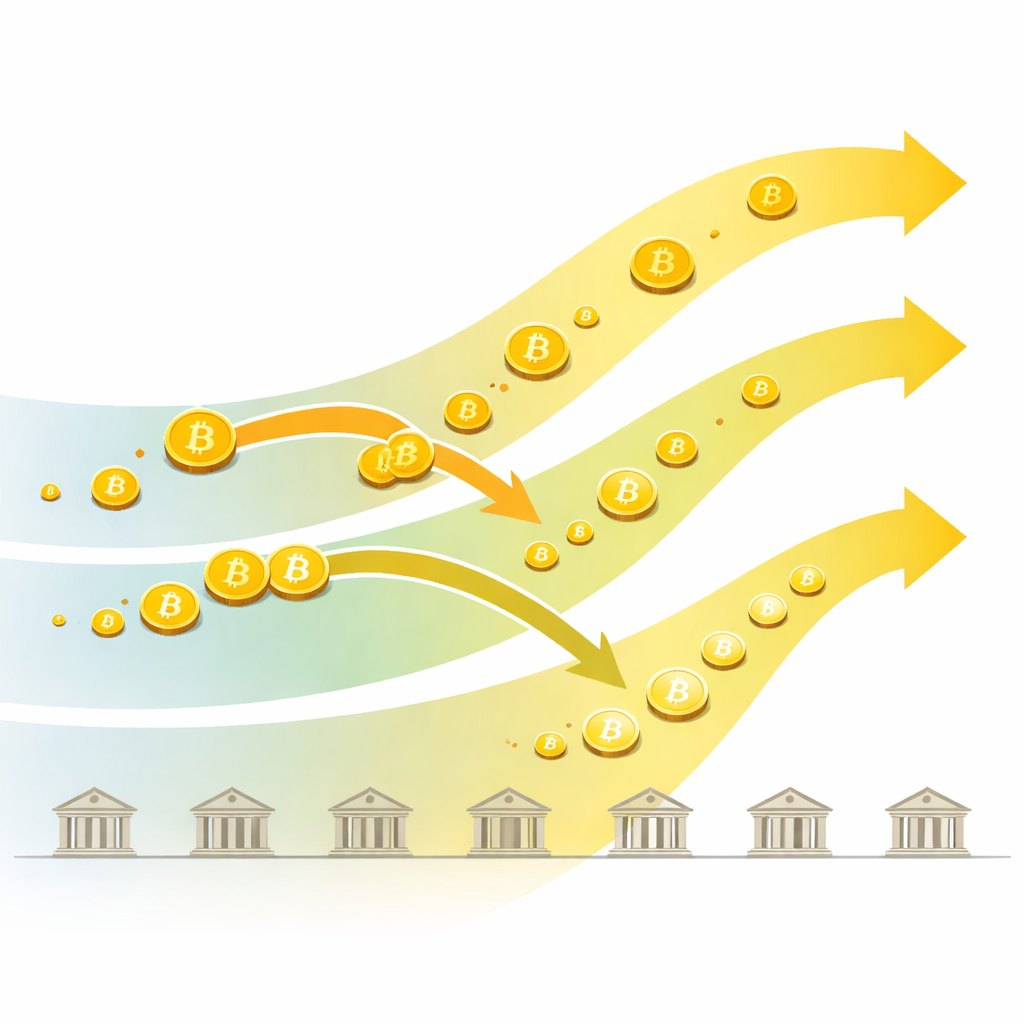
What happened when crises hit
The results paint a nuanced picture. Bitcoin mostly behaved as a short‑term diversifier: it often moved differently from G7 bank stocks, helping spread risk, but did not reliably rise when banks fell—except during the SVB collapse, when it showed clearer safe‑haven behavior, especially for U.S., U.K., and Canadian banks. Over longer periods, Bitcoin’s link to banking shares was too mixed to call it a steady shelter. Gold, by contrast, lived up to its reputation. It consistently offered strong protection during the SVB turmoil across all G7 banking sectors and showed a stable, long‑run defensive role, particularly for European banks, while still helping diversify portfolios. The gold‑backed tokens fell somewhere in between. DGX mainly acted as a diversifier during COVID‑19 and the Russia–Ukraine conflict but switched to a safe‑haven role during the SVB episode, especially for North American banks. PAXG stood out as the most reliable of the digital options: it behaved as a safe haven across all three crises and served as a long‑term shield for U.S. and Canadian banking stocks, while providing diversification elsewhere.
What this means for investors and policymakers
For non‑specialists, the message is that not all “safe” assets behave the same way, and their protective power depends on both the type of crisis and the time frame. Gold remains the most dependable long‑term refuge when banking systems are shaken. Bitcoin and gold‑backed tokens can still help, particularly for short‑term protection and during bank‑specific shocks like the SVB collapse, but they are less consistent over longer horizons. For investors building portfolios and for regulators concerned with financial stability, the study suggests that digital assets can complement, but not replace, traditional safe havens such as gold when the banking sector runs into trouble.
Citation: Snene Manzli, Y., Alsagr, N. & Jeribi, A. Testing safe haven properties of digital and financial assets: wavelet coherence insights from G7 banking sector indices during crises. Humanit Soc Sci Commun 13, 330 (2026). https://doi.org/10.1057/s41599-026-06775-2
Keywords: safe haven assets, banking crises, Bitcoin, gold, gold-backed cryptocurrencies