Clear Sky Science · en
A systematic literature review and mapping of human-robot interaction in educational contexts
Robots Joining the Classroom
Across the world, friendly-looking robots are starting to appear in classrooms, language labs, and even therapy rooms. This article looks at what actually happens when students learn side by side with these machines: Do robots really help children learn better, feel more motivated, or connect more with others? By pulling together ten years of research from many countries, the authors give readers a clear picture of how social robots are being used in education today, what they seem to be good at, and where important questions remain.
Where and How Robots Are Being Used
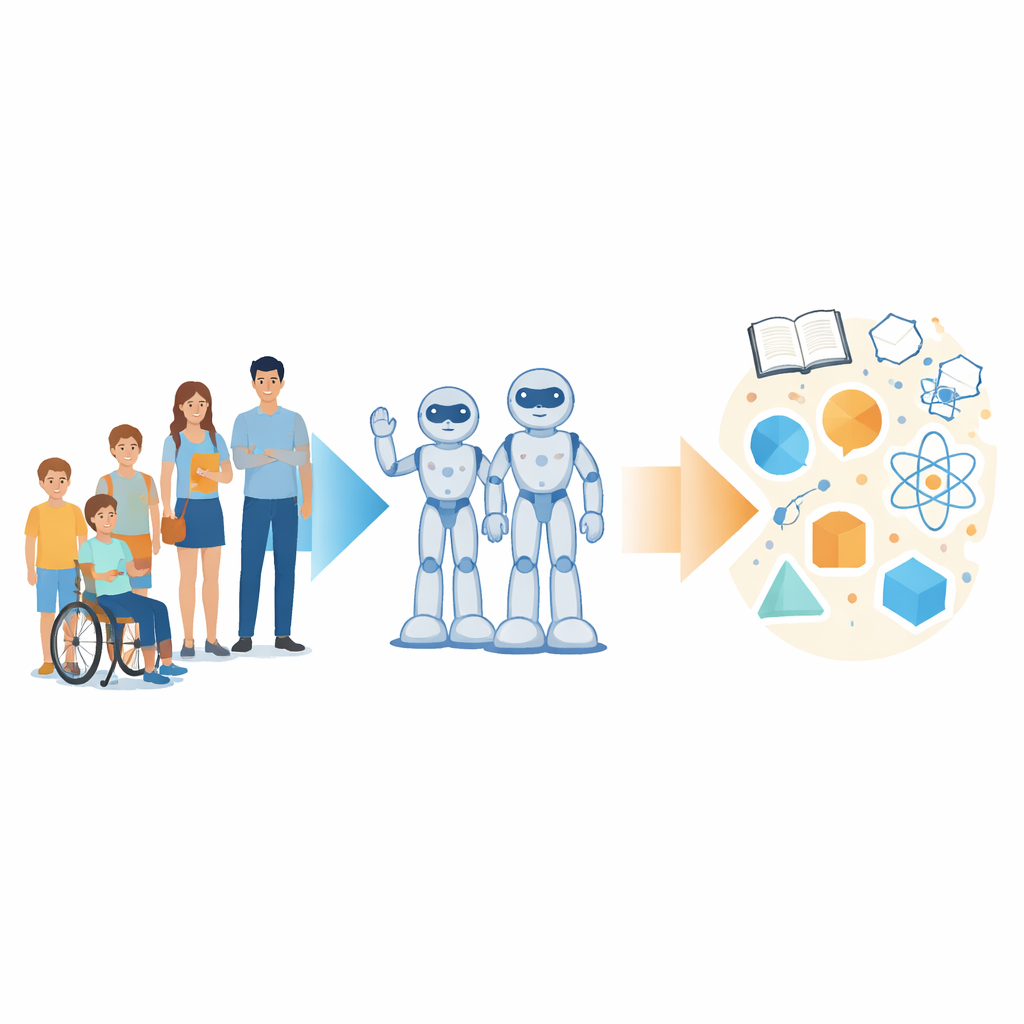
The review examined 28 detailed studies published between 2014 and 2024. Most came from the United States, but work was also carried out in Europe, Asia, and other regions, showing that interest in classroom robots is global. Researchers have tried robots with preschoolers, primary and secondary students, university students, and learners with special needs. Much of this work has taken place in language and STEM (science, technology, engineering, and mathematics) lessons, where robots can lead simple activities, guide drills, or act as practice partners. A few common robot models, especially the small humanoid NAO, appear again and again because they are easy to program, can move and gesture, and are appealing to children.
The Many Hats Classroom Robots Can Wear
In these studies, robots rarely play just one part. Sometimes they act as full teachers, delivering short lessons, asking questions, or giving feedback. More often they serve as teaching assistants, standing beside a human teacher to demonstrate tasks, lead small groups, or keep children on track. Robots have also been used as learning tools, story tellers, game partners, guides, and even mediators who help children cooperate or resolve conflicts. In mathematics, for example, robots have quizzed students on number facts or guided them through puzzles. In language learning, they have practiced vocabulary and dialogue, using gestures and eye contact to hold children’s attention. For learners with autism or physical disabilities, carefully designed robot activities have encouraged communication, movement, and social play.
What Changes for Students
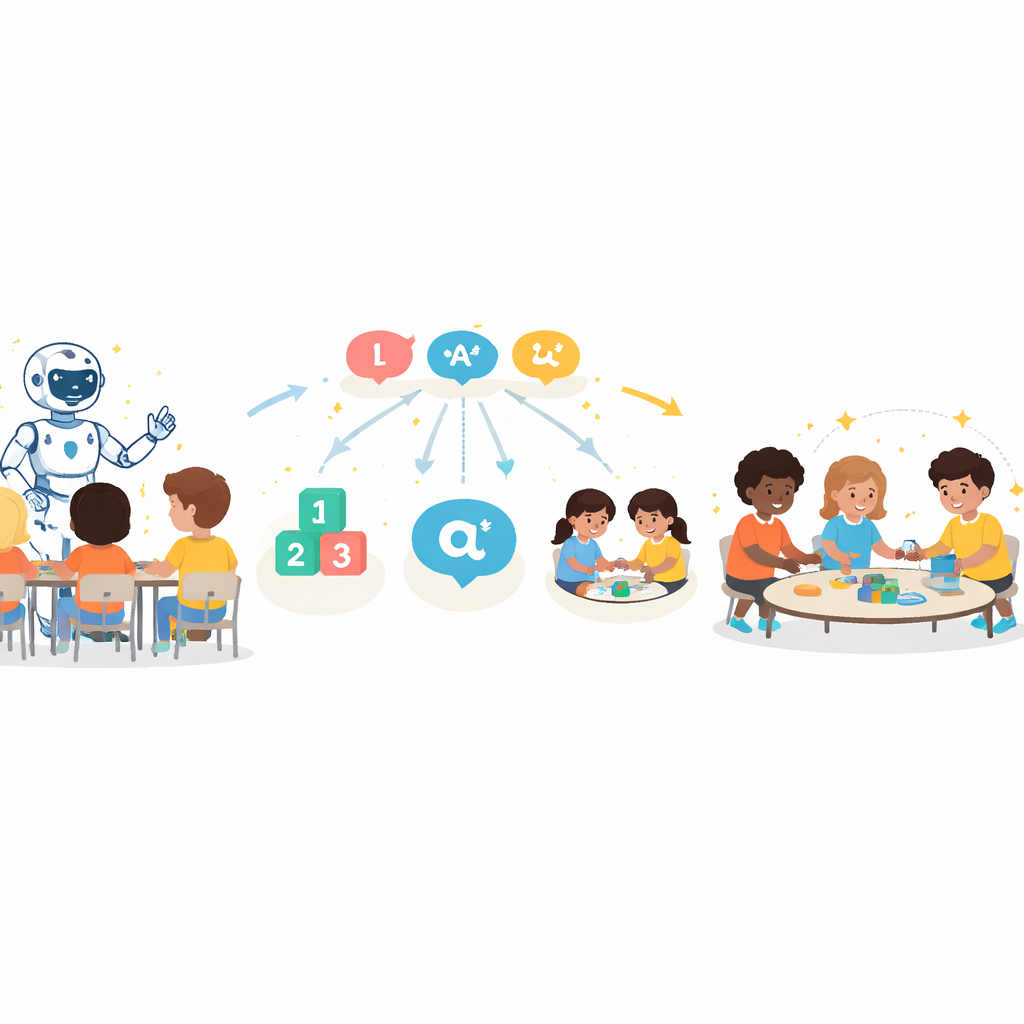
Across the studies, researchers tracked several main outcomes: academic performance, motivation, and social interaction. The most common finding is that, at least in the short term, robots can boost test scores or task performance, especially when lessons are tightly structured and repeated. Many students report feeling more interested and less anxious when a friendly robot is involved, which can draw shy children into class activities. Studies also note richer social behavior: children talk more, collaborate more, and sometimes use the robot as a safe bridge to interact with classmates. At the same time, results are not uniform. Most projects are small, run for only a few sessions, and do not follow students long enough to see whether benefits last or how relationships with robots might change over time.
Hidden Gaps and Ethical Questions
Despite the promise, the review uncovers important blind spots. Very few studies clearly explain the teaching ideas or learning theories behind their robot activities, making it hard to judge why certain designs work. Ethical issues are also often glossed over. Many robots record speech, movement, and emotional reactions, raising concerns about how children’s data are stored, who can access it, and how long it is kept. Some scholars warn that heavy reliance on robot companions could subtly affect how children develop empathy and handle human relationships, yet long-term studies on these risks are rare. The body of research is also skewed toward younger children and assistant-style roles, with less attention to older learners, varied school subjects, or comparisons with other types of technology.
What This Means for the Future of Learning
Overall, the article concludes that social robots can make learning more engaging and, in many cases, more effective—but only when they are thoughtfully designed and responsibly used. Robots seem best suited as supportive partners that encourage participation, personalize practice, and make abstract ideas more concrete, rather than as replacements for human teachers. To move beyond early trial runs, the authors argue that future work should involve educators from the start, anchor robot activities in sound teaching principles, run longer and larger studies, and follow strict, transparent rules for protecting children’s data and well-being. If these conditions are met, robots could become one more valuable tool in creating inclusive, responsive classrooms, especially for students who need extra support.
Citation: Tekerek, M., Beyazaslan, Z., Aydemir, H. et al. A systematic literature review and mapping of human-robot interaction in educational contexts. Humanit Soc Sci Commun 13, 336 (2026). https://doi.org/10.1057/s41599-026-06698-y
Keywords: educational robots, human-robot interaction, classroom technology, student engagement, social robotics