Clear Sky Science · en
How to understand: from the perspective of Marxism
Why This Question Still Matters
More than 150 years after Karl Marx wrote his most famous works, people around the world still turn to him to make sense of today’s economic and social troubles. But what does it really mean to “understand” Marx now, in a world of global supply chains, digital labor, and rapidly changing societies? This article argues that understanding Marx is not just about reading old books carefully. Instead, it is a living process shaped by history, language, and above all by what people actually do together in the real world. In this view, to understand is not only to think—it is already to act.
Words, History, and Shifting Meanings
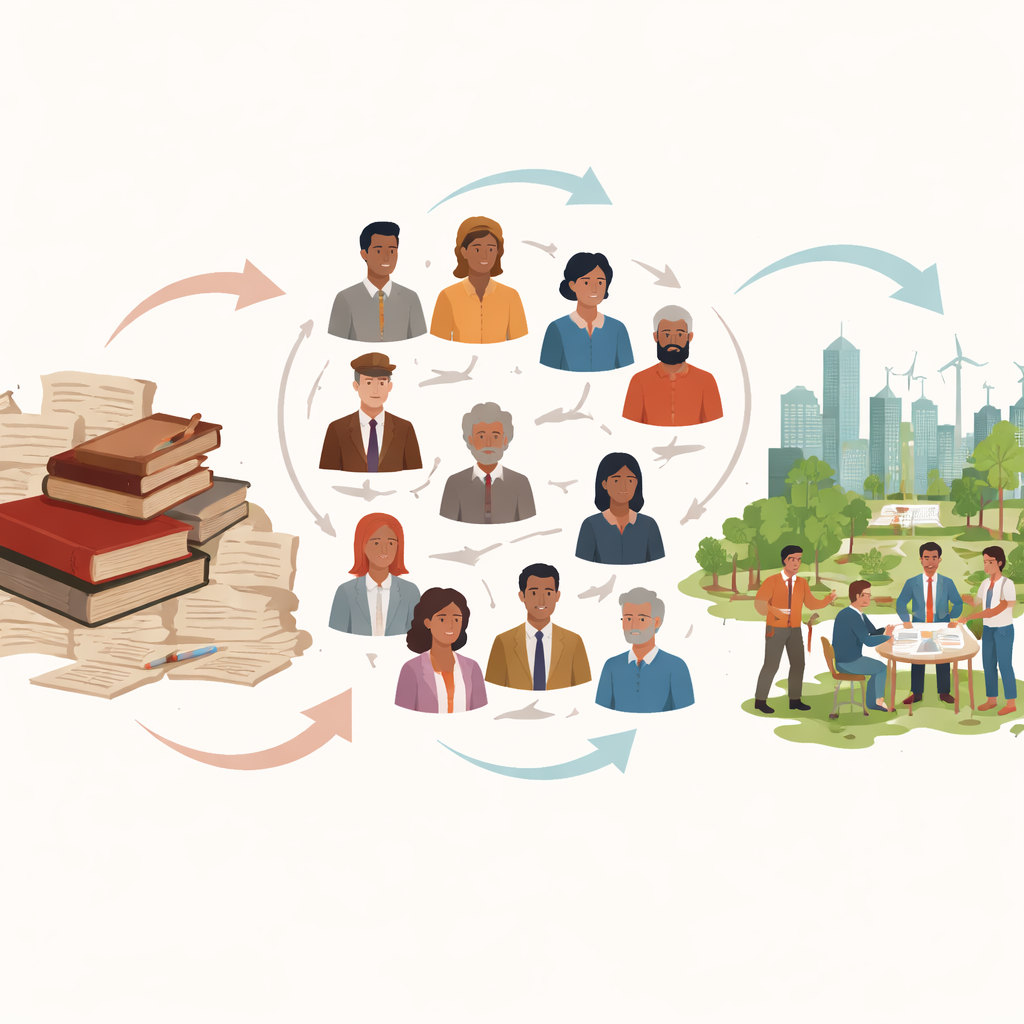
The article begins by examining a single difficult German word, Aufhebung, used by Marx and Hegel and fiercely debated by Chinese thinkers who translate Marx. The term can suggest abolishing, preserving, or lifting up, and its Chinese versions carry different political shades, from “elimination” to “sublation.” The author shows that these disputes are not just about dictionary accuracy. They reveal how each generation’s social conditions and political struggles reshape what key ideas are taken to mean. Translation becomes a window on a deeper problem: our understanding of Marx is always bound up with the realities we face here and now.
Language Is Not a Neutral Tool
From there, the paper explores how language itself grows out of work, technology, and daily life. Marx noted that as people produce things, they also produce new ways of speaking and thinking. Words never simply mirror the world; they highlight some aspects and hide others, depending on who is speaking and in what setting. This means that trying to grasp Marx’s ideas by chasing a perfectly faithful wording or by reconstructing his exact intentions will always fall short. The meaning of his concepts cannot be frozen in time. They have to be “reactivated” within today’s struggles and institutions, where new experiences give old terms fresh force or expose their limits.
Texts Meet a Changing World
The article then looks at the tension between Marx’s writings, rooted in 19th-century Europe, and readers living in very different societies, such as contemporary China. This gap is not simply a matter of education or effort; it grows out of different stages of economic development, class relations, and political life. As social conditions change—through revolutions, reforms, or the rise of new industries—people inevitably read Marx differently. Some emphasize certain passages, others build systems around single concepts, and still others turn his works into rigid dogma. The author warns that both blind loyalty to the text and loose, purely practical adaptation miss the point. Instead, we must constantly move back and forth between the books and the world, deepening our grasp of both.
Understanding as a Form of Practice
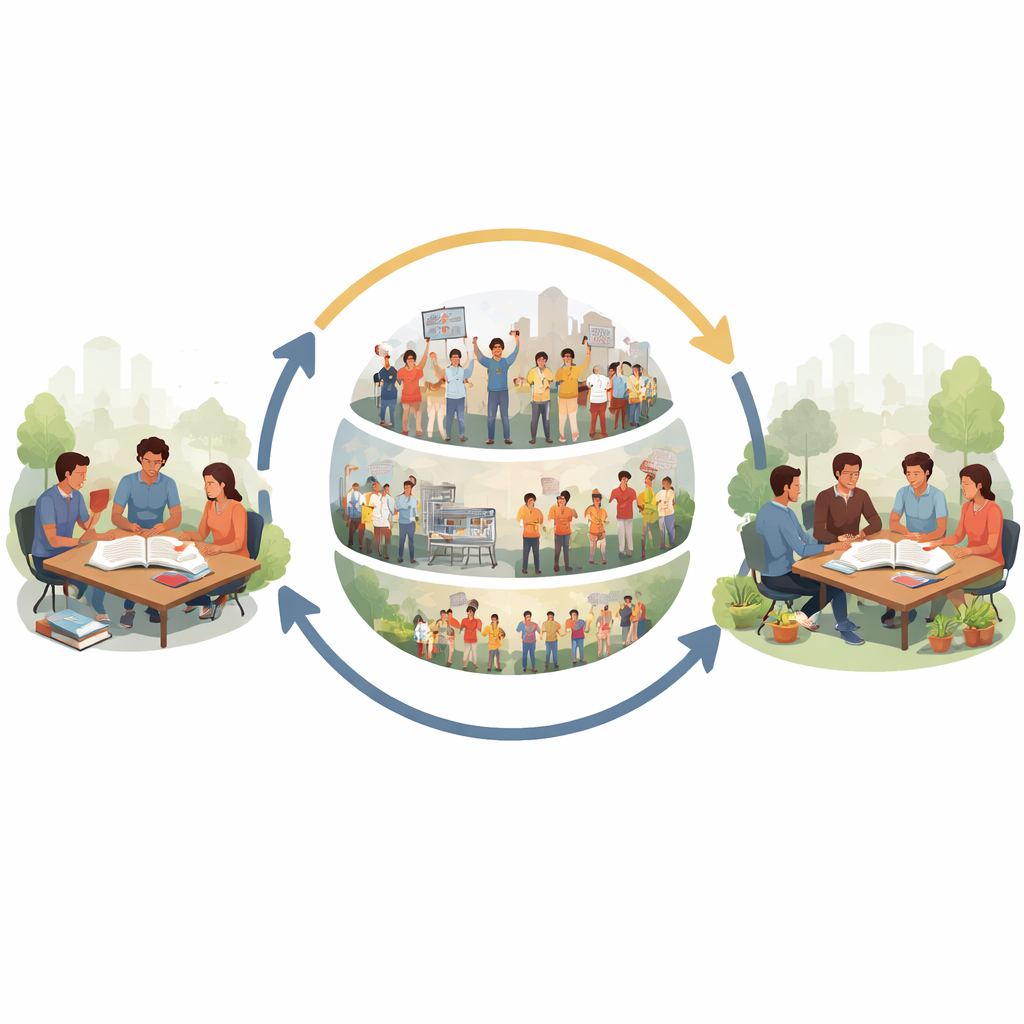
To show what this back-and-forth looks like, the article discusses two familiar approaches: close study of texts and empathetic “feeling into” the author’s world. Both, it argues, are forms of practice, not just mental exercises. Philology—careful work with words and contexts—ties us to the lives and struggles that shaped Marx’s language. Empathy asks us to shift our standpoint, especially toward the oppressed. But for Marxists, empathy only becomes genuine understanding when it is tested in collective action: organizing, debating, and experimenting with new social arrangements. In this sense, understanding is measured less by how closely our thoughts match Marx’s sentences and more by how our use of his ideas changes the realities we live in and the people we become.
From Reading to Changing the World
In conclusion, the article returns to Marx’s famous claim that the point is not only to interpret the world, but to change it. It argues that this does not reject interpretation; it redefines it. To understand Marx today is to recognize how language, history, and social conflict shape what his works can mean—and to let that recognition guide practical efforts toward a freer, more equal society. Concepts such as class, labor, and alienation are not museum pieces; they are tools that gain life only when put to work in real struggles. True understanding, the author suggests, does not end when we close the book. It begins when we carry what we have read into our workplaces, communities, and movements, turning reflection into shared action aimed at human emancipation.
Citation: Sun, Y. How to understand: from the perspective of Marxism. Humanit Soc Sci Commun 13, 335 (2026). https://doi.org/10.1057/s41599-026-06691-5
Keywords: Marxism, praxis, hermeneutics, social change, critical theory