Clear Sky Science · en
Gendered perspectives on digital skill stratification among manufacturing workers: implications for strategic human resource management
Why this matters for everyday workers
Factories around the world are quietly becoming more digital, with screens, sensors, and automated machines reshaping how products are made. This shift brings new chances for better jobs—but only for those who have the right skills. This article looks at who is actually getting those digital skills on the factory floor, and shows how men and women are being steered into very different kinds of work, with real consequences for pay, job security, and career paths.
How factories are going digital
In modern manufacturing, digital tools are now woven into nearly every step: machines are run by software, production lines are monitored in real time, and data are used to fine-tune processes. To keep up, workers need to do more than basic button-pressing. They must understand how equipment works, interpret digital readouts, and suggest improvements when things go wrong. The study focuses on factories in China’s Guangdong Province—one of the world’s largest manufacturing hubs—to see how this new demand for digital know-how is reshaping the workforce, and whether men and women are benefiting equally from the changes.
Four kinds of digital workers
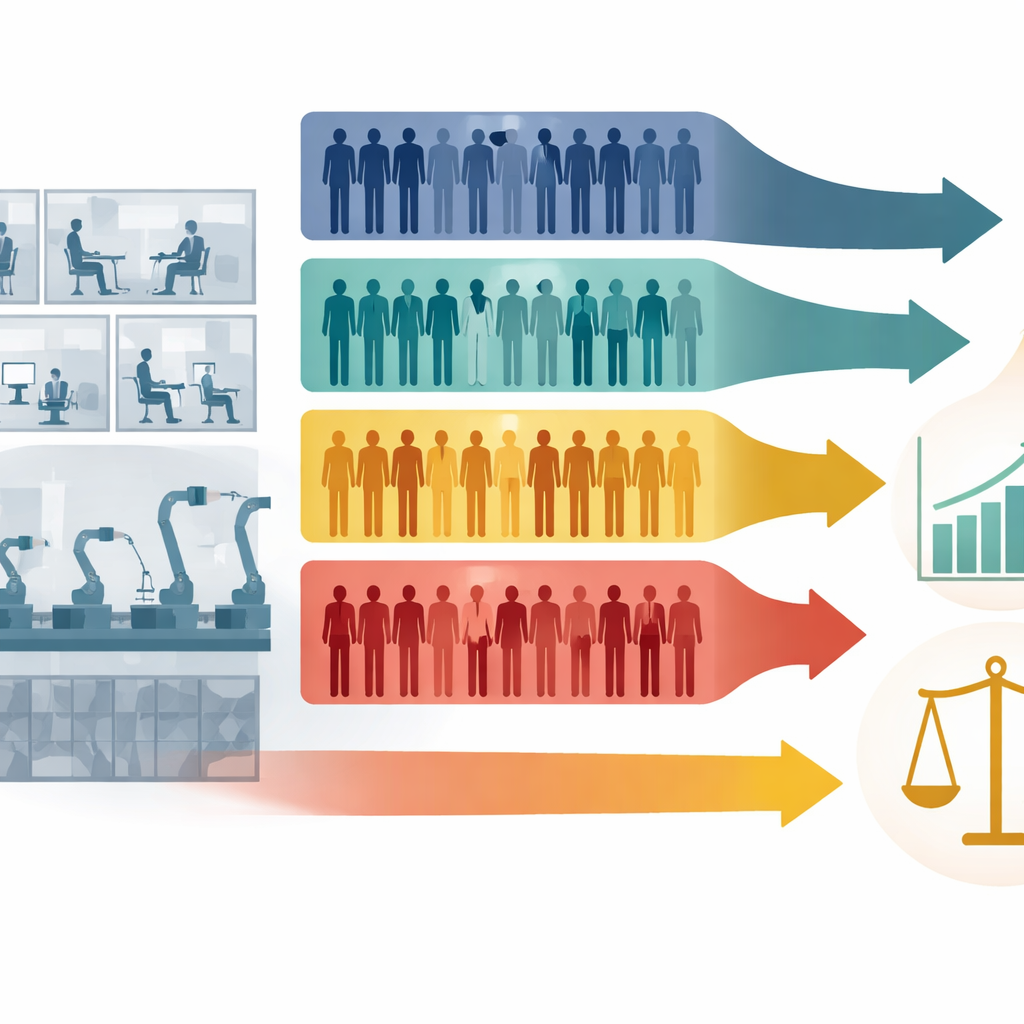
Using survey data from over 11,000 employees and nearly 900 factories, the authors grouped workers into four digital skill levels, based on what they actually do at work. One group combines strong understanding of the whole production process with hands-on ability to operate and fix digital equipment. Another excels at process coordination and management but has weaker equipment skills. A large middle group has moderate skills in both areas, while a final group has low digital skills overall and tends to handle routine support or basic administrative work. This four-part ladder paints a more realistic picture than simple labels like "skilled" versus "unskilled," showing how different types of digital know-how are stacked inside a single factory.
Where men and women end up
The study finds clear gender patterns across these four levels. Men are heavily concentrated in the top tier that combines strong process and equipment skills, and in mid-level operational jobs closely tied to machines and automation. Women appear more often in roles that rely on organizing, coordinating, and paperwork—management, sales, support, and clerical positions—and in the low-skill tier. These differences do not reflect innate ability; instead they mirror long-standing expectations about “men’s” technical work and “women’s” office work, as well as hiring and promotion practices that steer men toward machine rooms and women toward desks. As factories digitize, this sorting pattern quietly limits women’s exposure to advanced tools and on-the-job learning.
Tasks, training, and worries about being replaced
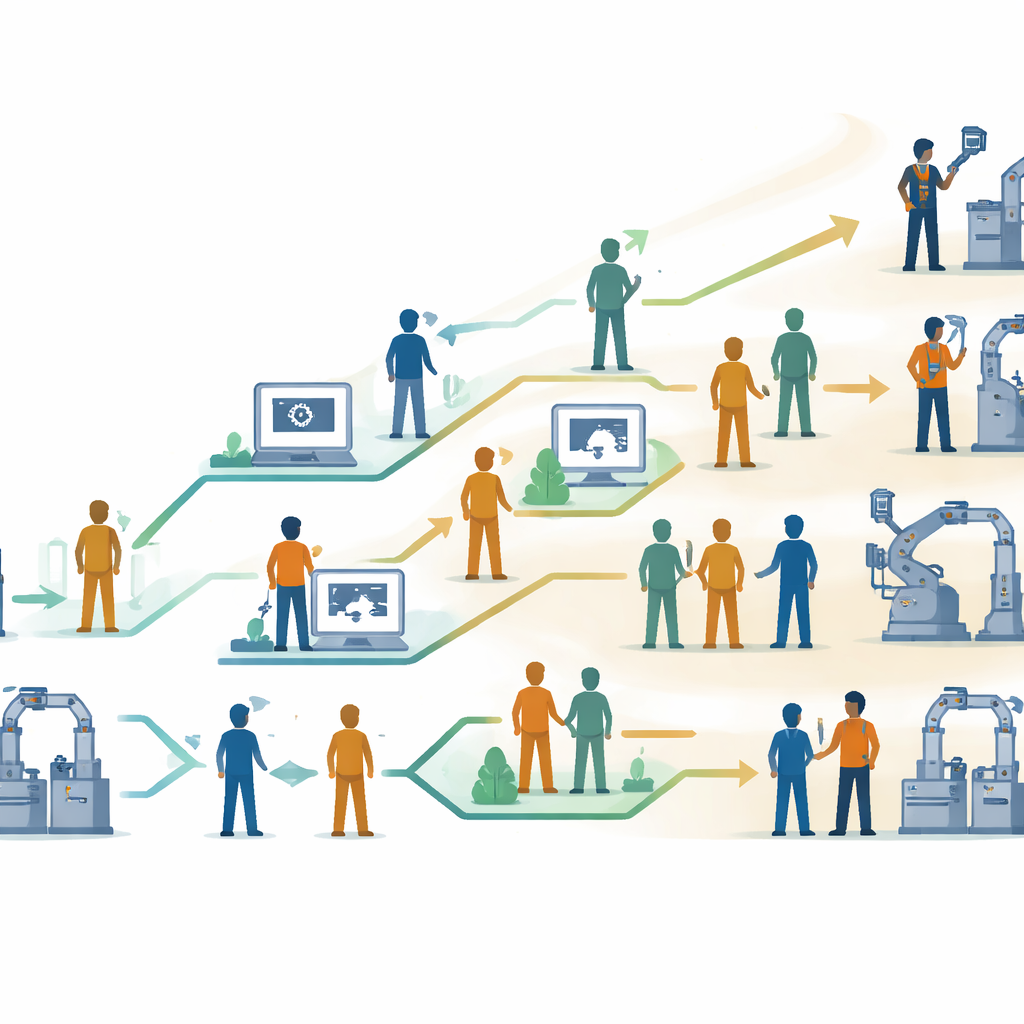
Not all factory jobs face the same risk from automation. The study introduces a measure of how “non-routine” a job is—how much it depends on problem-solving, creativity, and social interaction rather than repetitive steps. Workers in such non-routine roles are far more likely to be in higher digital skill groups, and less likely to fear being replaced by machines. Those clustered in low-skill, easily automated tasks—where women are overrepresented—are more anxious about losing their jobs to robots or software. Training plays a decisive role: workers who receive targeted instruction in automation, robotics, and computer tools are much more likely to climb into higher digital tiers, but access to these programs is uneven and often favors already advantaged groups.
What this means for companies
Interestingly, boosting the digital skills of already high-performing workers brings only modest gains for the company, because their contributions are close to “saturated.” By contrast, raising the skills of low- and mid-level workers can deliver large jumps in productivity, quality, and flexibility. Yet these same groups, which include many women, are the least likely to receive advanced digital training or be placed in high-value tasks. The study argues that firms miss a major opportunity when they overlook this “talent from below,” and that uneven access to digital roles can gradually push women out of the most desirable parts of the manufacturing workforce altogether.
Building fairer digital factories
For a general reader, the key message is that the digital future of manufacturing is not just about smarter machines—it is about who gets the chance to work with them. The article concludes that companies and policymakers can both improve fairness and strengthen competitiveness by opening up technical roles to more women, redesigning hiring and promotion to focus on skills rather than stereotypes, and offering transparent, role-specific digital training to all groups of workers. When women and men have equal access to learning, advanced equipment, and non-routine tasks, factories are better prepared for technological change and more likely to share the benefits of digital transformation across their entire workforce.
Citation: Zhang, L., Xu, J. Gendered perspectives on digital skill stratification among manufacturing workers: implications for strategic human resource management. Humanit Soc Sci Commun 13, 314 (2026). https://doi.org/10.1057/s41599-026-06686-2
Keywords: digital skills, manufacturing workers, gender inequality, automation, workforce training