Clear Sky Science · en
Supporting pre-service teachers’ TPACK development and technology integration in collaborative lesson planning
Why this matters for tomorrow's classrooms
As schools race to keep up with a digital world, it is not enough for future teachers to simply know how to use gadgets. They must learn how to blend subject knowledge, good teaching methods, and technology into lessons that truly help children learn. This study follows a group of graduate students training to become information and technology teachers in China, showing how structured teamwork on lesson planning can sharpen their ability to use digital tools wisely rather than just stylishly.
Learning to teach with more than just tools
The researchers focus on a widely used idea in teacher education called TPACK, which captures the mix of three kinds of knowledge: the subject being taught, the craft of teaching, and the technologies that can support learning. Many teacher programs offer a single technology course that shows how to use software, but leaves students unsure how to bring it into real classrooms. This study asks whether carefully guided, small-group lesson planning—combined with practice teaching in mock classrooms—can help pre-service teachers build this blended form of expertise and feel more ready to use digital tools in meaningful ways.
A semester of teamwork and practice
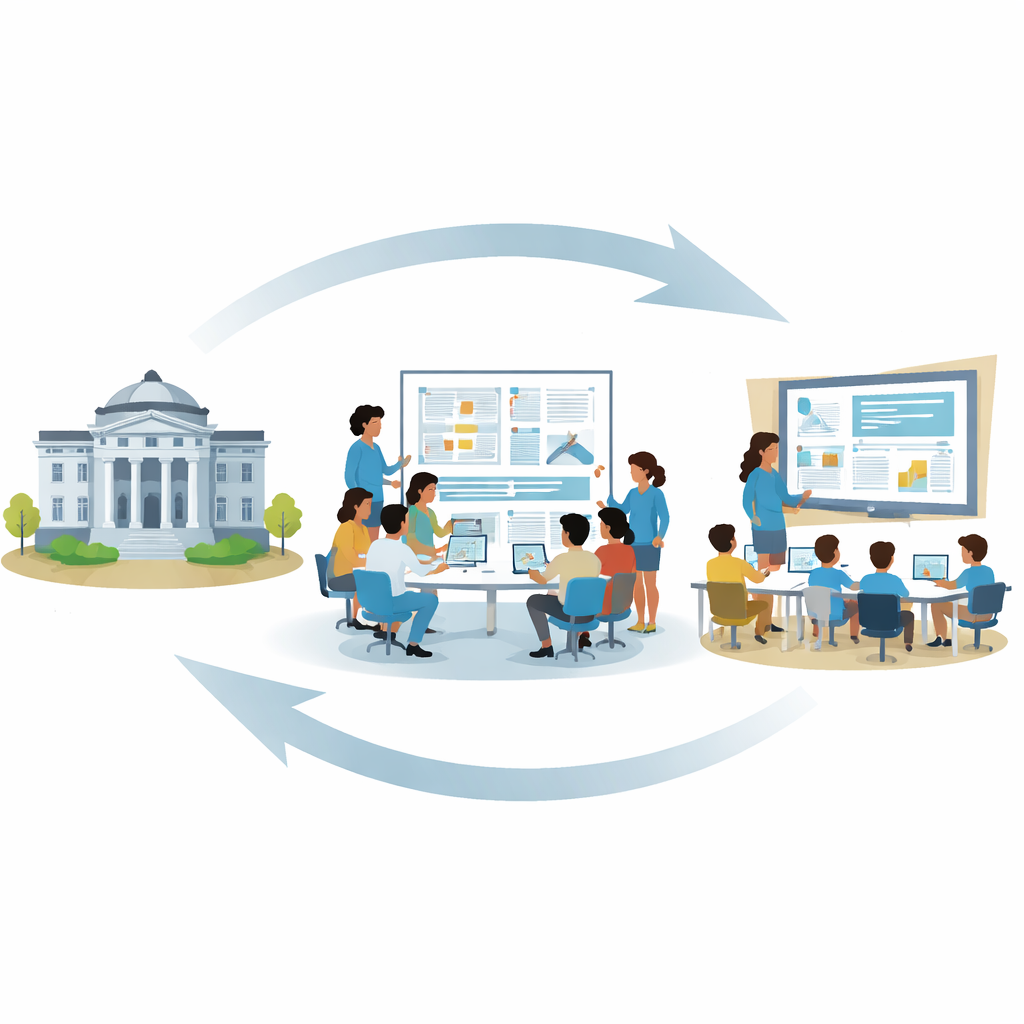
Twenty-four graduate students enrolled in a twelve-week teacher education course took part in the project. After six weeks of lectures on teaching methods and technology use, they spent six more weeks working in five small groups on what the authors call collaborative lesson planning. Each group met in a micro-teaching classroom, designed joint lesson plans, and took turns delivering short practice lessons while peers observed. An online "Co-Learning" platform and common apps such as messaging tools and shared documents helped them coordinate tasks, track progress, and discuss ideas even when they were not together in person.
Measuring change in confidence and know-how
To see how their abilities evolved, the students filled out a detailed questionnaire about their TPACK levels before and after the collaborative work, rating their confidence in things like choosing digital tools to match a topic, planning lessons, and adjusting instruction based on student responses. The results showed that, on average, scores in all seven TPACK areas rose significantly over the six-week planning cycle. Gains were especially strong in the technology-related parts, such as knowing which tools to use with which content and how to weave them into teaching strategies. While not every small group improved equally—partly because of the small numbers—the overall pattern pointed to richer, more integrated views of teaching with technology.
Using technology with purpose, not for show
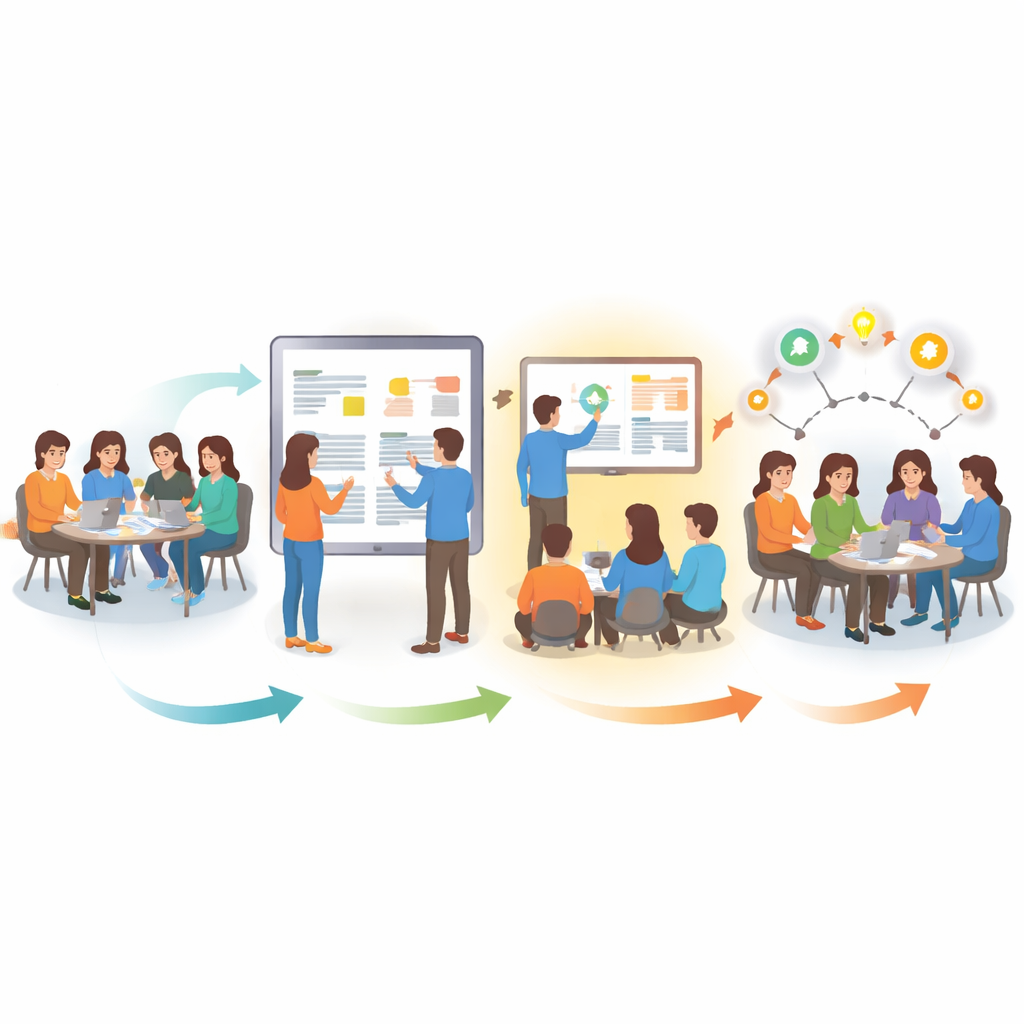
Beyond numbers, the researchers examined the groups’ written plans, teaching slides, and short interviews. The students chose a mix of everyday tools (whiteboards, shared documents, cameras) and more advanced options (flowchart apps, audio clips, cloud-based artificial intelligence platforms, and coding environments). Most groups deliberately limited the amount of technology in any single lesson, arguing that tools should make ideas clearer, boost students’ curiosity, and support interaction rather than dominate the class. They also identified real hurdles: avoiding over-reliance on flashy tools, dealing with technical glitches, and figuring out which digital resources fit multi-user, classroom settings. Their suggested fixes were down-to-earth—practice with tools in advance, share experiences with peers, and study concrete examples of good digital lessons.
What this means for training future teachers
In the end, the study shows that when pre-service teachers work together through a structured cycle of planning, practice teaching, and reflection, they do more than just learn to click through software menus. They begin to see how technology, content, and pedagogy fit together, and they learn to question whether a digital tool truly serves the lesson. Although the project took place in a well-equipped university with a small, fairly similar group of students, the findings suggest that teacher education programs everywhere can help future teachers by giving them guided, hands-on chances to co-design and rehearse technology-rich lessons. Such experiences appear to build both confidence and judgment—key ingredients for turning digital tools into real learning opportunities for students.
Citation: Guo, C., Mu, M., Chen, J. et al. Supporting pre-service teachers’ TPACK development and technology integration in collaborative lesson planning. Humanit Soc Sci Commun 13, 322 (2026). https://doi.org/10.1057/s41599-026-06679-1
Keywords: teacher education, technology integration, collaborative lesson planning, TPACK, digital classrooms