Clear Sky Science · en
Starlight or shadow? Gendered outcomes of star collaborations for independent non-star gig workers: evidence from the board game design industry
Why this study matters for today’s workers
The rise of the gig economy means millions of people now earn a living from short-term projects instead of traditional jobs. Many of these workers, especially women, turn to famous “star” freelancers for informal training and reputation-building. This study asks a deceptively simple question with big implications: when everyday gig workers team up with stars, does that collaboration ultimately boost or blunt their own success and originality once they strike out on their own?
Learning from stars in a new world of work
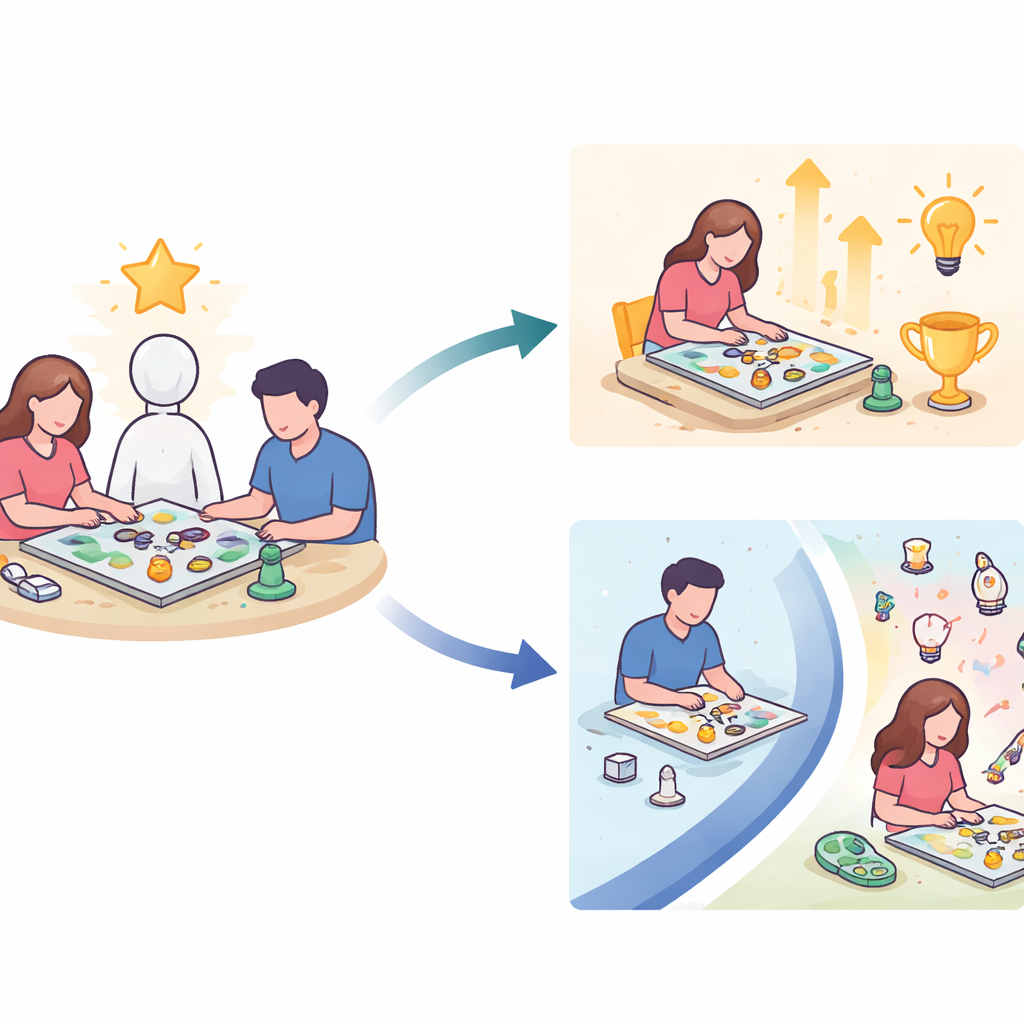
In standard jobs, companies offer training courses and career ladders. Gig workers, by contrast, usually have to teach themselves. One important route is to collaborate with star workers—people widely celebrated for exceptional quality and visibility. The authors argue that such partnerships are a powerful form of on-the-job learning. By working side-by-side with stars, non-stars can watch how experts plan projects, avoid mistakes, and keep quality high. This “up-close apprenticeship” may also be inspiring: seeing what top performers achieve can raise gig workers’ confidence in their own abilities.
A unique testbed: board game designers
To explore these ideas, the researchers turned to the global board game design community, a classic project-based gig market. Designers typically work game by game, often as freelancers, and are judged directly by players rather than bosses. Using data from BoardGameGeek, a major online hub, the team assembled records on 31,319 games created by 13,879 non-star designers between 2008 and 2023. They identified “star” designers as those who had won well-known industry awards, then traced whether non-star designers had previously co-created games with these stars before later releasing solo projects.
The study measured independent task performance through the platform’s community rating for each solo-designed game—a crowd-based score that reflects how enjoyable and well-crafted a game is. Creativity was captured by examining how much a game’s mechanics differed from other recent games in the same genre. In simple terms, a designer was judged more creative if they combined game mechanisms in ways that stood out from what the market had seen over the past five years.
Better-crafted work, but fewer bold ideas
The results reveal a double-edged pattern. Non-star gig workers who had more collaboration experience with stars later produced higher-rated solo games. Observing star routines helped them adopt reliable workflows and quality benchmarks, and the motivational boost of working with a star seemed to translate into better execution. However, those same experiences tended to narrow their creative choices. After working with stars, many non-stars appeared more inclined to stick to proven formulas, borrowing familiar approaches rather than experimenting with unusual mechanics. In a world where payoffs hinge on market acceptance, the safest path can easily become copying what already works, even when the setting allows for imaginative departures.
How gender changes the picture
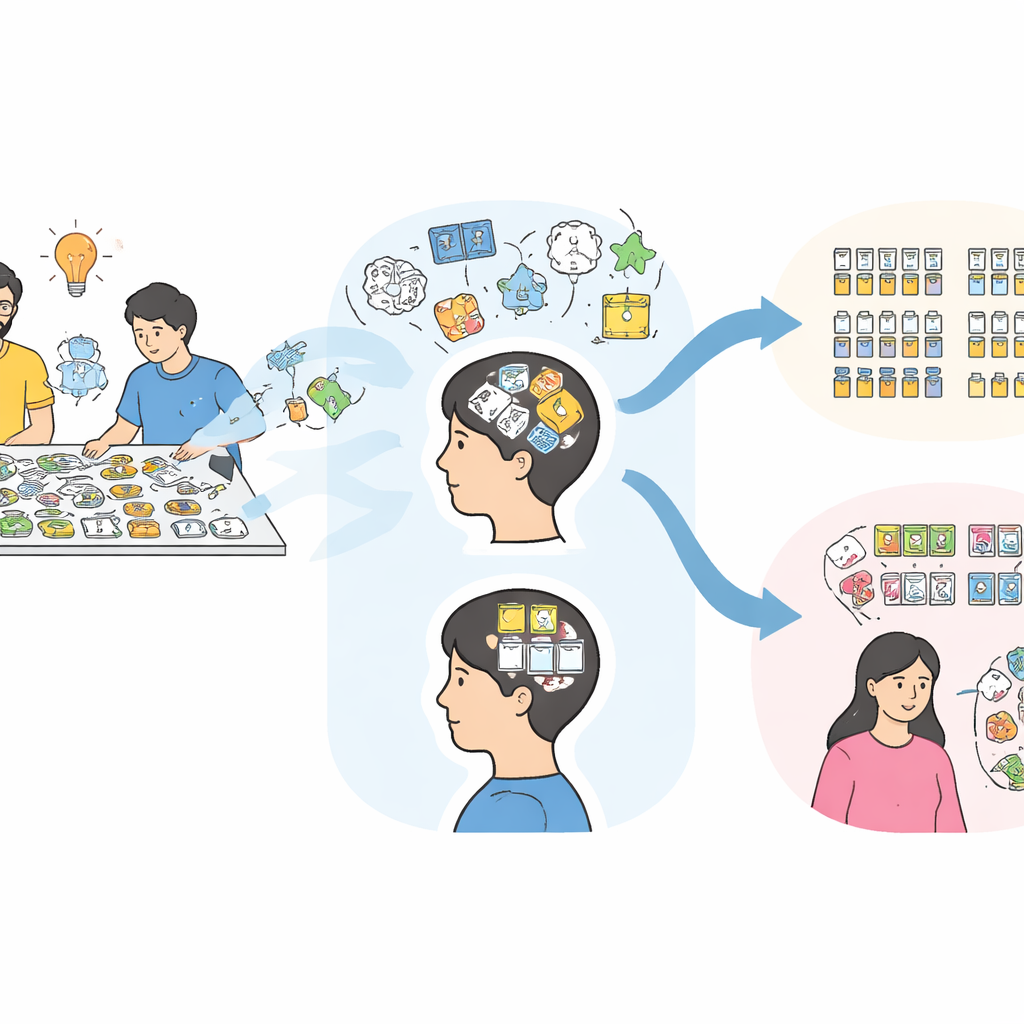
A striking twist emerged when the researchers compared women and men. Overall, female gig workers gained more from star collaborations. Women’s solo games showed stronger improvements in ratings than men’s after similar levels of star exposure. At the same time, women’s creativity was not significantly dampened by these collaborations, whereas men’s creativity clearly declined as their star experience grew. The authors link this to the structure of gig work: because evaluation is driven more by open markets and less by office politics and gendered expectations, women may feel freer to apply what they learn while still expressing their own ideas. Men, by contrast, may be more prone to treat star practices as fixed recipes for success and follow them more rigidly.
What this means for gig workers and platforms
For both researchers and practitioners, the study sends a nuanced message. Collaborating with stars is not a simple win-or-lose gamble; it is a trade-off. Non-star gig workers who partner with stars can markedly improve the quality and reliability of their later solo work, but they must guard against letting those experiences lock them into narrow creative grooves. The findings also highlight the gig economy as a space where women, often shut out of formal training elsewhere, can leverage star partnerships to close skill gaps without paying the usual price in lost creativity. For platforms and clients that depend on fresh ideas, supporting all gig workers—especially men who may be more vulnerable to “template thinking”—to keep experimenting after learning from stars could help preserve both excellence and originality in the fast-growing world of gig work.
Citation: Ma, M., Wu, T., Xu, S. et al. Starlight or shadow? Gendered outcomes of star collaborations for independent non-star gig workers: evidence from the board game design industry. Humanit Soc Sci Commun 13, 321 (2026). https://doi.org/10.1057/s41599-026-06672-8
Keywords: gig economy, star collaborators, board game design, gender differences, creativity