Clear Sky Science · en
Leveraging machine learning in a comparative analysis of rural revitalization policies in China and global best practices
Why Rural Policy Shapes Everyday Life
Whether we live in cities or countryside, we depend on rural areas for food, landscapes, and cultural roots. This study asks a timely question: how do different countries design rules and support systems to keep their villages alive and thriving? By comparing China with five wealthy nations and using computer analysis of policy texts, the authors reveal how styles of governing the countryside are tied to national wealth, history, and ideas about the roles of markets, governments, and local communities.
Looking at Villages Around the World
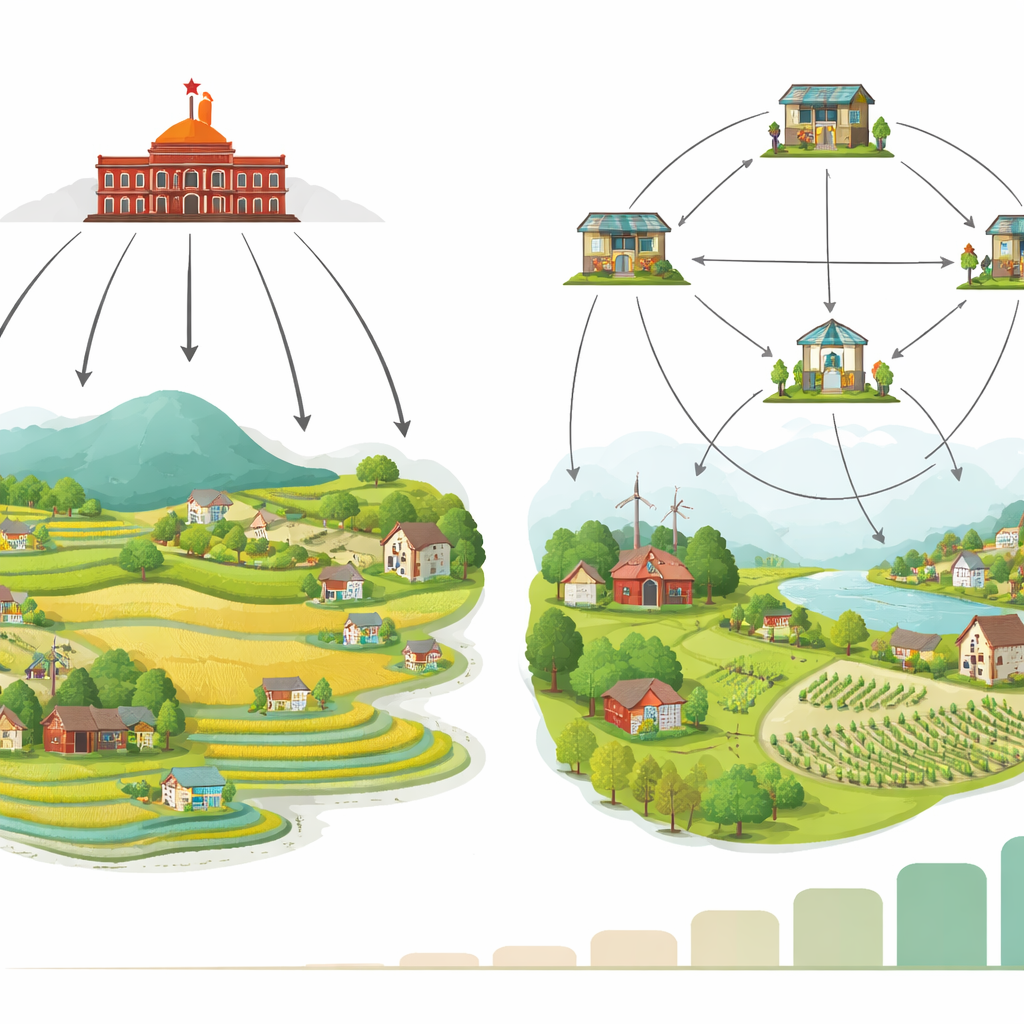
The authors start from a simple observation: rural places everywhere face similar pressures—aging and shrinking populations, changing industries, environmental strain, and tensions between tradition and modernization. China has made rural revitalization a national priority, but its problems echo those the United States, the United Kingdom, Japan, Germany, and South Korea faced earlier in their development. By setting these countries side by side, the study looks for patterns in how governments have tried to close the gap between city and countryside, protect landscapes, and maintain a decent quality of life for rural residents.
Four Lenses for Seeing Rural Policy
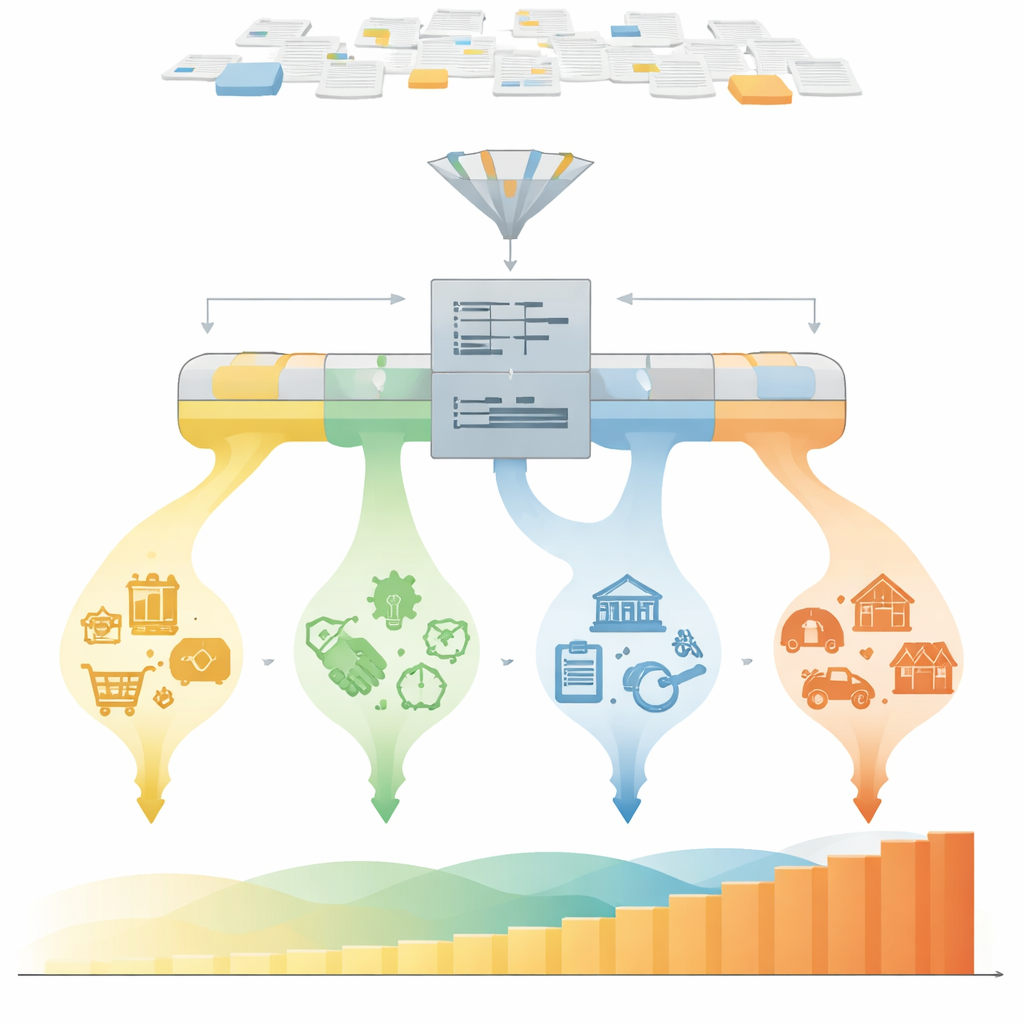
To make sense of 71 major policy documents, the researchers build a simple but powerful framework with four lenses. "Market capital" covers efforts to attract investment, grow rural industries, and expand trade. "Balanced coordination" refers to cooperation among governments, businesses, and civil groups. "Government regulation" captures laws, planning, and state-led programs. "Rural ethics" focuses on community values, local organizations, and moral guidance. Each country’s policies can be described as different blends of these four elements, ranging from heavily state-led to highly market-driven or community-centered approaches.
Letting Machines Read the Policies
Instead of reading every page by hand, the team turns to machine learning. They feed policy texts into algorithms that automatically discover key themes, pull out important phrases, and group them into the four lenses. Techniques from natural language processing first identify recurring ideas in the documents, then break them into keywords such as land regulation, financial services, or farmer cooperatives. These keywords are converted into numerical vectors that capture their meaning, and a classification model assigns them to one of the four domains. This automated pipeline allows the researchers to compare countries and time periods in a consistent, data-driven way that would be nearly impossible manually.
What Makes China Different—and What the Rich Countries Share
The analysis shows that China’s approach leans strongly on government regulation. Most of its key policies fall into a "single category dominance" pattern where state-led rules and plans overshadow market tools, partnerships, or community initiatives. In contrast, the wealthier countries spread their policies more evenly. They are more likely to combine the four lenses, or to deliberately step back from heavy regulation and let markets and local actors play a bigger role. The study also finds that as national income (measured by GDP per person) rises, policies tend to stress markets and integrated approaches more, while dependence on direct government control declines. Historical timelines back this up: as countries rebuild after war, urbanize, and liberalize their economies, their rural policies shift from strict state management toward more flexible, mixed models.
Lessons for a More Balanced Future
Drawing on these global patterns, the authors suggest that China could benefit from gradually broadening its toolkit. That means pairing strong oversight with more space for private investment, farmer cooperatives, civic organizations, and region-specific experiments, rather than relying mainly on central directives. Public–private partnerships, support for local groups, and integrated plans that give equal weight to economy, environment, and community values could make rural revitalization more resilient in the long run. The study also notes its own limits: it focuses on richer and upper‑middle‑income countries, so poorer nations may need different approaches. Still, by showing how economic development and policy style move together, this work offers readers an accessible map of how societies can rethink the future of their countryside.
Citation: Zheng, X., Zhang, X. & Li, H. Leveraging machine learning in a comparative analysis of rural revitalization policies in China and global best practices. Humanit Soc Sci Commun 13, 309 (2026). https://doi.org/10.1057/s41599-026-06670-w
Keywords: rural revitalization, public policy, China development, machine learning, rural governance