Clear Sky Science · en
Revisiting the factors affecting child trafficking: an empirical study based on the origin areas
Why this issue hits close to home
Behind every statistic on child trafficking lies a missing son or daughter, a family in anguish, and a community living with fear. This study looks closely at where trafficked children in one large region of Southwest China originally came from, and what local conditions made them most vulnerable. By combining digital records from a public website for missing children with modern mapping and statistical tools, the researchers reveal patterns that can help societies target prevention efforts more precisely and protect children before they disappear.
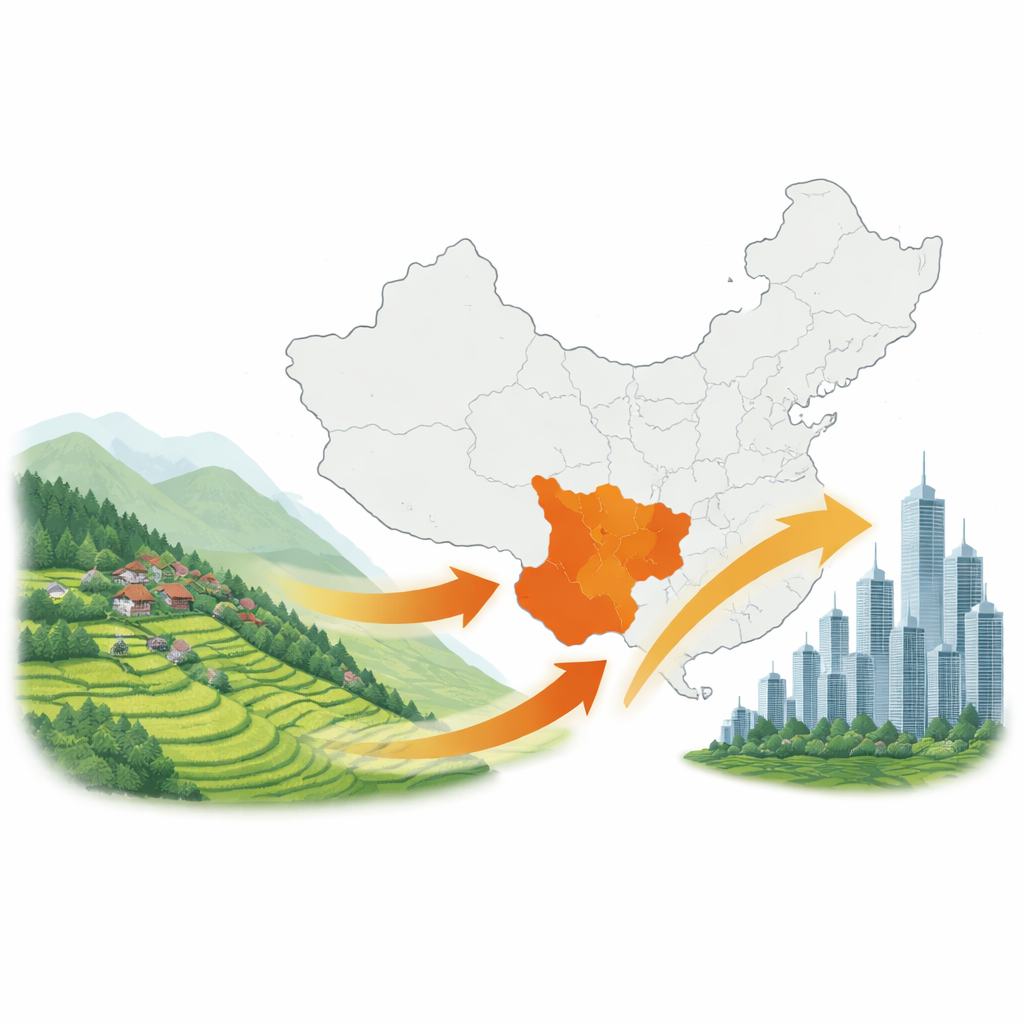
Following the paths of missing children
The team gathered information on 9016 children reported as trafficked between 1949 and 2022 from Yunnan, Guizhou, Sichuan, and Chongqing. These reports, posted by families to a public welfare website, recorded where and when the child went missing and basic details such as age and sex. Instead of looking only at shocking individual cases, the researchers treated this as a long-term, region-wide picture, asking where cases tended to cluster on the map and how those hot spots shifted over time as China transformed economically and socially.
Hidden clusters on the map
Using a spatial statistic called Local Moran’s I, the study searched for areas where counties with many trafficking cases were surrounded by similar high-risk neighbors. Before the mid-1980s, these clusters were mainly in the border area between Sichuan and Chongqing. From the late 1980s onward, the hot spots expanded and shifted to the junction of Yunnan, Guizhou, Sichuan, and Chongqing. For most of the map, cases were rare or scattered, but these border zones stood out as long-term centers of risk, highlighting how child trafficking is not a random problem but one that concentrates in specific places.

What makes some communities more vulnerable
To understand why some provinces had more trafficked children than others, the researchers compared case numbers with a wide range of social indicators, such as income levels, unemployment, education, population structure, ethnic makeup, and public spending on security. High unemployment consistently stood out as a direct driver: when adults struggled to find decent work, some were more easily drawn into illegal activity or desperate decisions. Limited schooling made matters worse, leaving people with fewer job options and less awareness of risks. At the same time, dense transport networks around big cities, where many bus and train routes converge, made it easier for traffickers to move children quickly and blend into crowds.
Family pressure, festivals, and rules on births
The study also shows how everyday family life and local traditions can unintentionally open doors to traffickers. In many multi-child households, especially in earlier decades, parents worked long hours in fields or migrated to cities, leaving younger children in the care of older siblings or grandparents. This looser supervision created more chances for children to be approached or taken. In minority areas rich in cultural festivals, huge social and religious gatherings meant large, shifting crowds and distracted guardians, again offering cover for traffickers. Policy changes mattered too: during the years when the one-child rule was strict in richer eastern provinces but birth rates stayed higher in the southwest, an illegal market emerged that treated “extra” children as a supply to meet demand elsewhere, fueling trafficking flows.
Turning evidence into protection
For non-specialists, the study’s key message is that child trafficking responds to concrete local conditions, not just individual evil. Where jobs are scarce, education is limited, transport hubs are poorly monitored, families are overstretched, and festive crowds are unmanaged, children are at greater risk. The authors argue that anti-trafficking efforts must therefore be geographically focused and multi-layered: improving rural livelihoods, supporting parents and caregivers, educating children about personal safety, tightening surveillance and cooperation across borders, and enforcing laws that punish both traffickers and buyers. By revealing where and why children are most likely to be taken, this research offers a roadmap for turning grief and outrage into targeted action that can help keep more families whole.
Citation: Zhou, J., Li, G., Gao, X. et al. Revisiting the factors affecting child trafficking: an empirical study based on the origin areas. Humanit Soc Sci Commun 13, 319 (2026). https://doi.org/10.1057/s41599-026-06667-5
Keywords: child trafficking, Southwest China, spatial analysis, unemployment and poverty, family and festival risks