Clear Sky Science · en
Adapting mobility: insights from COVID-19 impact on east asian regions
How a Virus Changed Everyday Movement
The COVID-19 pandemic did not just send people to hospitals; it also quietly rewrote where we go each day and how our cities breathe. This study looks closely at how everyday movement changed in five East Asian places—Mongolia, Japan, Republic of Korea, Hong Kong, and Taiwan (China)—and what those changes mean for health and the economy. By tracking trips to shops, parks, transit stations, workplaces, and homes over nearly three years, the authors show that people did not simply “stay home” or “go out.” Instead, they adapted in patterned, region-specific ways that reveal how societies cope with crisis.
Different Places, Different Patterns
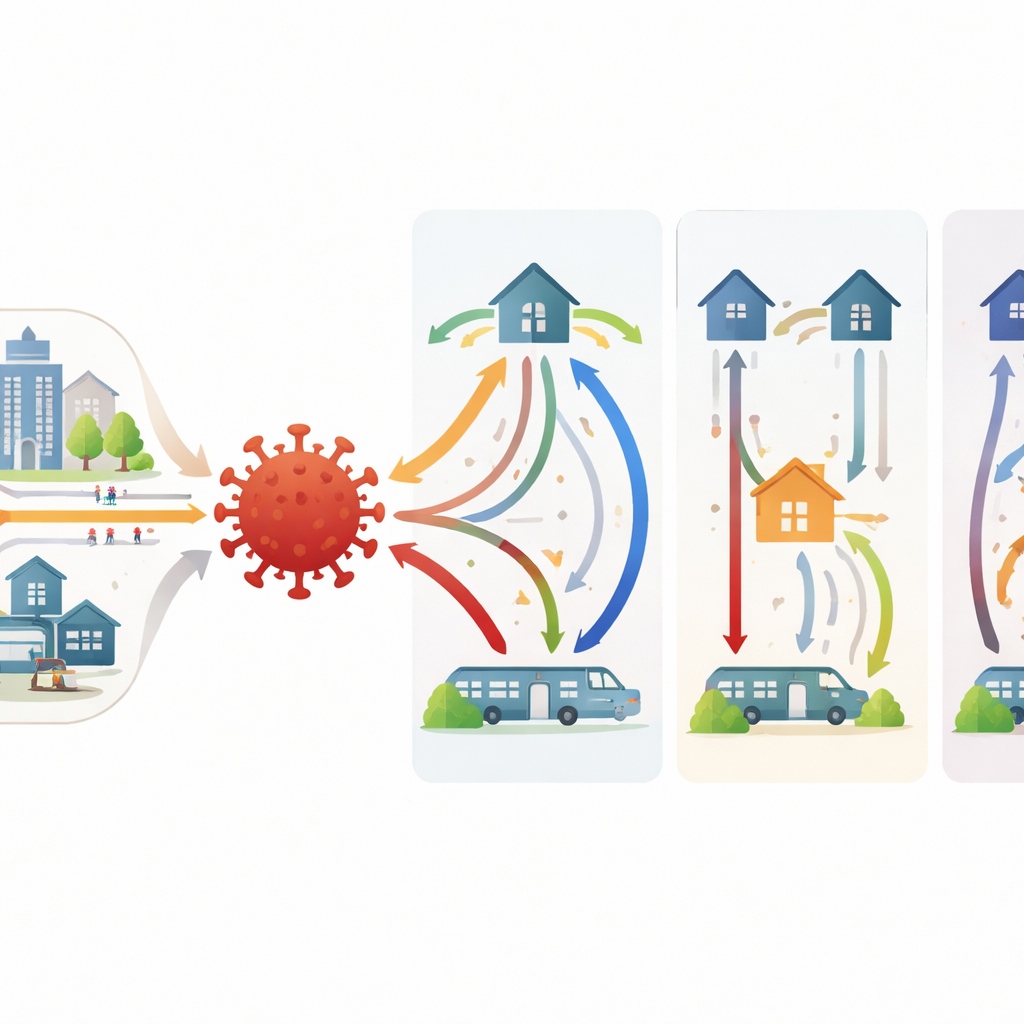
The researchers began with a simple question: how did movement patterns shift once COVID-19 arrived? Using anonymized location data from Google’s Community Mobility Reports between February 2020 and October 2022, they compared visits to six types of places against pre-pandemic baselines. Mongolia stood out for its relatively stable mobility: visits to shops, parks, and transit hubs generally stayed above pre-COVID levels, reflecting a sense of internal safety after the country sealed its borders. By contrast, Japan, Republic of Korea, Hong Kong, and Taiwan (China) showed sharp drops in trips to workplaces, transit stations, and leisure spots whenever infections surged, alongside clear rises in time spent at home. Across all five regions, one near-universal reaction emerged during big waves of cases—especially in early 2022: people retreated to their homes while cutting back on transit use.
Reading Behavior as an Adaptive Response
To move beyond simple curves on a graph, the authors framed these shifts as examples of “behavioral adaptation”—how people change daily habits when the environment suddenly becomes risky. They introduced a responsive index that condenses weeks of mobility data into a single score showing how strongly people reduced or increased trips in each category. Negative scores for homes and positive scores for transit, workplaces, and retail meant that, on balance, people were avoiding busy public spaces and spending more time in domestic settings. In Mongolia, this index was often negative for non-home categories, consistent with looser internal controls and lower case counts. In the other regions, it pointed to sustained caution and adherence to distancing measures, especially in crowded urban environments where public transport is central to daily life.
Moments When Habits Broke and Reset
The study also asked when, exactly, people changed course. Using a statistical technique called changepoint detection, the authors pinpointed weeks when mobility suddenly shifted—corresponding to new waves, lockdowns, or policy relaxations. For example, Hong Kong and Taiwan (China) showed abrupt drops in visits to shops and transit stations during major outbreaks, while Japan and Republic of Korea displayed more gradual but persistent declines. Residential mobility showed strong upward breaks during stay-at-home periods, marking the point at which home truly became the center of life. These turning points varied by place and by type of location, underscoring that there is no single “pandemic behavior”; each society followed its own timing and tempo of adjustment.
From Movement to Money
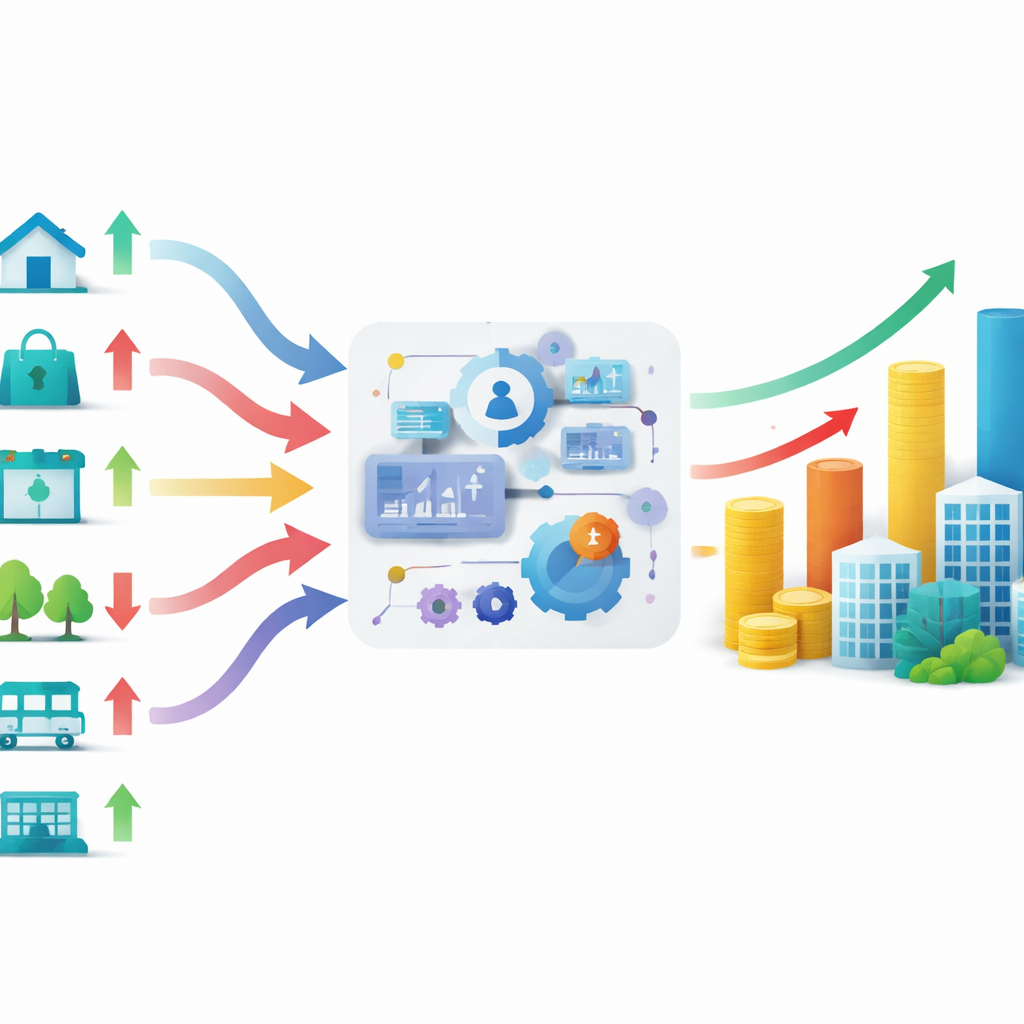
Finally, the authors explored how these mobility shifts fed into the economy. They used a machine-learning model to see which types of movement best predicted short-term changes in gross domestic product and unemployment. Across all regions, trips related to shopping, work, and transit carried the most weight: when these flows shrank, economic indicators tended to worsen in the following days or weeks. Time spent at home, by contrast, was a weaker direct signal of economic health, reflecting the fact that staying in often meant less production and consumption. The most informative “warning window” differed by place—from about two weeks in Mongolia to just a few days in Taiwan (China)—suggesting that each economy responds on its own schedule to changes in how people move.
What This Means for Future Crises
Taken together, the study shows that mobility data can serve as a real-time window into how societies absorb a shock. Rather than chaotic or random, the changes in movement across East Asia followed clear, context-dependent patterns shaped by culture, policy, and urban form. People consistently cut back on non-essential trips, crowded vehicles, and workplaces, while maintaining or even increasing visits for essentials like food and medicine. These shifts not only helped slow the spread of COVID-19 but also reshaped economic activity in ways that may outlast the virus, especially where lower workplace and transit use persisted into late 2022. For public officials, the message is clear: monitoring how and where people move during a crisis can guide smarter health measures and more targeted economic support, helping communities adapt without grinding daily life to a halt.
Citation: Sun, X., Song, W. & Wei, Y. Adapting mobility: insights from COVID-19 impact on east asian regions. Humanit Soc Sci Commun 13, 297 (2026). https://doi.org/10.1057/s41599-026-06662-w
Keywords: human mobility, COVID-19, East Asia, behavioral adaptation, economic impact