Clear Sky Science · en
The effect of long-term care insurance on labor force participation among informal caregivers: evidence from China
Why this matters for families and jobs
Across China and many other countries, families are wrestling with how to care for growing numbers of older adults who can no longer look after themselves. Much of this care still happens at home, usually provided by daughters, daughters-in-law, or other relatives. While this devotion reflects deep cultural values, it also pulls people—especially women—out of paid work. This study asks a timely question: when the government helps pay for long-term care, does it actually free up family caregivers to keep or find better jobs?

A new safety net for long-term care
To ease the strain on families, China has been piloting long-term care insurance (LTCI) in dozens of cities since 2016. The program helps cover the costs of care for older people with serious disabilities, often through services provided in institutions, hospitals, or at home. The authors use national survey data from middle-aged and older adults to track more than 4600 people who were actively helping aging parents or in-laws with daily activities. They compare those living in cities that adopted LTCI with caregivers in cities that did not yet have the program, before and after the pilots began. This allows them to isolate how much of any change in work patterns can be linked to the new insurance rather than to broader economic trends.
From farm work to city jobs
The researchers distinguish carefully between non-agricultural jobs—such as factory, office, or service work—and agricultural jobs in fields and on farms. They find that LTCI clearly boosts caregivers’ chances of holding a non-agricultural job, raising the likelihood by about one-third in pilot cities compared with others. In contrast, the program does not measurably change whether caregivers do paid farm work. One reason is that farm work is often seasonal and flexible, so relatives can more easily weave caregiving around it. Non-farm jobs, by contrast, usually demand more regular hours and presence, so freeing up time with formal care makes a bigger difference.
How insurance changes daily time use
To understand what lies behind these shifts, the authors look at how caregivers spend their days. After LTCI is introduced, caregivers in pilot cities spend fewer hours providing hands-on care to their parents, suggesting that some of this work is picked up by formal services. However, they do not report sleeping more or joining more social activities. Instead, the spared hours seem to flow into paid work outside the home, especially in non-agricultural roles. The study also checks whether the insurance noticeably improves caregivers’ physical aches or depressive feelings. Although these measures tend to move in a better direction, the changes are too small to be confident they are real. The main, clearly observed effect is a reshuffling of time from unpaid care to paid employment.
Who benefits most and why design details matter
The impact of LTCI is not spread evenly. Female caregivers, those who are married, those with less schooling, and those in better health are most likely to move into non-agricultural jobs when the program is available. This pattern reflects how caregiving and work are divided within families and the wider labor market. Women in China still shoulder most housework and elder care, and many lower-educated caregivers rely on low-paying, unstable jobs. For them, even partial financial support for formal care can tip the balance toward staying in or re-entering paid work. Policy details also shape outcomes. Pilots that mainly cover urban employees, extend benefits to both moderate and severe disability, or emphasize institutional rather than home-based care show the strongest boosts to caregivers’ employment, likely because they reduce the time and money families must devote to hands-on care.
What this means for families and policy
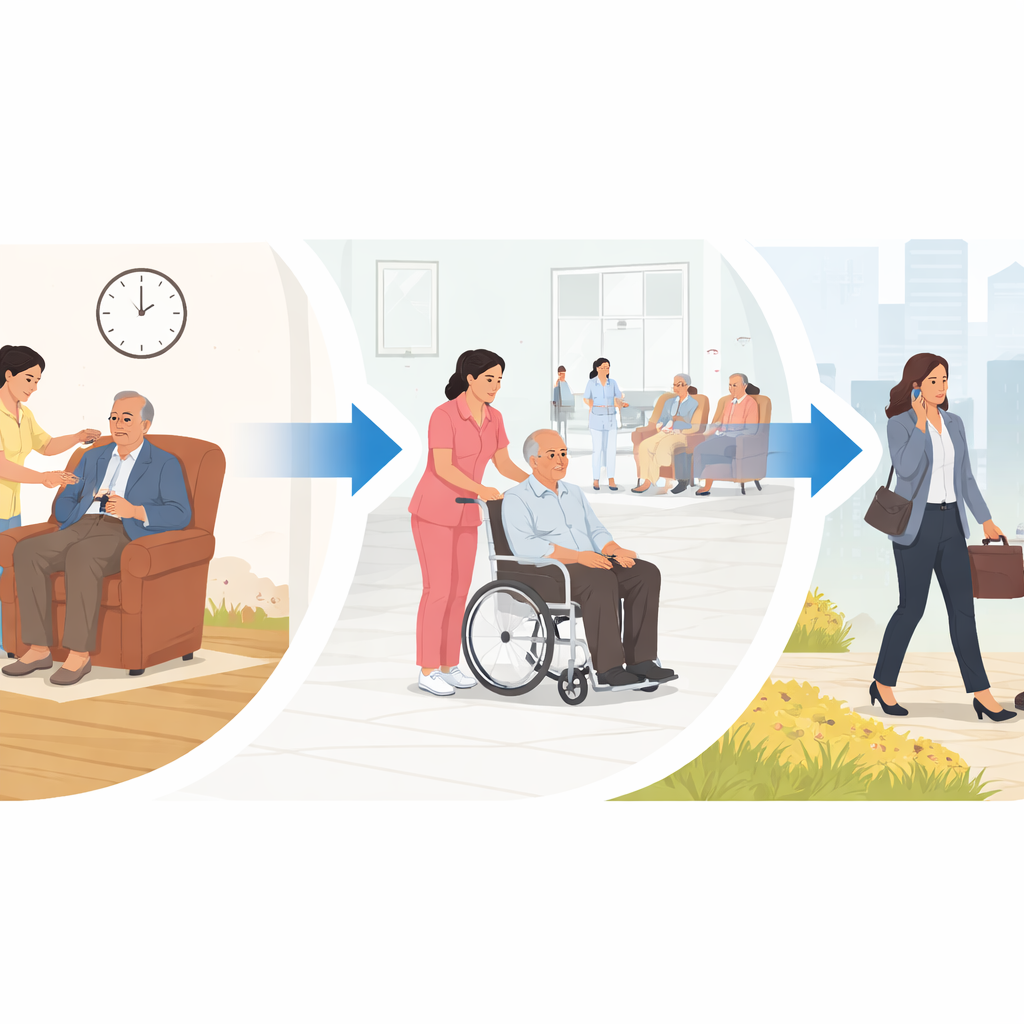
In simple terms, the study suggests that when the state helps pay for long-term care, family caregivers—especially women in cities—are better able to take or keep non-farm jobs. Long-term care insurance does not seem to change farm work much, but it does shift some of the heavy daily care from relatives to formal services, freeing time for wage earning. The authors argue that to make the system fair and truly “labor-friendly,” China should expand coverage beyond urban employees, strengthen services in rural areas, and improve home-based support so caregivers can balance family duty and career. For other aging societies, the findings offer an important lesson: designing long-term care programs with caregivers’ work opportunities in mind can help protect both family well-being and the broader labor force.
Citation: Zhang, L., Dong, J., Li, S. et al. The effect of long-term care insurance on labor force participation among informal caregivers: evidence from China. Humanit Soc Sci Commun 13, 339 (2026). https://doi.org/10.1057/s41599-026-06658-6
Keywords: long-term care insurance, informal caregivers, labor force participation, China aging, caregiving and employment