Clear Sky Science · en
Does self-employment mitigate the perceived discrimination? Evidence from Chinese migrant workers
Why this story matters
China’s cities run on the labor of hundreds of millions of rural migrants, yet many of these workers feel they are treated as outsiders. This study asks a timely question with global relevance: when migrants stop working for others and start working for themselves, does it actually change how much discrimination they feel in everyday city life?
Life between village and city
Since the 1980s, China’s economic boom and looser household registration rules have pulled vast numbers of rural residents into urban factories, construction sites, and service jobs. Even as formal barriers have fallen, many city natives still see rural migrants as second-class. Migrants report late or unequal pay, poor housing, weaker job security, and limited access to welfare and schooling for their children. These experiences feed a sense of being looked down on, which the authors measure as “perceived discrimination” using a national 2017 survey of more than 80,000 rural-to-urban migrants.
Working for yourself, in two very different ways
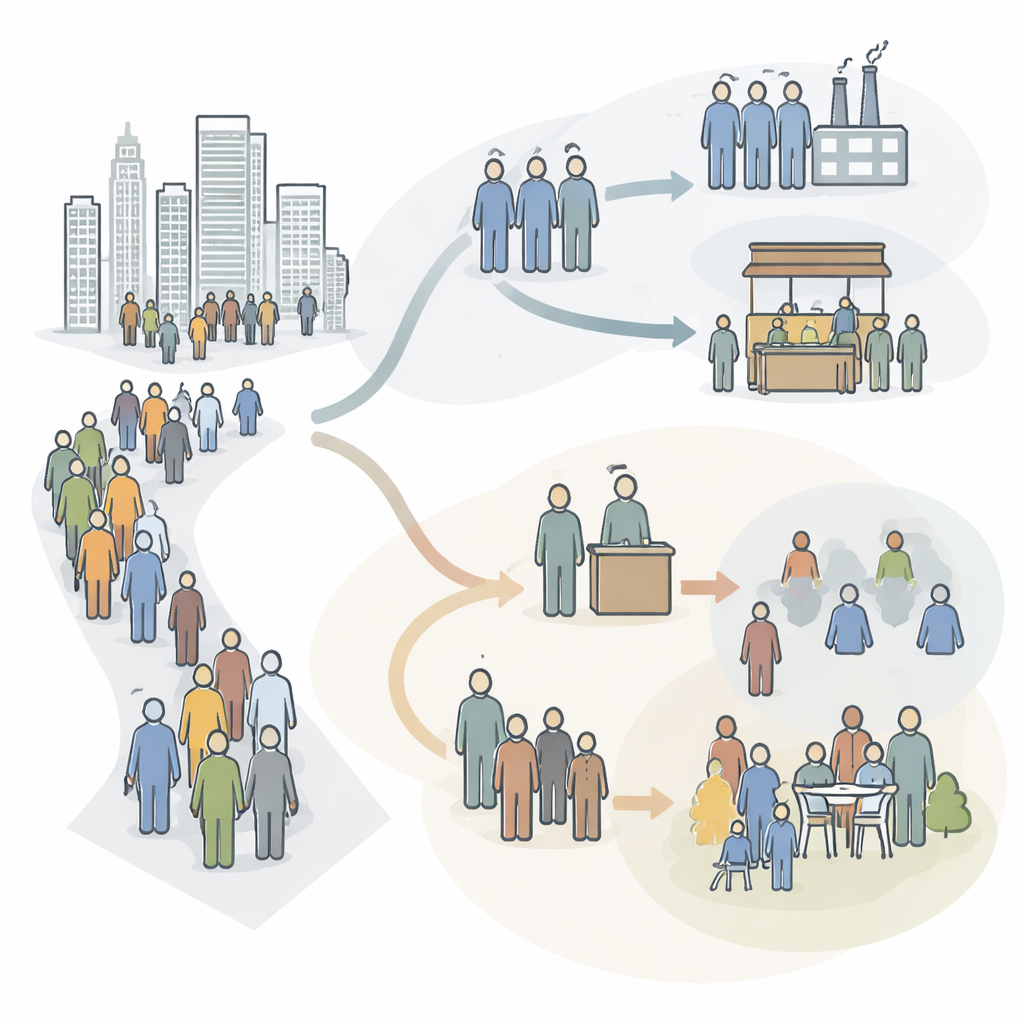
The study distinguishes between three main types of work. Salaried migrants earn wages in someone else’s firm. Own-account workers are self-employed but have no employees—think street vendors, small shopkeepers, or tricycle drivers. Employers are self-employed migrants who hire and manage other workers. Using statistical models that control for age, education, health, family structure, migration distance, and city conditions, the authors compare how much discrimination people in each group say they feel from local residents.
Who feels less like an outsider?
The clearest pattern emerges for migrant employers. Across many checks and alternative models, those who run businesses with paid employees consistently report lower levels of perceived discrimination than similar wage workers. Simply being self-employed without employees, however, does not automatically help. Own-account workers, on average, do not feel less discriminated against than salaried migrants—unless they live in especially diverse and open-minded cities. In places with rich mixes of people from different provinces, own-account workers seem to benefit from more frequent casual contact with locals and other migrants, which softens the sense of exclusion.
How running a business can change social standing
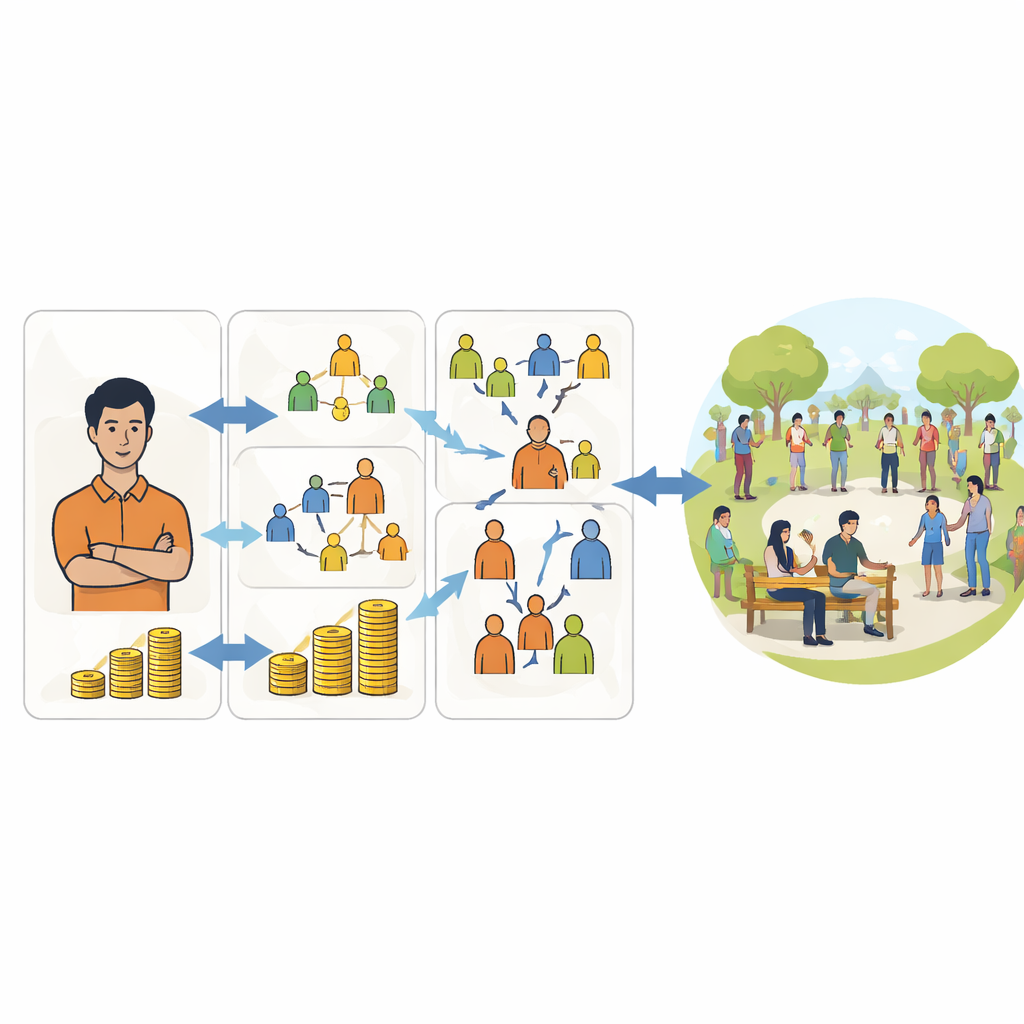
The authors then probe why employers feel less discriminated against. They identify three reinforcing channels. First, employers typically earn more money than wage workers, giving them better housing and more chances to join local activities. Second, their businesses force them into regular contact with customers, suppliers, and officials, widening their social networks and building trust. Third, by hiring others, employer migrants become job creators rather than just job seekers. This role shift can alter how native residents see them—from burdens competing for scarce work to partners who help support the local economy. The analysis shows that higher income, richer social ties, and job creation each partly explain the gap in perceived discrimination between employers and wage workers.
Cities that welcome difference
City culture also matters. The researchers build an index of cultural diversity based on how many different provinces migrants in each city come from. In cities with more diverse populations, own-account workers feel less discriminated against than similar workers in more homogeneous places. Diversity seems to create a looser, more tolerant atmosphere where migrants can more easily test small business ideas, meet new contacts, and blend into local life. By contrast, employer migrants already have broad networks and higher social status, so additional diversity adds relatively little to how accepted they feel.
What this means for everyday lives
For a non-specialist, the message is straightforward: when rural migrants gain the means and confidence to run businesses—especially ones that employ others—their sense of being outsiders in the city can shrink. Self-employment alone is not a magic cure, but the combination of higher earnings, wider circles of acquaintances, and visible contributions to local jobs appears to soften social boundaries. At the same time, cities that embrace cultural diversity create friendlier ground for smaller, one-person ventures to have similar benefits. Together, these findings suggest that policies supporting migrant entrepreneurship and more open, mixed urban communities can reduce the daily sting of discrimination and help newcomers truly feel part of the cities they build.
Citation: Hu, H., Feng, X. & Feng, D. Does self-employment mitigate the perceived discrimination? Evidence from Chinese migrant workers. Humanit Soc Sci Commun 13, 318 (2026). https://doi.org/10.1057/s41599-026-06655-9
Keywords: self-employment, rural migrants, China urbanization, discrimination, cultural diversity