Clear Sky Science · en
Beyond readiness: ICT integration and simulation use in secondary physics classrooms
Why digital science tools matter for real classrooms
Imagine trying to teach electricity or waves to a room of sixty teenagers with no working lab, few textbooks, and unreliable power. This is the daily reality for many physics teachers in Nigeria and across sub-Saharan Africa. Interactive computer simulations could help students “see” invisible forces and carry out virtual experiments, but do teachers actually use these tools, and what really stands in their way? This article looks beyond simple ideas of teacher “readiness” to uncover why promising digital tools often fail to take root in real schools.
What digital simulations can offer
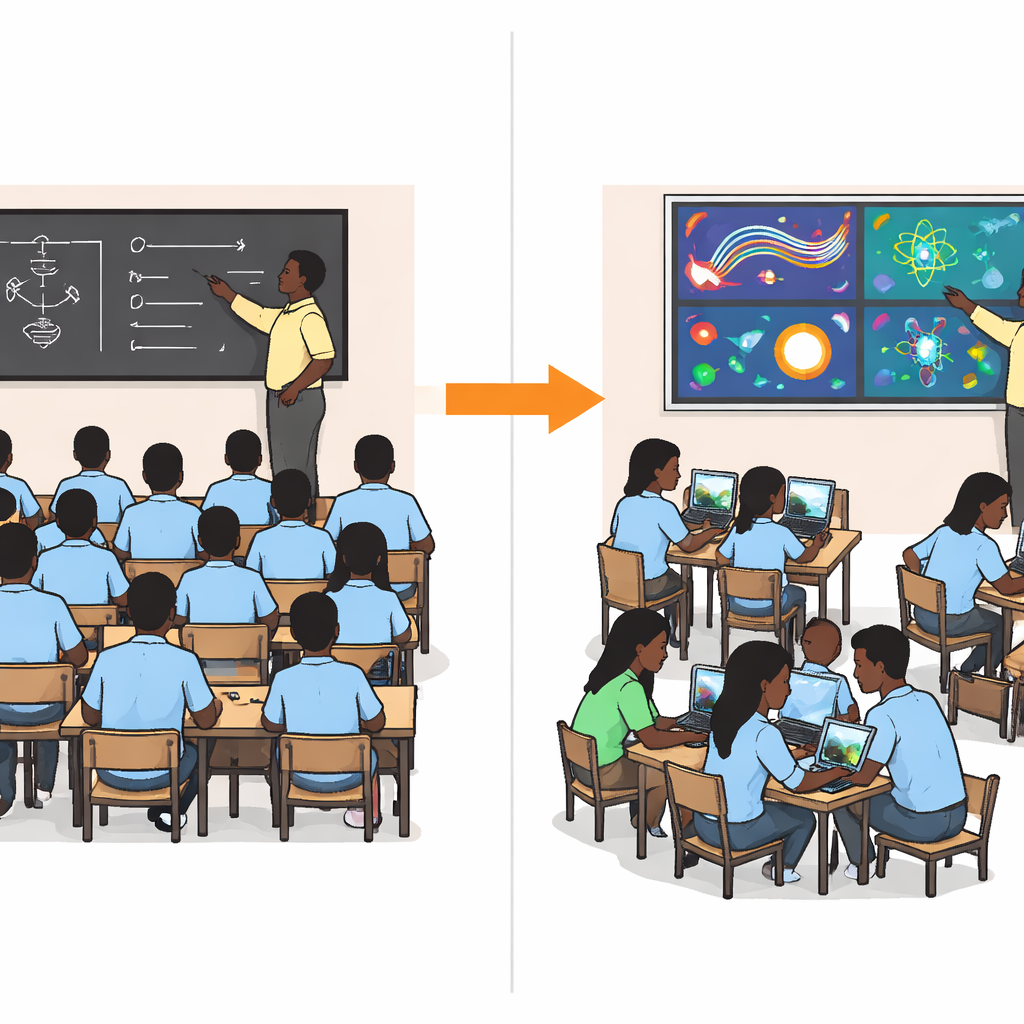
Over the past few decades, physics education worldwide has been reshaped by digital technologies. Interactive simulations, such as the widely used PhET tools, let students manipulate variables, visualize abstract ideas, and run virtual experiments that would otherwise require expensive or dangerous equipment. For schools without well-equipped laboratories, simulations can stand in as a powerful substitute, helping learners grasp difficult topics like electromagnetic fields or wave motion. Earlier research has shown that these tools can boost understanding, motivation, and inquiry-based learning. Yet, despite these benefits, many classrooms, especially in low-income regions, still rely almost entirely on chalk-and-talk teaching.
Looking beyond the individual teacher
Most previous studies have focused on whether teachers are personally ready to use technology: Do they believe it helps students? Do they feel confident and skilled? Do they have basic access to computers and the internet? To explore these questions in depth, the authors combined two popular theories of technology use. One emphasizes how people judge usefulness and ease of use, while the other argues that successful technology integration depends on three ingredients: the will to use it, the skill to handle it, and the tools and support to make it possible. By blending these perspectives, the study set out to see how beliefs, confidence, technical skills, school support, and available resources all work together to shape the use of simulations in physics lessons.
How the study was carried out
The researchers surveyed 375 in-service secondary school physics teachers across Nigeria using a detailed questionnaire that measured attitudes toward digital tools, confidence in using them, self-rated skills, access to equipment, and actual use of simulations. They analysed the results with structural equation modelling, a technique that tests complex relationships between many factors at once. At the same time, they conducted in-depth interviews with six teachers from a variety of school settings to gain a richer picture of everyday challenges. This mixed approach allowed them to compare broad numerical patterns with real-world stories from classrooms.
When readiness is not enough
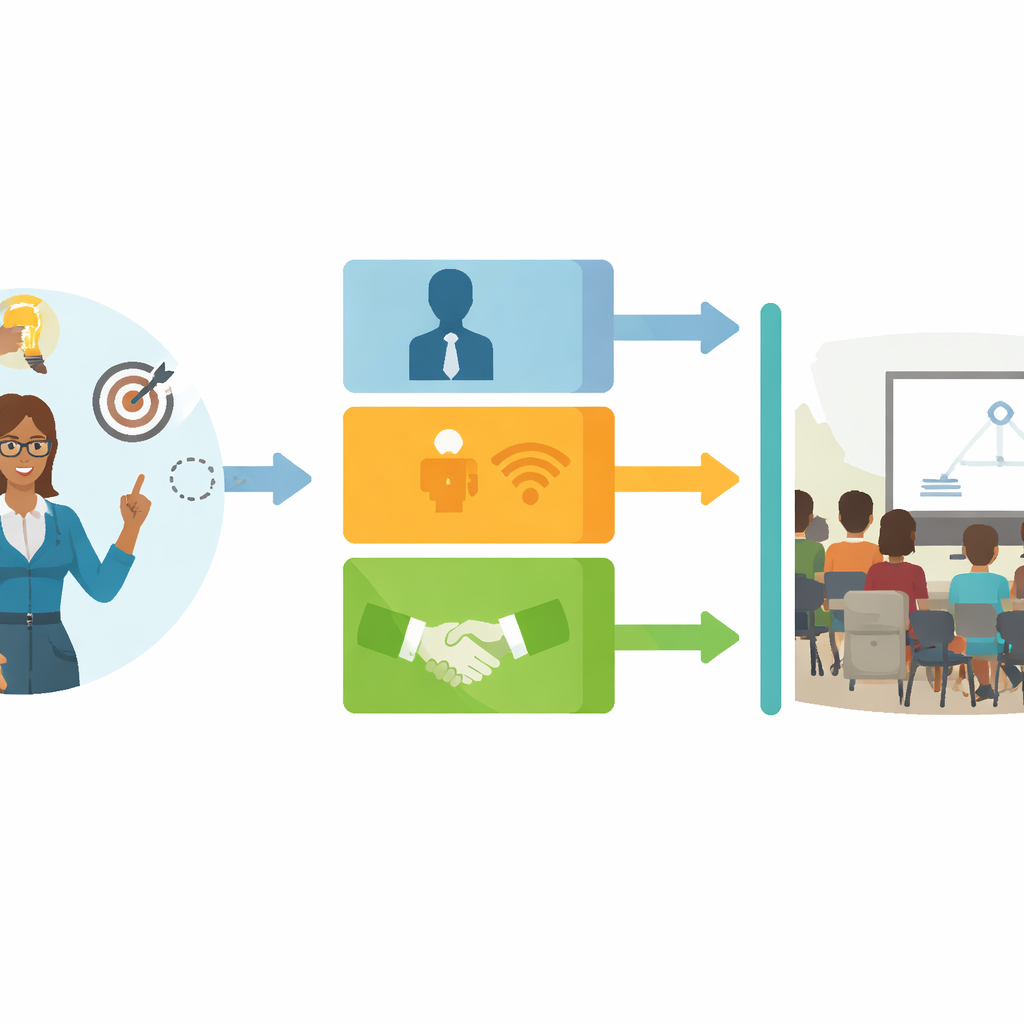
The most striking finding was that none of the measured teacher characteristics—positive beliefs, strong confidence, technical skills, or even perceived school support—actually predicted whether teachers were using simulations. Statistical tests showed no meaningful links, even though the survey questions themselves were reliable. Interviews helped explain this puzzle. Teachers often valued simulations and felt reasonably capable of using them, but described constant power cuts, weak or nonexistent internet, too few working computers, and devices that were locked away to prevent theft. School leaders rarely championed technology use, and training sessions, when offered at all, focused on generic office software instead of classroom simulations. In this environment, even the most motivated teacher struggled to move beyond traditional methods.
Rethinking how to support digital learning
These results suggest that focusing solely on individual teachers is not enough to bring simulations into everyday physics lessons. In under-resourced systems, structural barriers can completely overshadow personal readiness. The authors argue for a broader way of thinking about technology adoption, one that weaves in school leadership, institutional culture, realistic policy, and reliable infrastructure alongside teacher attitudes and skills. For policy makers and teacher educators, this means pairing professional development with investments in electricity, connectivity, and shared planning time, as well as principals who actively support experimentation with new tools. For readers, the key takeaway is that digital revolutions in education do not happen simply because teachers are trained or willing; they require whole-school and system-wide change so that promising technologies can move from theory to everyday practice.
Citation: Badmus, O.T., Jita, L.C. & Jita, T. Beyond readiness: ICT integration and simulation use in secondary physics classrooms. Humanit Soc Sci Commun 13, 270 (2026). https://doi.org/10.1057/s41599-026-06653-x
Keywords: physics education, interactive simulations, ICT in schools, teacher professional development, sub-Saharan Africa