Clear Sky Science · en
Do the socialization services in the whole process of agricultural production enhance sustainable grain production capacity?
Why sharing farm work matters for everyone’s dinner plate
Across the world, fewer people want to work on farms, even as populations grow and climate pressures intensify. China is a striking example: many young rural residents move to cities, leaving behind aging farmers and scattered plots. This article explores whether a new way of "sharing" farm work—through specialized service providers that handle everything from plowing to harvesting—can keep grain harvests high, protect the environment, and stabilize food supplies over the long term.
A new way to get the crops in
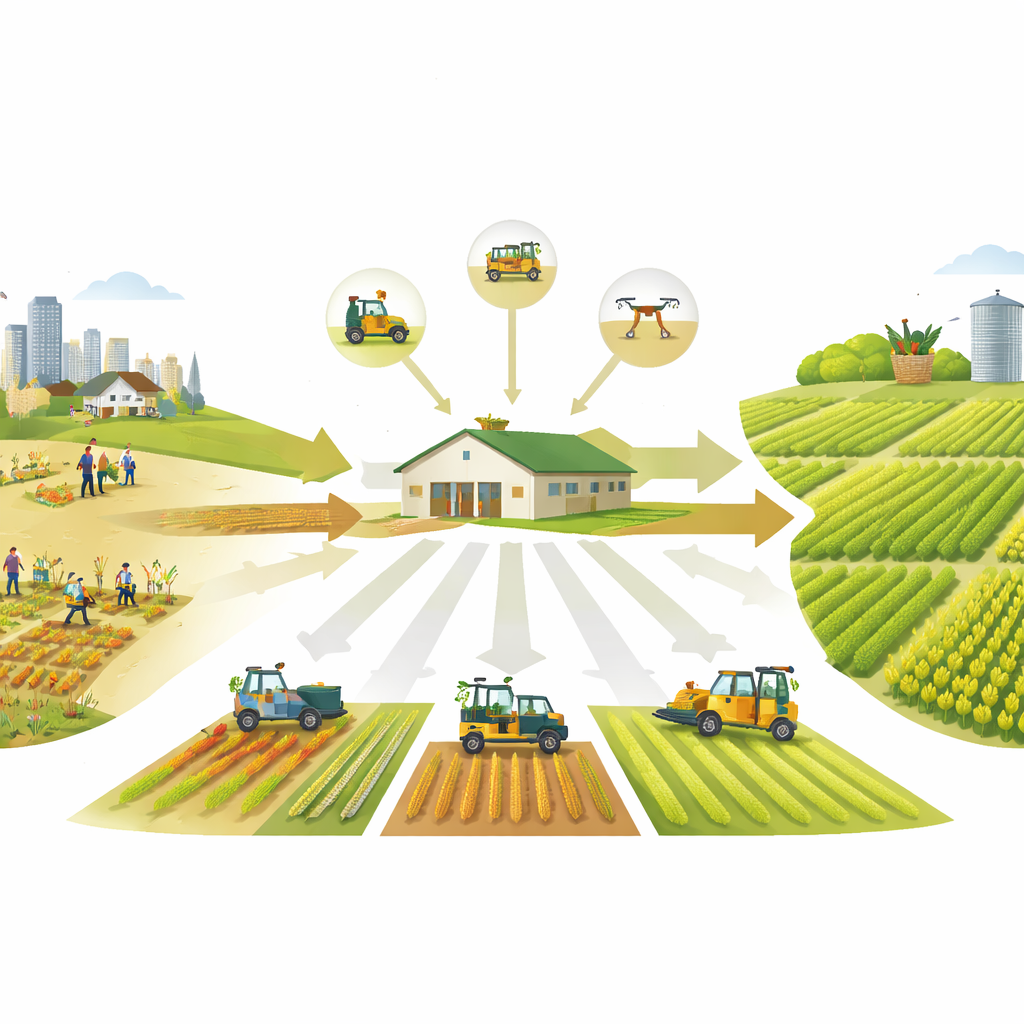
Instead of each small household doing every farm task alone, China has been promoting whole-process agricultural social services. These are cooperatives, village collectives, and service companies that farmers can hire to prepare land, plant, manage crops, control pests, harvest, and even arrange insurance and financing. Launched as pilot programs in selected provinces and later expanded, this approach aims to solve the core question that many rural communities face: when work and wages draw people to cities, who will still cultivate the land and how can they do it efficiently?
Testing the idea across a vast country
The researchers treated the rollout of China’s service pilots as a large-scale natural experiment. They compiled data from 31 mainland provinces between 2008 and 2022, tracking a comprehensive index of “sustainable grain production capacity.” This index blends three elements: environmental pressure from inputs like fertilizer, the ability of land and population to support grain production over time, and the economic health of farming households. Using a statistical method called Difference-in-Differences, they compared provinces that adopted the service model early with those that did not, while controlling for weather, land area, soil protection, irrigation, income, and other factors.
How shared services reshape fields and methods
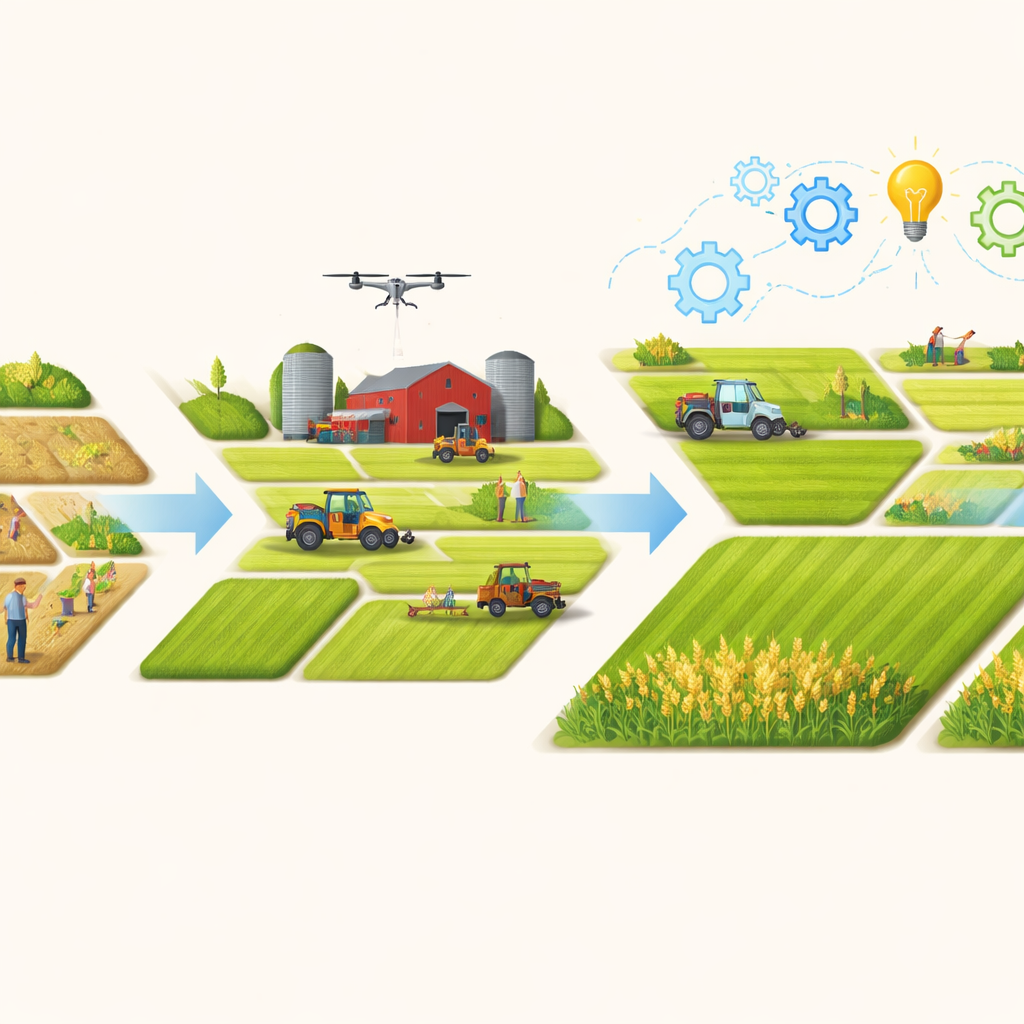
The study finds that whole-process services make a substantial difference: on average, they raise sustainable grain production capacity by about 44 percent. Much of this gain comes from shifting what and how farmers plant. As services spread, grain crops such as rice, wheat, and corn become more attractive than high-risk cash crops. Farmers expand the share of land devoted to staple grains and improve the balance between grain and non-grain crops, supported by easier access to inputs, risk-sharing tools like insurance, and more reliable returns. At the same time, service organizations pool demand for machinery, purchase equipment at scale, and operate it across many fields. This boosts mechanization, reduces the need for scarce labor, shortens critical farming windows, and makes it easier to adopt modern techniques and new crop varieties.
Why place and institutions still matter
The benefits of shared services are not evenly spread. The impact is strongest in eastern and central China, where land is flatter, roads and irrigation are better developed, and there are many capable service organizations and demonstration zones for modern agriculture. In hilly western regions, fragmented plots, poor access, and tight public budgets make it harder to deliver affordable services, so the gains are smaller. The number and quality of service providers, the strength of local farm institutions, and how widespread these services already are all shape the outcome. Where services were previously scarce, new programs bring big improvements; where systems were already mature, the added boost is more modest.
What this means for future harvests
For a layperson, the bottom line is that organizing farm work as a shared, professional service can keep grain supplies robust even as rural populations shrink and environmental limits tighten. By helping farmers coordinate land use, rely on modern machines, and tap into up-to-date know-how, whole-process services turn many small, scattered plots into a more efficient and resilient grain system. The authors argue that tailored support—especially in remote and mountainous areas, and for grassroots cooperatives—could further strengthen this model. Their findings suggest that similar service-based approaches may help other countries facing aging farmers, fragmented land, and rising food security risks.
Citation: Wang, J., Wu, Y. Do the socialization services in the whole process of agricultural production enhance sustainable grain production capacity?. Humanit Soc Sci Commun 13, 320 (2026). https://doi.org/10.1057/s41599-026-06649-7
Keywords: food security, agricultural services, grain production, rural labor migration, farm mechanization