Clear Sky Science · en
Information technology and supply chain collaborative drives supply chain cooperative: resource-based view perspective
Why smarter building chains matter
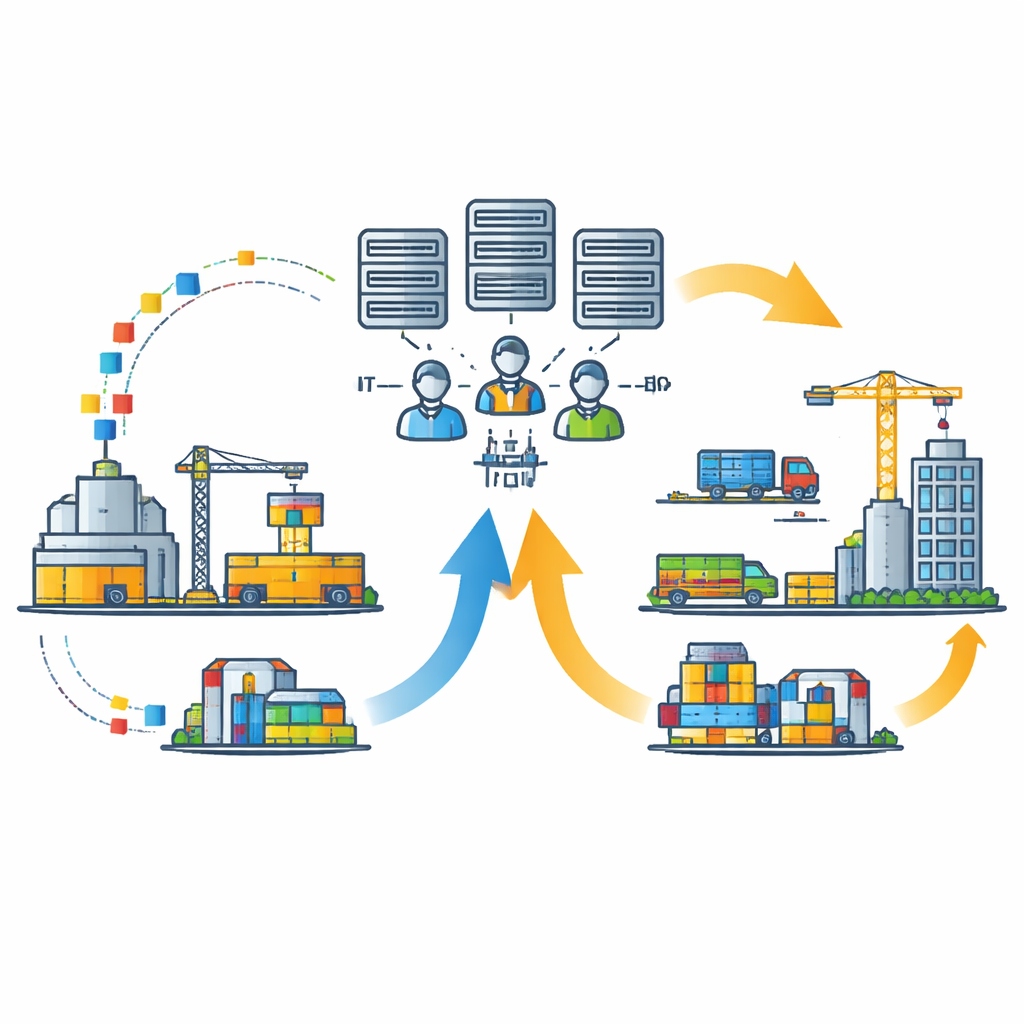
When we think about construction, we picture cranes, concrete, and dust—not computer networks and data flows. Yet as more buildings are made from factory-produced components that are assembled on-site, the construction industry increasingly depends on smooth coordination between designers, factories, shippers, and builders. This study looks at how information technology, teamwork across companies, and government policies come together to make these complex prefabricated building projects run more smoothly and deliver better results for everyone involved.
The challenge of building with many moving parts
Prefabricated construction breaks projects into many steps: design, factory production, transportation, on-site assembly, and later maintenance. Each step can involve different companies with their own systems, standards, and priorities. Because projects are one-off and participants often work together only temporarily, it is easy for information to be lost, plans to misalign, and components to arrive late or incorrect. This can mean costly rework, schedule delays, and wasted materials. The authors argue that in such a scattered and time-sensitive setting, the ability of companies to share information and coordinate their actions is not a luxury—it is vital to keeping the entire chain working as one.
How digital tools and people power work together
The researchers focus on two types of information technology resources. The first is IT infrastructure: the hardware, software, and networks that let data flow between firms—things like shared design platforms and connected management systems. The second is IT human resources: the people who know how to use, adapt, and connect these tools across organizations. On their own, servers and software are just static equipment, and skilled people without proper systems are limited in what they can do. The study shows that performance improves when these two types of resources are tightly linked with strong collaborative habits: sharing data, coordinating processes from design through maintenance, and building trust-based relationships between firms.
What the survey of firms reveals
To examine these links, the authors surveyed 265 experienced project managers from Chinese prefabricated construction firms, asking about their technology, collaboration practices, government support, and perceived cooperation results. Using statistical modeling, they found that when IT infrastructure and collaboration capabilities reinforce each other, supply chain cooperation clearly improves. The same is true for the combination of IT-skilled people and collaboration capabilities. Interestingly, basic infrastructure had a stronger overall effect than human skills alone, suggesting that without a solid digital foundation, even talented staff struggle to make cooperation work.

When government support tips the balance
The study also explores how government policies shape these outcomes. In prefabricated construction, public authorities often set technical standards, offer funds or tax breaks, and promote digital platforms. The analysis shows that such support strengthens the positive impact of IT and collaboration on supply chain performance. For example, common technical standards reduce the friction of connecting different companies’ systems, and public platforms can cut redundant investments and encourage information sharing. A complementary analysis that looks at different “recipes” for success finds three main routes to strong cooperation: powerful IT alone (infrastructure plus skilled people), or weaker IT combined with strong collaboration and supportive government policies.
What this means for the future of building
In plain terms, the article concludes that better digital tools and better teamwork—backed by smart public policy—are key to making prefabricated construction supply chains work well. When companies invest in both robust IT systems and the people who can use them, they can sometimes achieve high performance even without unusually strong collaboration structures, because information flows so efficiently. But when digital resources are limited, close cooperation between firms and active government support become essential to keep projects on track. For industry leaders and policymakers, the message is clear: treat technology, collaboration, and policy as a connected system if you want buildings that are faster to deliver, less wasteful, and more reliable.
Citation: Wang, C., Qin, S., Zhou, X. et al. Information technology and supply chain collaborative drives supply chain cooperative: resource-based view perspective. Humanit Soc Sci Commun 13, 291 (2026). https://doi.org/10.1057/s41599-026-06646-w
Keywords: prefabricated construction, supply chain collaboration, information technology, government support, resource-based view