Clear Sky Science · en
Resilient futures: intellectual and thematic pathways in financial resilience research and their relevance to well-being
Why money shocks matter for everyday life
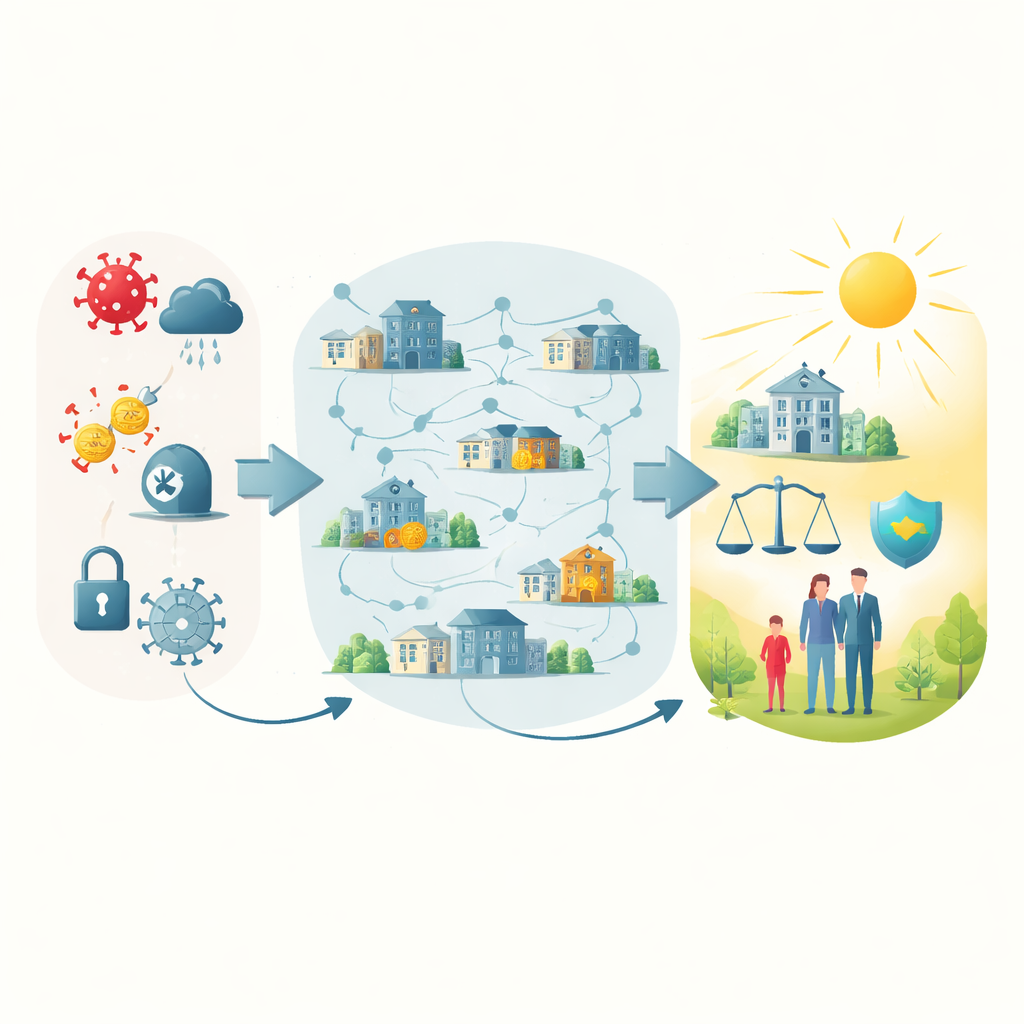
From sudden job loss to rising food prices and extreme weather, many people today live one crisis away from serious money trouble. This article looks at how well people, businesses, and governments can cope with such shocks—a quality the authors call financial resilience. Instead of offering personal finance tips, they step back and ask: what has the global research community actually learned about this kind of resilience, and how does it connect to people’s health and happiness? To find out, they map and organize 527 scholarly studies published up to late 2025.
Taking the pulse of a growing research field
The authors use bibliometric tools, which are like X‑rays for scientific literature, to see which studies, authors, and ideas shape this field the most. They focus on papers indexed in the Web of Science database that mention financial resilience in their titles, summaries, or keywords. By tracing who cites whom and which keywords travel together, they reveal how thinking has evolved since the early 2000s. Research really took off after 2017 and surged again around the COVID‑19 pandemic, mirroring real‑world shocks that pushed policymakers to ask how families, firms, and public agencies could survive and recover. Influential work ranges from studies on mobile money in low‑income countries to analyses of how local governments manage their budgets during crises.
Five big themes behind financial resilience
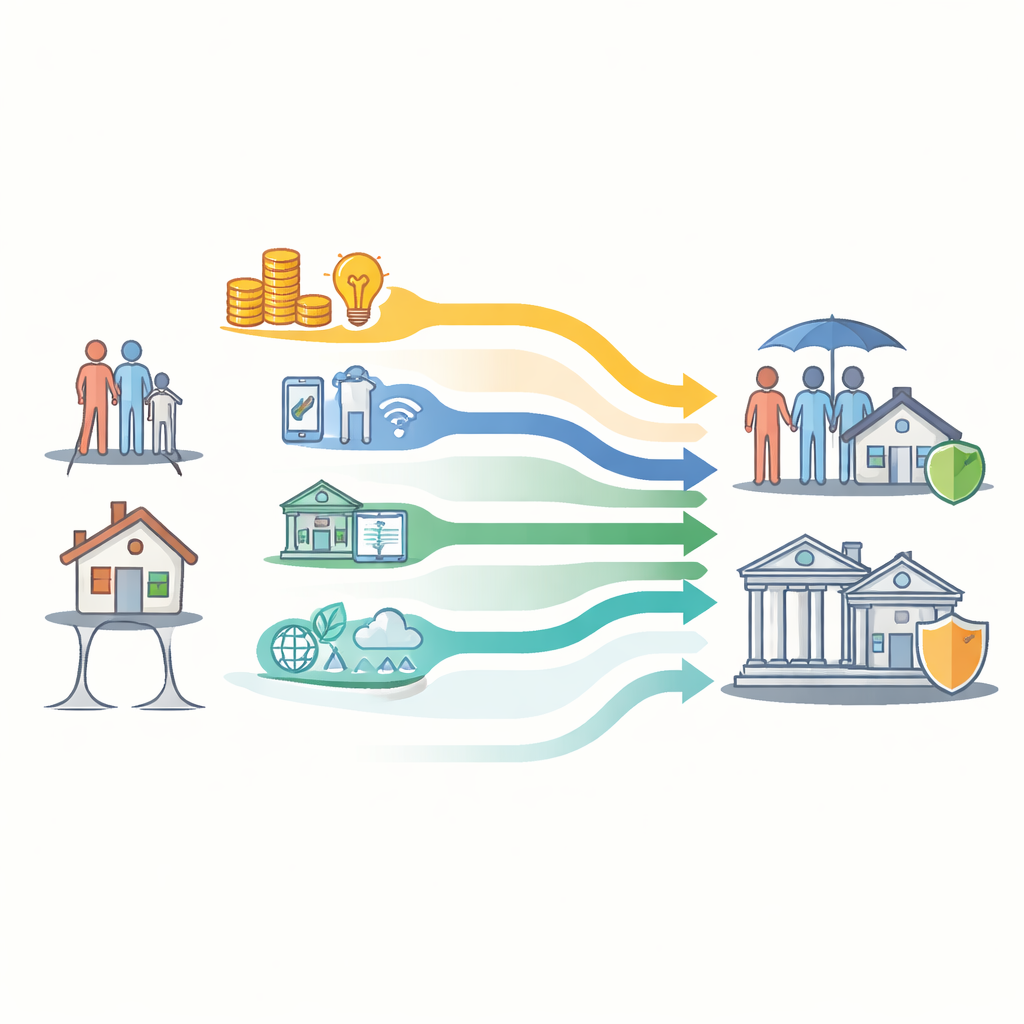
One of the study’s main contributions is to show that financial resilience is not just about how careful individual savers are. Instead, five broad themes dominate the literature. First, many papers look at how company leadership and the use of new technologies—such as artificial intelligence, digital platforms, and data systems—help businesses stay afloat during turmoil. Second, a large body of work examines households and communities, stressing the role of basic money know‑how, access to bank accounts and digital tools, and fair rules that reduce long‑term hardship. Third, scholars explore how public agencies use accounting and budgeting systems to prepare for shocks and keep essential services running. Fourth, another cluster focuses on people’s skills and day‑to‑day financial behavior, including how stress, mental health, and even gambling can weaken or strengthen their ability to cope. Finally, a growing line of research treats financial resilience as part of wider social and environmental systems, connecting it to community support networks, ethical investing, and climate‑related risk.
How ideas have shifted over time
By looking at which keywords appear together and when they gained popularity, the authors show that early studies mostly saw resilience through narrow lenses: insurance policies, local government budgets, or household savings. Over time, the focus broadened. Recent work blends financial issues with mental health, job insecurity, digital finance, and environmental sustainability. Terms tied to the pandemic and crises spike and then start to fade, while themes like impact, performance, and sustainability move to center stage. This suggests a shift from asking whether people and institutions bounce back to asking how well they do afterwards—do they emerge with better stability, fairer systems, and improved well‑being?
Designing systems that help people weather storms
Across all these studies, a shared lesson emerges: financial resilience is created by links between people’s skills and supports, the organizations they rely on, and the wider economic and ecological context. Programs that focus only on teaching individuals about money, without tackling barriers such as weak safety nets, poor digital access, or unstable jobs, are unlikely to deliver lasting security. Likewise, high‑tech financial tools can either protect or harm vulnerable users depending on how they are governed. The authors argue that policymakers should treat financial resilience as a public good that blends fair rules, solid public finances, inclusive digital systems, and attention to mental health.
What this means for a more secure future
For a lay reader, the bottom line is that staying financially steady in a turbulent world is not just a matter of individual discipline. According to this review, resilience grows when households have basic financial skills and support, when firms and public bodies plan ahead and use reliable information, and when digital and climate policies are designed with inclusion and well‑being in mind. By pulling together scattered research, the article offers a roadmap for building money systems that help people not only avoid ruin during hard times but also recover in ways that support their long‑term health, dignity, and opportunities.
Citation: Wu, C., Wider, W., Yang, M. et al. Resilient futures: intellectual and thematic pathways in financial resilience research and their relevance to well-being. Humanit Soc Sci Commun 13, 296 (2026). https://doi.org/10.1057/s41599-026-06641-1
Keywords: financial resilience, financial literacy, digital finance, economic shocks, well-being