Clear Sky Science · en
Dancing with disruption: a phenomenology of disability in Padma Venkatraman’s A Time to Dance
Why This Story of Dance and Change Matters
What happens when a young dancer whose whole life is built around movement suddenly loses part of her leg? This article explores that question through Padma Venkatraman’s young adult novel A Time to Dance, which follows Veda, a gifted Bharatanatyam dancer in South India who undergoes a below‑knee amputation. Instead of treating disability only as tragedy or medical problem, the paper shows how Veda’s journey opens up new ways to feel, teach, and perform classical dance. It invites readers to see disability not as the end of art, but as a different way of inhabiting the body that can transform both the dancer and the dance itself. 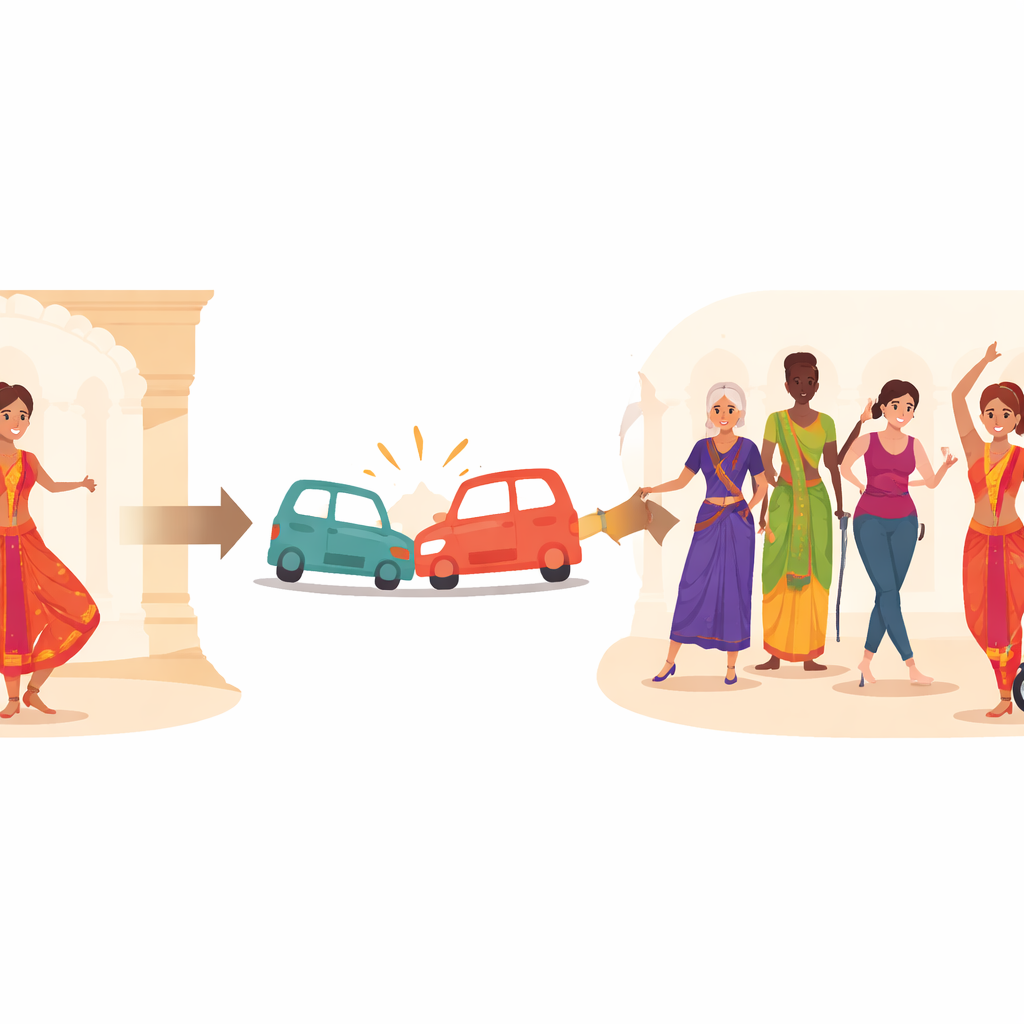
A Dancer, an Accident, and a New Beginning
At the start of the story, Veda’s identity is almost completely tied to her body’s strength and precision. She is a teenager from a middle‑class Brahmin family, trained in Bharatanatyam, a classical South Indian dance rooted in temple worship. Dance is not just a hobby; it is how she understands beauty, faith, and her own worth. A sudden road accident shatters this world, leading to the amputation of her right leg. The paper traces how this physical loss also disrupts her sense of self, her relationships, and her place within a tradition that has long prized a particular “ideal” body on stage.
From Body in Crisis to Body Rediscovered
After the surgery, Veda faces pain, medical routines, and the shock of seeing her changed body treated as an object by hospital staff. She struggles with the wheelchair, with social stigma, and with internalized insults that mark disabled people as “less than.” Learning to walk with a prosthetic leg is awkward and exhausting, and her first attempts to return to complex dance poses end in collapse. By following her thoughts moment by moment, the article shows how losing a limb scrambles familiar experiences of balance, space, time, and even personal dignity—but also how these same disruptions can become the starting point for a different relationship to movement.
New Teachers, New Movements, New Possibilities
Veda’s old dance master cannot imagine a disabled professional dancer and quietly pushes her out. Two new mentors, however, take a different approach. They slow the pace, adapt steps, and focus on breath, attention, and emotional expression rather than flawless symmetry. With their support, Veda discovers that some classical demands can bend without breaking the art form. Her prosthetic leg limits certain positions but also encourages fresh movement patterns, new balances, and slower, more meditative sequences that bring a deeper, steadier joy than the rush of speed she once chased. Over time, she moves from student to teacher, developing techniques that welcome dancers with many kinds of bodies into the studio. 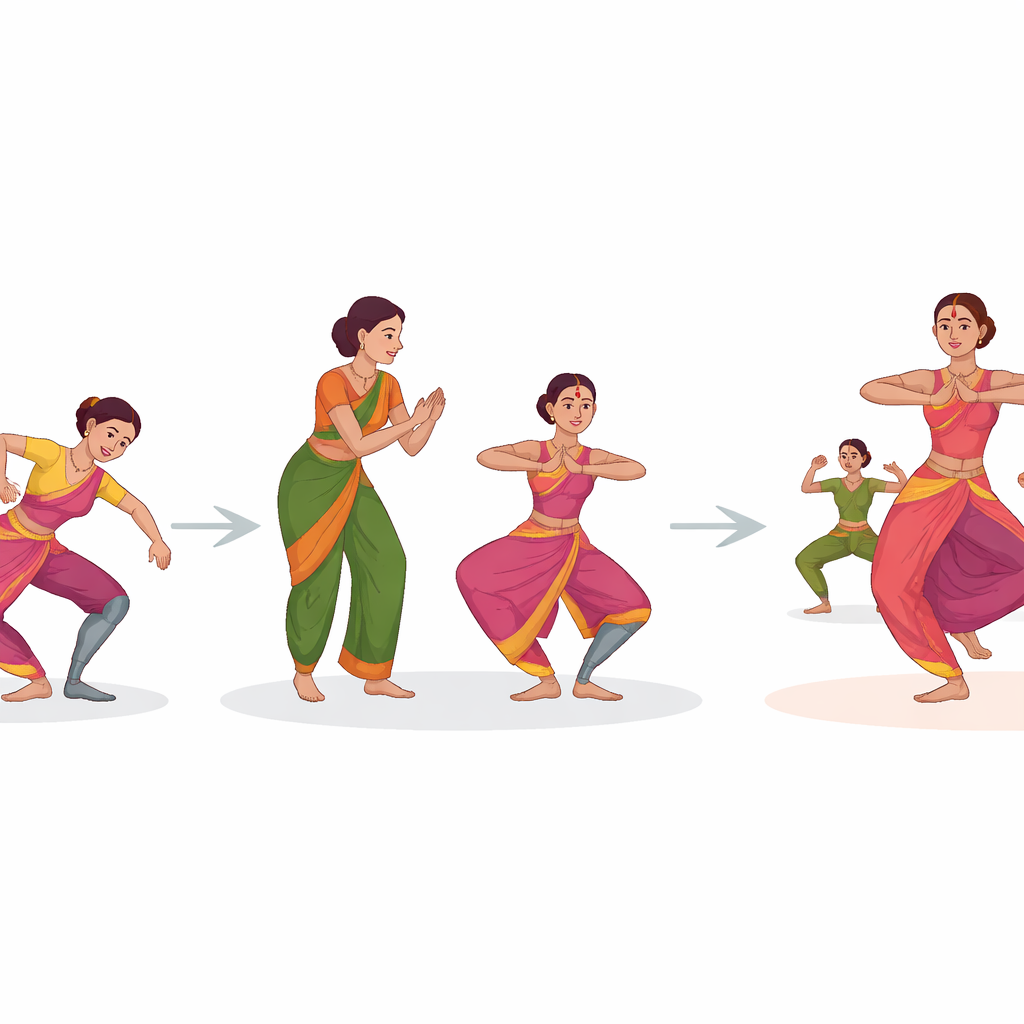
When Identity, Culture, and Disability Intertwine
The article also highlights how Veda’s story is shaped by more than her body alone. Her age, gender, caste background, religion, and social class all interact with her disability. As a Hindu Brahmin girl, she has privileged access to Bharatanatyam’s sacred heritage, yet she must also navigate old moral suspicions about female dancers, family worries about financial stability, and widespread prejudice against disabled people in India. The author uses this layered picture to argue that disability cannot be understood in isolation: it is always lived through local beliefs about karma and duty, family expectations, and uneven opportunities. Veda’s shift from rejected performer to admired teacher shows how one disabled artist can quietly push an entire tradition toward greater openness.
What This Study Tells Us About Dance and Disability
In the end, the article concludes that disability in A Time to Dance is not just a loss to be mourned but a force that reshapes art itself. By tracking Veda’s inner life over the course of the novel, the study shows how she moves from shock and grief to a renewed sense of purpose, finding “health within illness” by redefining what it means to dance well. Her prosthetic leg and adapted techniques expand the language of Bharatanatyam and inspire more inclusive ways of teaching. The authors argue that such stories can support broader social goals: treating disability as a form of human diversity, challenging discriminatory ideas about who belongs on stage, and encouraging arts education that fits the bodies people actually have, rather than a single imagined ideal.
Citation: Mohan, G.S., Karmakar, M. Dancing with disruption: a phenomenology of disability in Padma Venkatraman’s A Time to Dance. Humanit Soc Sci Commun 13, 317 (2026). https://doi.org/10.1057/s41599-026-06634-0
Keywords: disability and dance, Bharatanatyam, inclusive arts, prosthetic embodiment, young adult fiction