Clear Sky Science · en
Intergenerational influence of parental childhood psychological maltreatment and emotional expressiveness on children’s callous-unemotional traits: a longitudinal actor–partner interdependence model
Why family feelings matter across generations
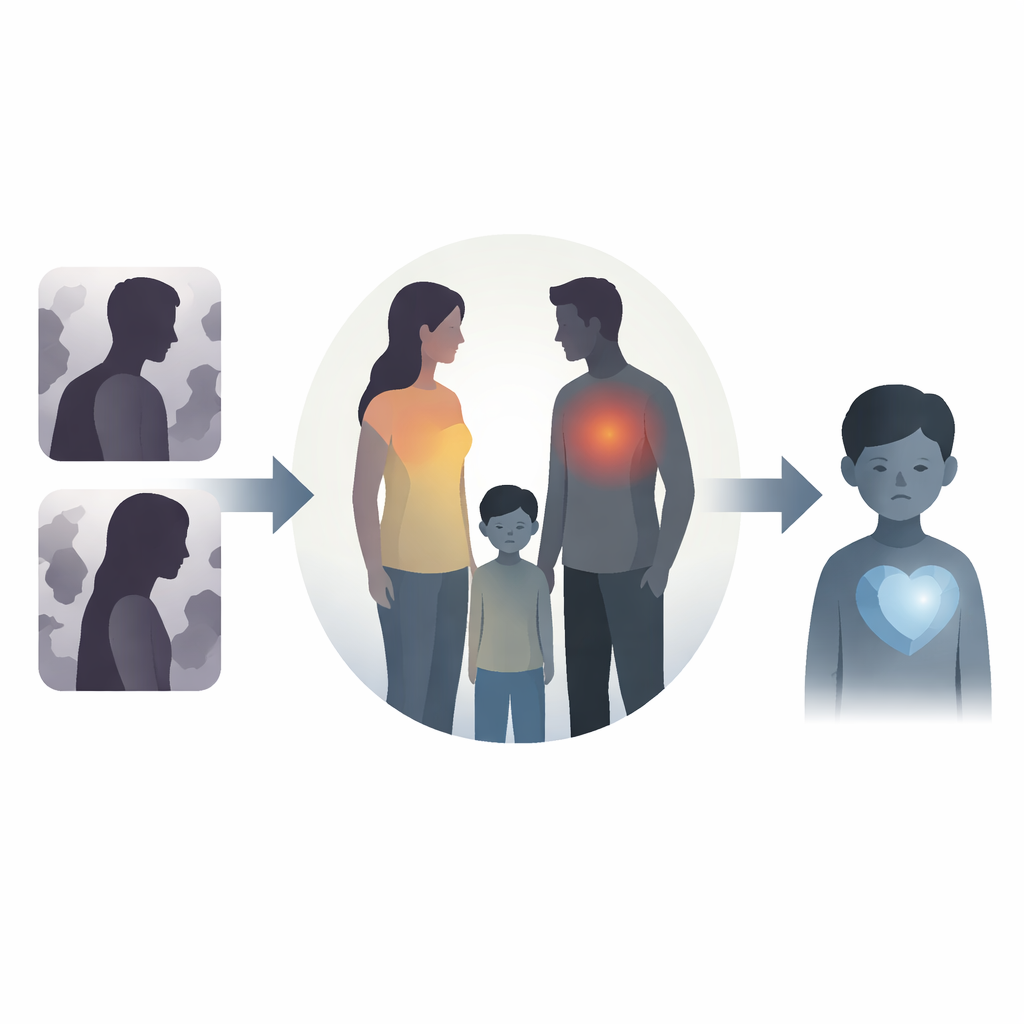
Many parents carry emotional scars from their own childhoods, yet hope to raise warm, caring children. This study asks a difficult question: when parents were emotionally mistreated as children, does that history quietly shape how they express feelings with their own sons and daughters—and in turn, how empathic or cold those children become? Focusing on families in China, the researchers followed parents and school‑age children over time to see how earlier harm might echo through everyday family emotions.
Emotional coldness in children
The researchers were especially interested in “callous‑unemotional” traits in children—patterns like seeming not to care when others are hurt, showing little guilt, or appearing emotionally flat. These traits, even at a young age, are linked to later problems such as bullying, aggression, and trouble with the law. Understanding where such emotional coldness comes from could help families and schools step in early, before these patterns harden.
Parents’ hidden history of hurt
The team surveyed 366 mother–father pairs with children aged 6 to 12 from two primary schools in southern China. Parents reported on whether, in their own childhoods, they had been emotionally abused or ignored—told they were worthless, insulted, or denied warmth and attention. Importantly, this study looked at what parents had suffered long before they became caregivers themselves, not at how they now treated their children. Six months later, both parents rated their child’s callous‑unemotional traits, giving the researchers a window into how past hurt might connect to present‑day parenting and child outcomes.
How everyday emotions carry the past forward
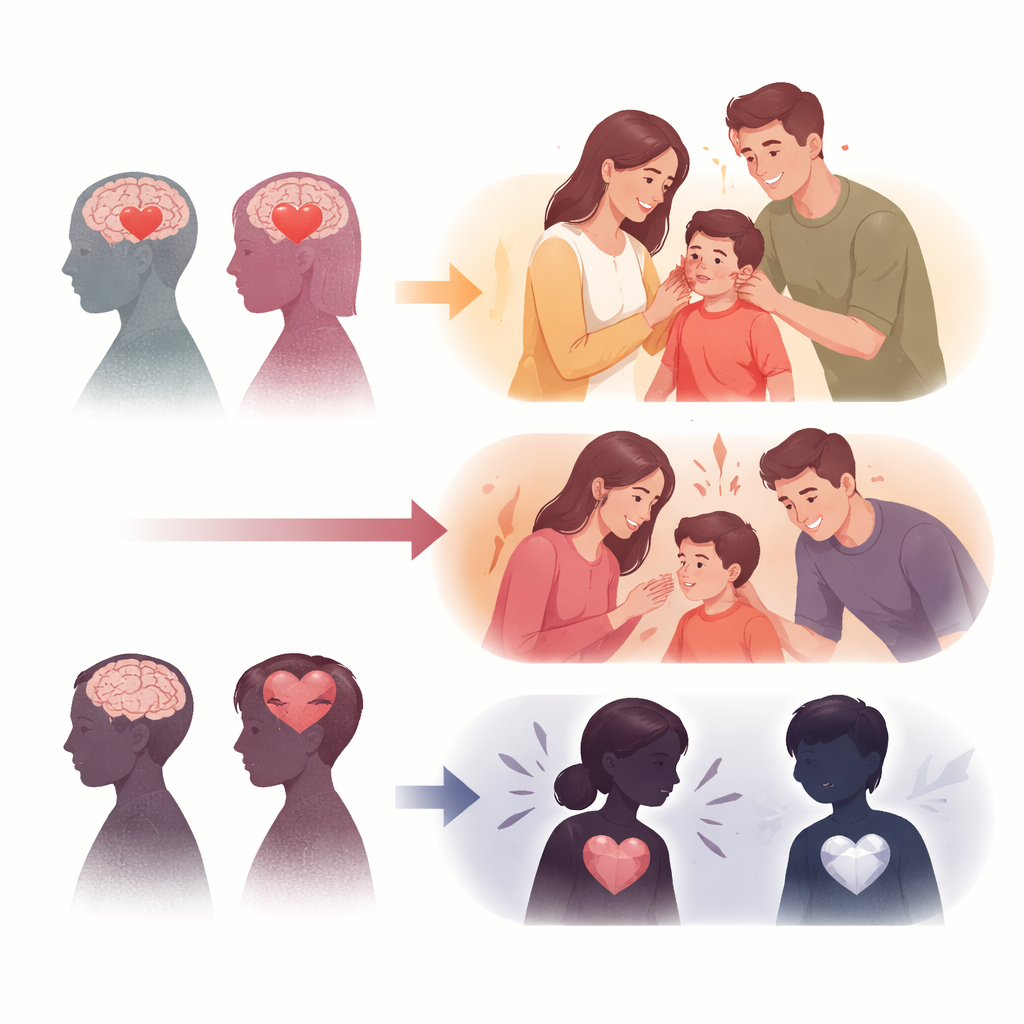
To explore what happens inside families, the study focused on “emotional expressiveness”—how openly parents show positive feelings such as affection and support, and negative feelings such as anger or irritation. Parents who had experienced more emotional maltreatment in their own childhoods tended to show less positive emotion at home. In fathers, higher childhood maltreatment was also tied to more frequent negative emotional displays. These emotional patterns, in turn, were linked to children who appeared more emotionally cold and unresponsive. In other words, a parent’s distant or harsh emotional style served as a bridge between their earlier mistreatment and their child’s later callous traits.
Fathers’ special role in family climate
By analyzing mothers and fathers together as a unit, the researchers uncovered a particularly strong role for fathers. When fathers who had been mistreated as children showed more negative emotion at home, their children were more likely to develop callous‑unemotional traits. At the same time, when either parent’s history of maltreatment was associated with lower positive emotion from that parent, children also showed more emotional coldness. The study revealed a crossover effect as well: mothers’ childhood mistreatment was linked to reduced positive emotional expression by fathers, which then predicted higher callous traits in children. This suggests that one parent’s past can subtly shape the other parent’s emotional behavior, influencing the whole family atmosphere.
What this means for helping families
For a general reader, the main message is that the emotional tone parents set at home—warm, encouraging, harsh, or withdrawn—is not just about personality or mood. It is often rooted in how they themselves were treated as children, and it can shape whether their own children grow into caring or emotionally detached individuals. The study suggests that breaking cycles of harm may depend less on blaming parents and more on helping them recognize and heal from their past, while learning healthier ways to show both positive and negative feelings. Programs that support parents, particularly fathers, in expressing warmth and managing anger could be a powerful way to protect children from developing cold, unfeeling patterns that may lead to serious problems later in life.
Citation: Hu, J., Chen, Q. & Yu, T. Intergenerational influence of parental childhood psychological maltreatment and emotional expressiveness on children’s callous-unemotional traits: a longitudinal actor–partner interdependence model. Humanit Soc Sci Commun 13, 281 (2026). https://doi.org/10.1057/s41599-026-06631-3
Keywords: callous-unemotional traits, childhood emotional abuse, parental emotional expression, intergenerational transmission, Chinese families