Clear Sky Science · en
Cross-cultural media literacy interventions: comparing Gali Fakta and Harmony Square in Indonesia and the United States
Why This Matters for Everyday News Readers
Every day, people in different countries scroll through headlines, memes, and forwarded messages, trying to decide what to believe and what to pass along. This study asks a simple but urgent question: can short online games help ordinary users become better at spotting misleading news—and does it matter where in the world they live? By comparing two fact-checking games in Indonesia and the United States, the researchers explore how culture, technology habits, and player engagement shape our ability to resist false information.

Two Games, Two Styles of Fighting Falsehoods
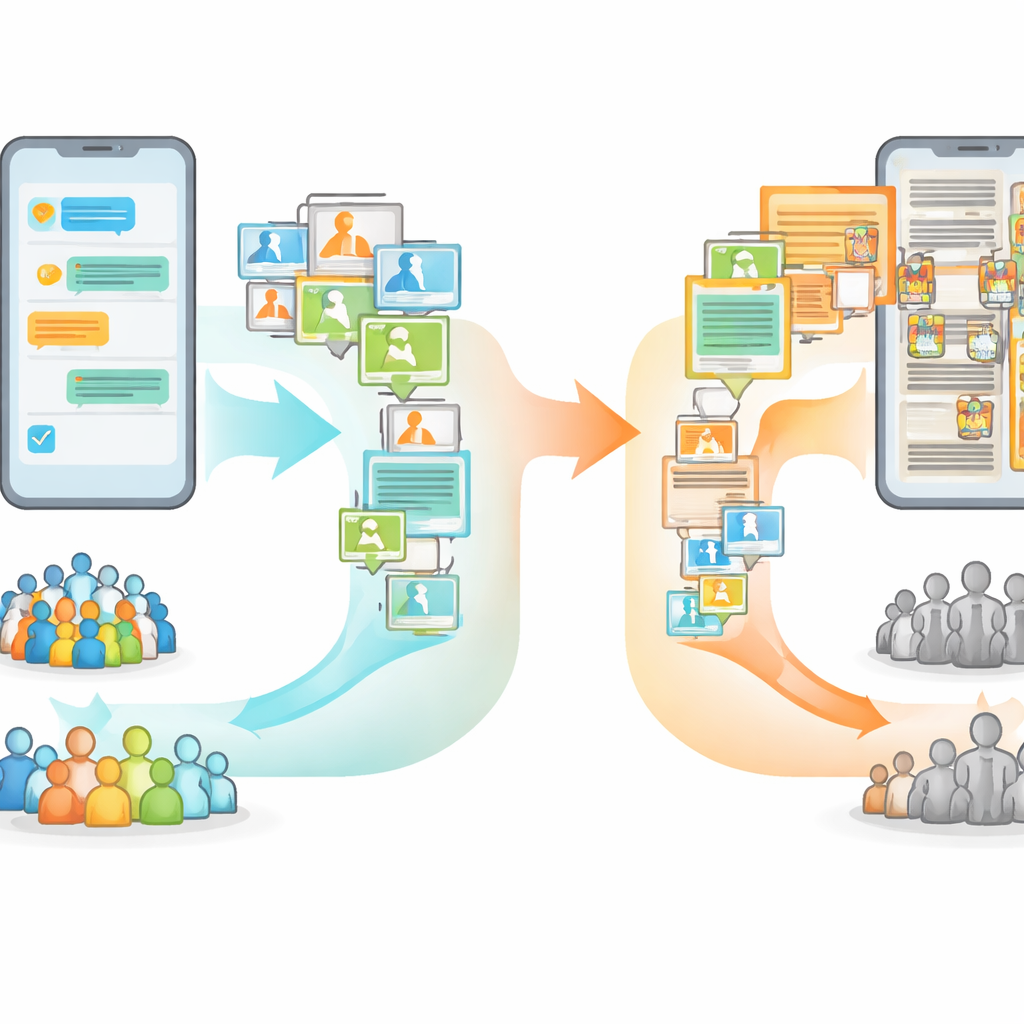
The paper focuses on two free online games designed to build “mental immunity” against misinformation before people encounter it. Gali Fakta, created in Indonesia, looks and feels like a familiar chat app. Players step into a group conversation with fictional friends and relatives who share questionable posts about health, politics, and money. The game asks players to decide whether a message might be false and how they would respond, then offers feedback and simple explanations. Harmony Square, designed in the West, takes a very different approach. It is a satirical political game that puts players in the role of a chief disinformation officer in a fictional town, teaching tactics like trolling and fearmongering by having players deliberately spread fake content in a controlled setting.
Testing the Games in Two Countries
To compare these approaches, the researchers recruited nearly 1,600 adults—about half in Indonesia and half in the United States. Participants were randomly assigned to play either Gali Fakta, Harmony Square, or the classic puzzle game Tetris as a neutral control. Before and after playing, everyone rated the accuracy of a set of real and false headlines and indicated whether they would share them. The researchers then looked at two outcomes: “accuracy discernment,” or how well people could tell true from false headlines, and “sharing discernment,” or whether they tended to share true headlines and avoid sharing false ones. Participants also rated how engaging they found the game, including how fun or tiring it was and whether they would recommend it to others.
What Worked in Indonesia—and What Did Not
In Indonesia, Gali Fakta delivered a mixed but important result. People who played it did not become significantly better at labeling headlines as true or false, so their accuracy discernment did not clearly improve. However, they did become more careful about what they said they would share: after playing, they were more likely to share true headlines and avoid sharing false ones compared with the Tetris group. In other words, the game nudged their behavior in a healthier direction, even if their raw accuracy ratings did not change much. Harmony Square, by contrast, showed no measurable benefit in Indonesia on either outcome. Indonesian players also rated Gali Fakta as more engaging than Harmony Square, suggesting that its chat-style format and prosocial tone fit better with their everyday online experience and social norms.
How Americans Responded to Both Games
In the United States, the story was different. Both games—Harmony Square in its original form and an English translation of Gali Fakta—helped participants improve on both accuracy and sharing discernment compared with the control group. That means Americans who played either game became better at telling real from false headlines and more selective about what they said they would pass along. Interestingly, Americans did not find Harmony Square clearly more engaging than Gali Fakta, even though Harmony Square was originally built for a Western audience and uses familiar political satire. This suggests that a simple, conversation-based design like Gali Fakta can work well even outside the culture it was built for, as long as the basic format feels intuitive.
Why Engagement and Culture Both Matter
Across both countries, one pattern stood out: higher engagement went hand in hand with better performance. People who found a game more enjoyable, less tiring, and more worth sharing tended to show greater gains in headline discernment. In Indonesia, this link appeared only for Gali Fakta, the game that also produced real improvements. In the U.S., greater engagement with either game was tied to better results, especially for judging accuracy. The findings point to an important lesson: media literacy tools work best when they are not only informative but also culturally familiar and genuinely engaging to use.
What This Means for Fighting False Information
For non-specialists, the takeaway is straightforward. Short, well-designed games can help people become more careful about what news they believe and share, but one size does not fit all. A satirical political game that works in the U.S. may fall flat in Indonesia, where people rely more on chat apps and may view spreading falsehoods as both socially and legally risky. At the same time, a simple, chat-based game created for Indonesia can still help users in the U.S. if it taps into universal experiences like helping friends and family. The study suggests that future efforts to curb misinformation should blend cultural sensitivity with engaging design, meeting people where they already are online and making the “healthy” choice—to pause, question, and share wisely—feel natural rather than burdensome.
Citation: Facciani, M., Huang, Q. & Weninger, T. Cross-cultural media literacy interventions: comparing Gali Fakta and Harmony Square in Indonesia and the United States. Humanit Soc Sci Commun 13, 288 (2026). https://doi.org/10.1057/s41599-026-06629-x
Keywords: misinformation, media literacy games, prebunking, social media, cross-cultural communication