Clear Sky Science · en
Not eating red meat is associated with reporting the environment and climate change as a top concern: evidence from a national U.S. survey
Why Your Dinner Plate Matters
Many of us have heard that eating less red meat is better for the planet, but it is not obvious who actually changes their diet because of environmental worries. This study looked at thousands of adults across the United States to see whether people who place the environment and climate change at the top of their concerns are more likely to say they do not eat red meat at all. The findings offer a window into how values, politics, and everyday eating choices are intertwined—and what that might mean for efforts to tackle climate change through food.
How Meat and the Planet Are Connected
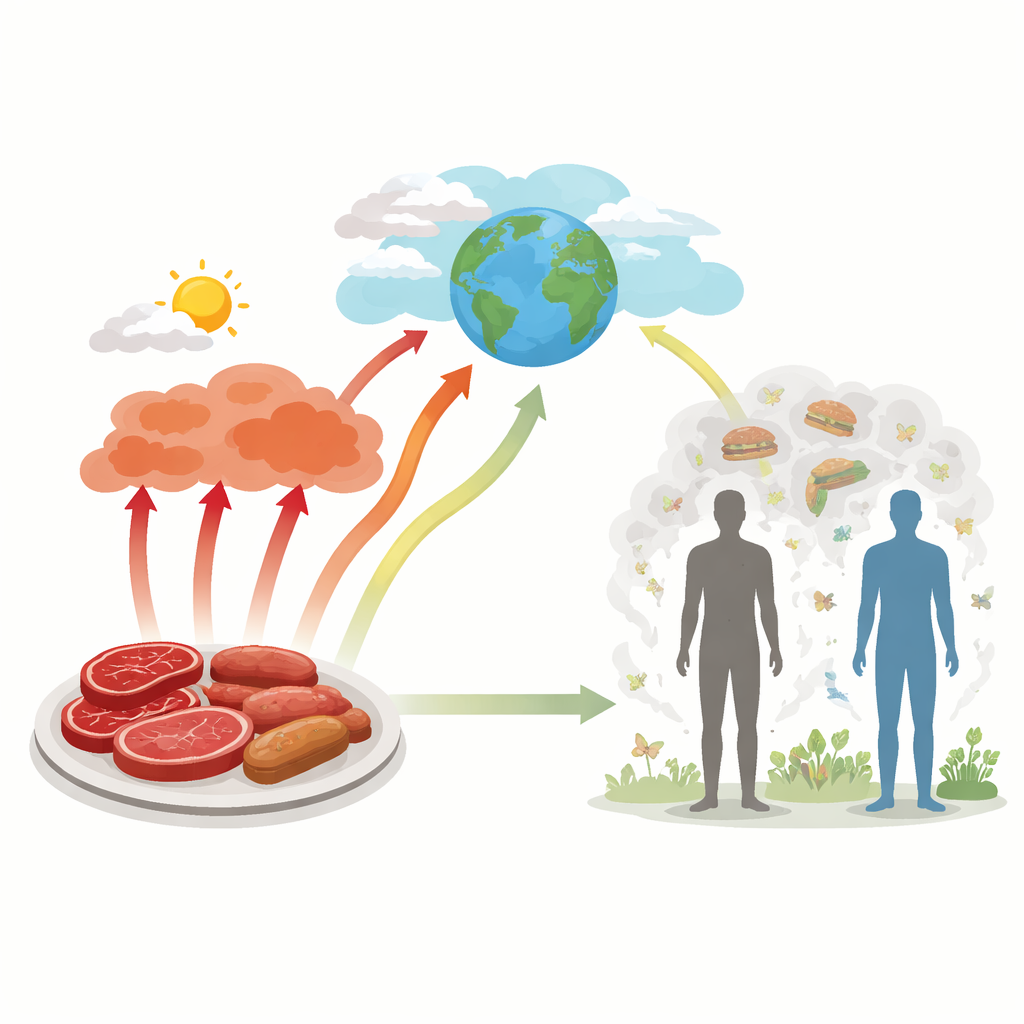
Raising animals for meat and dairy is responsible for a large share of greenhouse gas emissions from food, and red meat in particular has a heavy footprint. In wealthy countries like the United States, people typically eat far more red meat than is considered sustainable or healthy. Cutting back, even without going fully vegetarian or vegan, can significantly shrink the environmental impact of our diets. Yet previous research has shown that many people do not realize how strongly meat consumption is linked to climate change, and often rank other environmental actions, such as recycling, as more important.
What the Researchers Wanted to Know
The authors used data from the Understanding America Study, an ongoing national survey of U.S. adults. Over 7,300 participants answered questions between late 2022 and early 2023. The researchers focused on two simple measures: whether someone identified as a red meat eater, and which two issues they saw as the most important facing the country. One option on that list was “the environment and climate change,” and another was “health or healthcare.” The team also had detailed background information, including age, gender, education, income, race and ethnicity, region of residence, and how people voted in the 2020 presidential election.
Who Says They Skip Red Meat
Overall, about 12% of American adults in the survey said they do not eat red meat. This estimate is similar to other recent work suggesting that a little more than one in ten people in the United States identify with vegetarian, vegan, or fish-focused diets. In this study, not eating red meat was more common among women, older adults, people with a college degree, those with lower incomes, and people who identified as non-Hispanic Black, Hispanic, or Asian compared with non-Hispanic White respondents. It was also more frequent among those living in the West and Northeast, and among people who reported voting for Democrats or for another party, rather than Republicans.
Linking Concerns About Climate to Food Choices
The central question was whether putting the environment and climate change among one’s top issues was tied to not eating red meat. The researchers found that this connection remained strong even after taking into account all the background factors and whether people also listed health or healthcare as a top concern. In other words, people who ranked environmental issues at the top were significantly more likely to say they do not eat red meat, beyond what could be explained by their age, politics, income, or other traits. Interestingly, health and healthcare concerns were not as clearly linked to avoiding red meat, suggesting that climate-focused motivations may now play a distinct role for some Americans.
What This Means for the Future
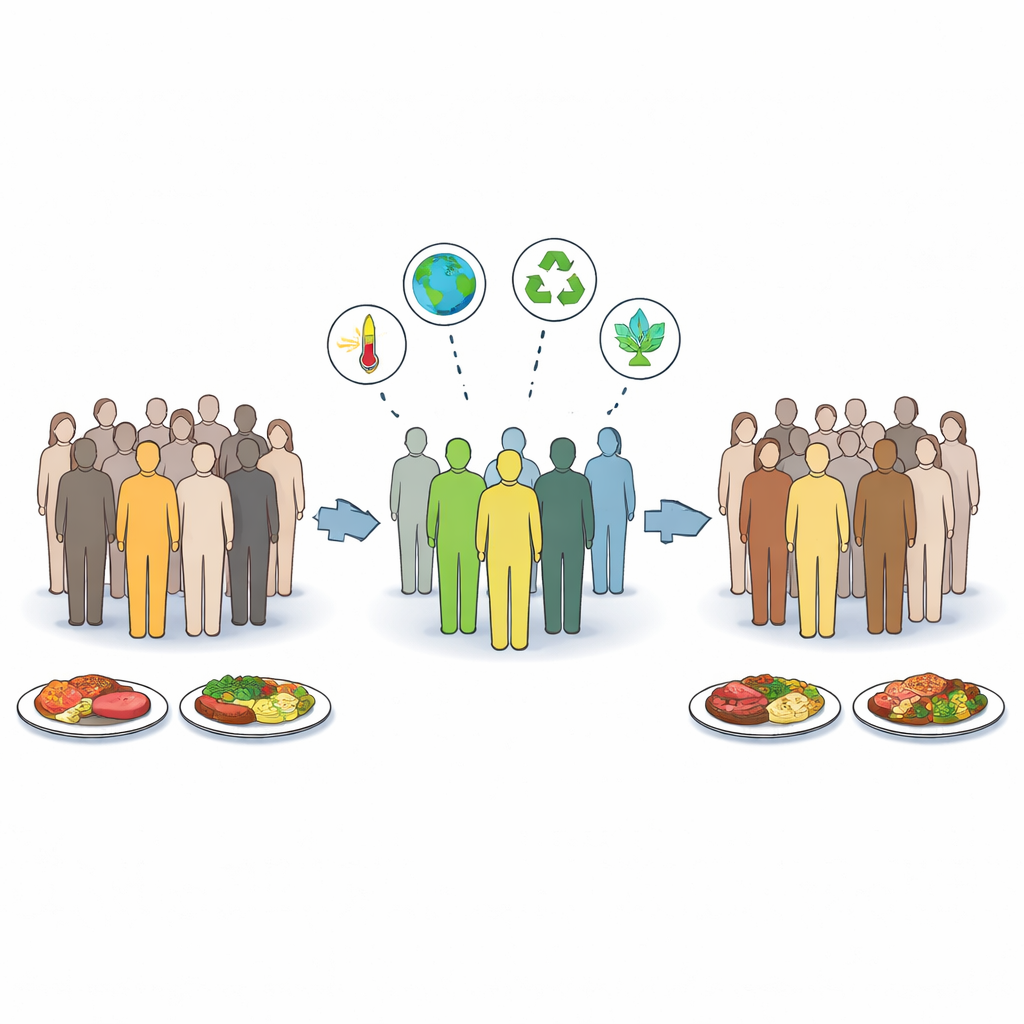
The findings suggest that Americans who care deeply about the environment are already more likely to avoid red meat, possibly because they are more aware of the climate impact of their diets. Yet only a small share of the population currently avoids red meat, even though other surveys show that many more people are willing to eat less of it. The authors argue that there is room for strategies that make the environmental and health consequences of meat clearer, such as simple warning labels or vivid images, while also tailoring messages to people with different levels of environmental concern. For everyday eaters, the study’s message is straightforward: if you worry about climate change, your choice to put less red meat on your plate is one tangible way to act on that concern.
Citation: Sleboda, P., Bruine de Bruin, W., Baker, K. et al. Not eating red meat is associated with reporting the environment and climate change as a top concern: evidence from a national U.S. survey. Humanit Soc Sci Commun 13, 295 (2026). https://doi.org/10.1057/s41599-026-06619-z
Keywords: red meat consumption, climate change, environmental concern, diet and sustainability, public opinion