Clear Sky Science · en
Environmental impacts of participants in small-scale sporting events
Why weekend races matter for the planet
Most of us think of big spectacles like the Olympics when we picture sports and the environment. But the rides, runs, and local tournaments that fill weekend calendars across the world may quietly add up to a far larger footprint. This article looks at a single small cycling event on Spain’s Mediterranean coast and asks a simple question: how much climate impact comes just from the way participants travel and stay overnight—and can organizers easily measure it themselves?
A closer look at a single cycling challenge
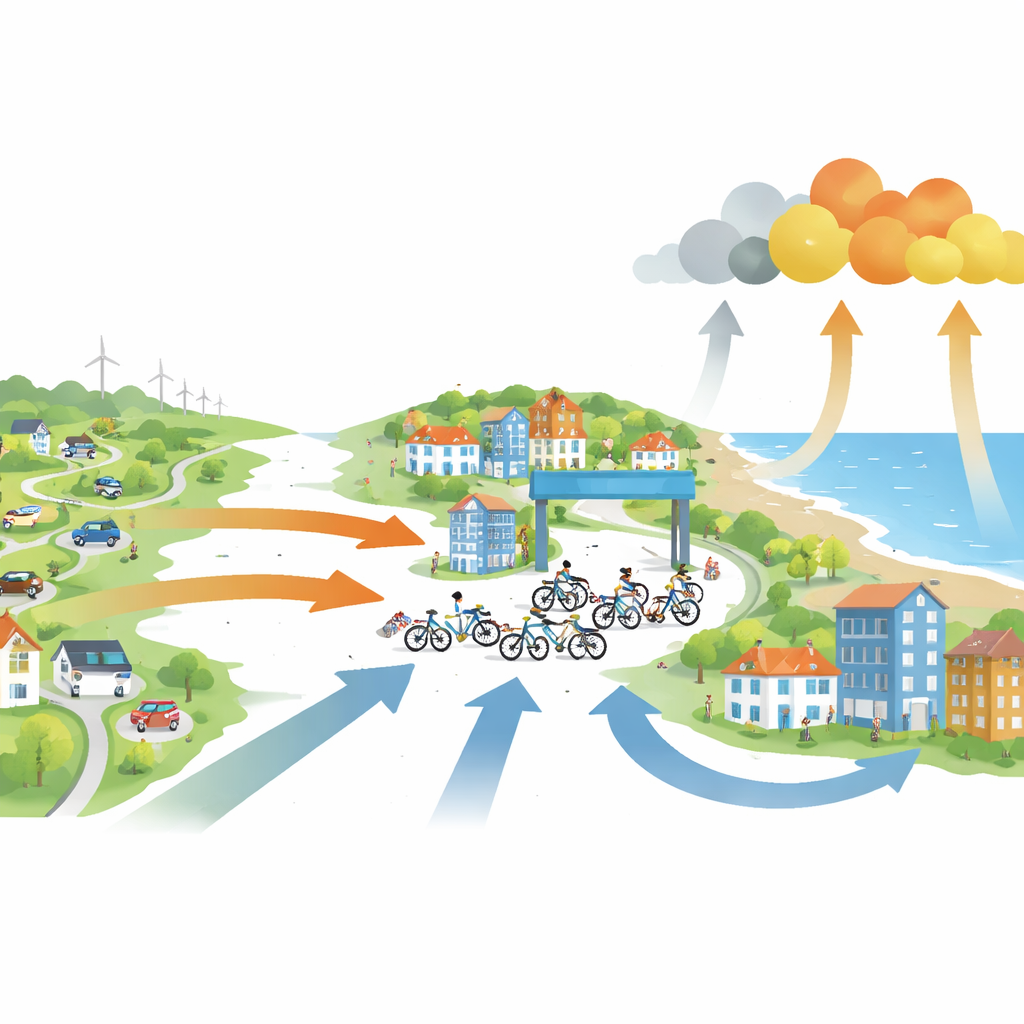
The authors focus on the Mediterranean Epic Gran Fondo, an amateur road and mountain cycling event held in the coastal town of Oropesa del Mar. The town is small, has limited public transport, and sits some distance from major hubs, so most riders must make special trips to attend. By concentrating on this one weekend event, the researchers use it as a test case for understanding the environmental burden of thousands of similar small and medium‑scale competitions that rarely make headlines but are held far more often than mega‑events.
Turning complex accounting into simple steps
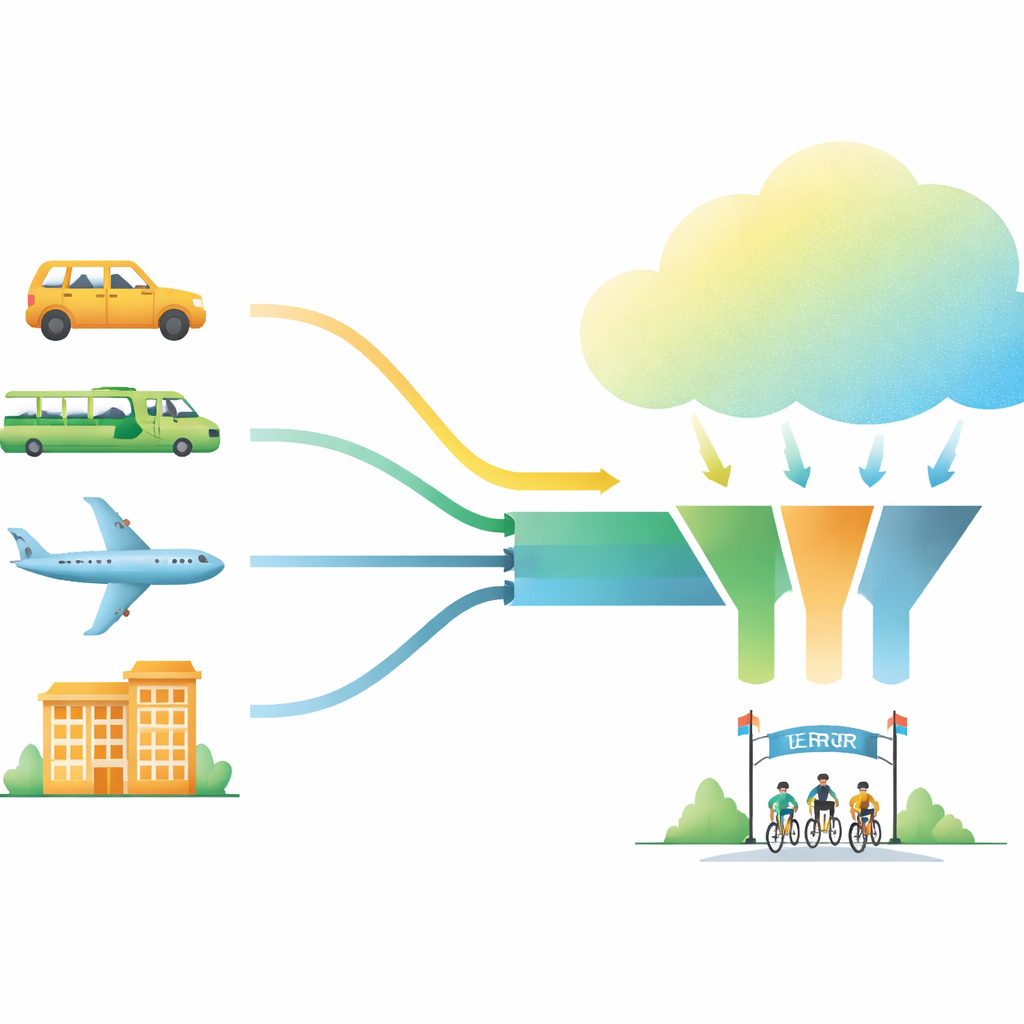
To make the impact understandable for non‑experts, the team relies on the Greenhouse Gas Protocol, a widely used standard for counting climate‑warming emissions. Instead of tracing every detail of the event, they zoom in on what are called “indirect” emissions from participants: their travel to and from the race and their nights in local accommodation. Using an online survey, 251 riders reported where they came from, how they traveled, how much fuel their cars used, and whether they stayed in hotels or other lodgings. Publicly available government data then linked each liter of fuel, kilometer by train, and hotel room‑night to an estimated amount of carbon dioxide released.
What the numbers reveal about getting there and staying over
Once the responses were cleaned and checked for duplicate vehicles and rooms, 230 complete travel records remained. Almost everyone came by car, often sharing rides with about two passengers per vehicle; only one participant flew, and a small number used trains. For cars, Spanish government figures on petrol and diesel were applied; trains were calculated with data from the national rail operator, and the lone flight was estimated using an international aviation calculator. For accommodation, British government conversion factors based on global hotel energy use supplied an emissions figure per occupied room per night in Spain, which was multiplied by the 86 rooms actually used by riders.
How big is the footprint of a “small” event?
Adding everything together, the participants’ travel and accommodation produced an estimated 13.46 tonnes of carbon dioxide equivalent. Travel dominated the total: about 12.85 tonnes came from getting riders to and from the event, with car journeys by far the largest source. Accommodation added roughly 0.6 tonnes—small compared with travel, but still substantial enough to warrant attention. These results echo findings from tourism and major sports competitions, where getting people to the venue usually outweighs other sources of emissions, yet they also highlight how event‑specific factors—like a remote location and the need to transport bicycles—shape behavior and impact.
What organizers and communities can do
Beyond the numbers, the study’s main contribution is a practical, step‑by‑step roadmap that smaller organizers can follow without specialist software or expert consultants. By collecting basic information from entrants during registration and using free or official calculators, they can estimate emissions in advance, design measures to cut them—such as promoting car‑sharing, improving links to lower‑impact transport, or partnering with greener accommodation—and, where necessary, plan compensation schemes. The authors argue that because small events are so common, routine measurement should eventually become a requirement supported by public policy. Even if early estimates are rough, they give sports managers and local authorities a concrete starting point for making everyday sporting events part of the climate solution rather than an overlooked part of the problem.
Citation: Alguacil, M., Gregori-Faus, C., Parra-Camacho, D. et al. Environmental impacts of participants in small-scale sporting events. Humanit Soc Sci Commun 13, 292 (2026). https://doi.org/10.1057/s41599-026-06617-1
Keywords: sports events, carbon footprint, sustainable travel, small-scale tournaments, environmental impact