Clear Sky Science · en
Falling in love with AI virtual agents: the role of physical attractiveness and perceived interactivity in parasocial romantic relationships
Why Digital Crushes on AI Matter
Many people now talk with virtual companions that listen, comfort, and even flirt. For some young women, these encounters do not feel like simple chats with a tool, but more like falling for a person. This study explores why some users develop one-sided romantic feelings for AI characters, how looks and conversation style matter, and what happens in the brain when those feelings emerge—offering clues about both the promise and the risks of loving a machine.
From Helpful Helper to Heartthrob
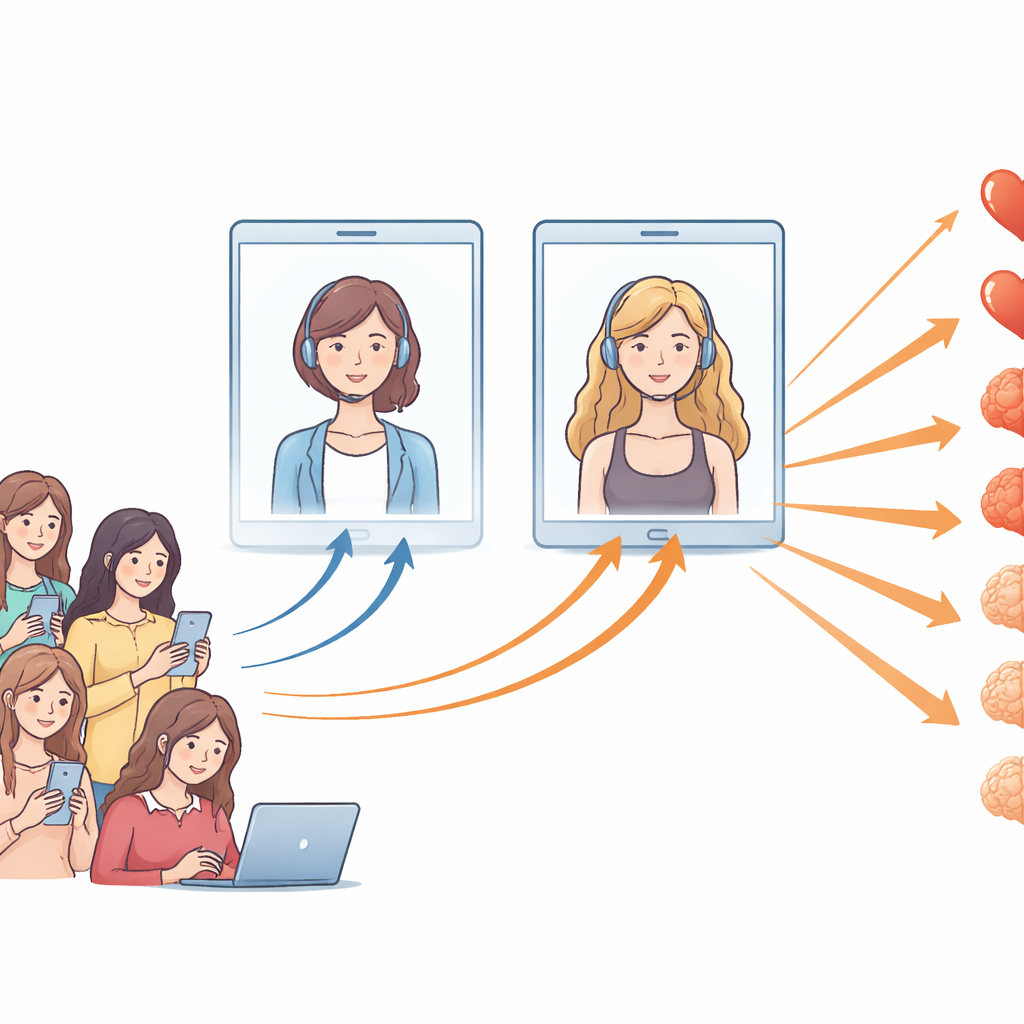
The researchers focused on “parasocial romantic relationships,” a term for one-way romantic bonds people feel toward a figure that cannot truly love them back—traditionally a movie star or fictional hero, and now also AI chatbots and virtual partners. Such bonds can soften loneliness and support identity exploration, but they can also encourage withdrawal from real-life relationships and fuel anxiety or depression if taken too far. The team zeroed in on female university students, a group especially drawn to character-based games and AI companions, to understand what makes an AI agent feel like a potential lover rather than just software.
Looks, Conversation, and First Impressions
In the first study, 117 female students interacted with a male AI character presented in four versions: more or less physically attractive, and more or less interactive. Attractiveness was manipulated using different character images generated by an AI art model, while interactivity ranged from simple scripted messages to free-flowing conversations powered by an advanced language model. After chatting, participants rated how romantically attached they felt to the agent. The results showed that appearance did matter: more attractive agents evoked stronger romantic feelings overall. But appearance was not the whole story. When the agent was very attractive, higher interactivity—responses that felt responsive, personal, and emotionally tuned—significantly boosted romantic attachment. When the agent looked less appealing, even lively conversation could not fully compensate; romantic feelings stayed comparatively low.
Peeking Inside the Romantic Brain
The second study asked a deeper question: Do romantic feelings toward an AI resemble those toward a real partner in the brain? Forty-two women who were in relationships completed a brain-imaging experiment using functional near-infrared spectroscopy. Each participant first interacted with a highly attractive virtual agent that was either strongly or weakly interactive. Later, while wearing the brain sensor, they viewed photos of the virtual agent and of their real boyfriend and were asked to recall warm, affectionate moments with each. This setup allowed the researchers to compare how the brain responded to AI versus real love under different levels of perceived interactivity.
When AI Feels Almost Human
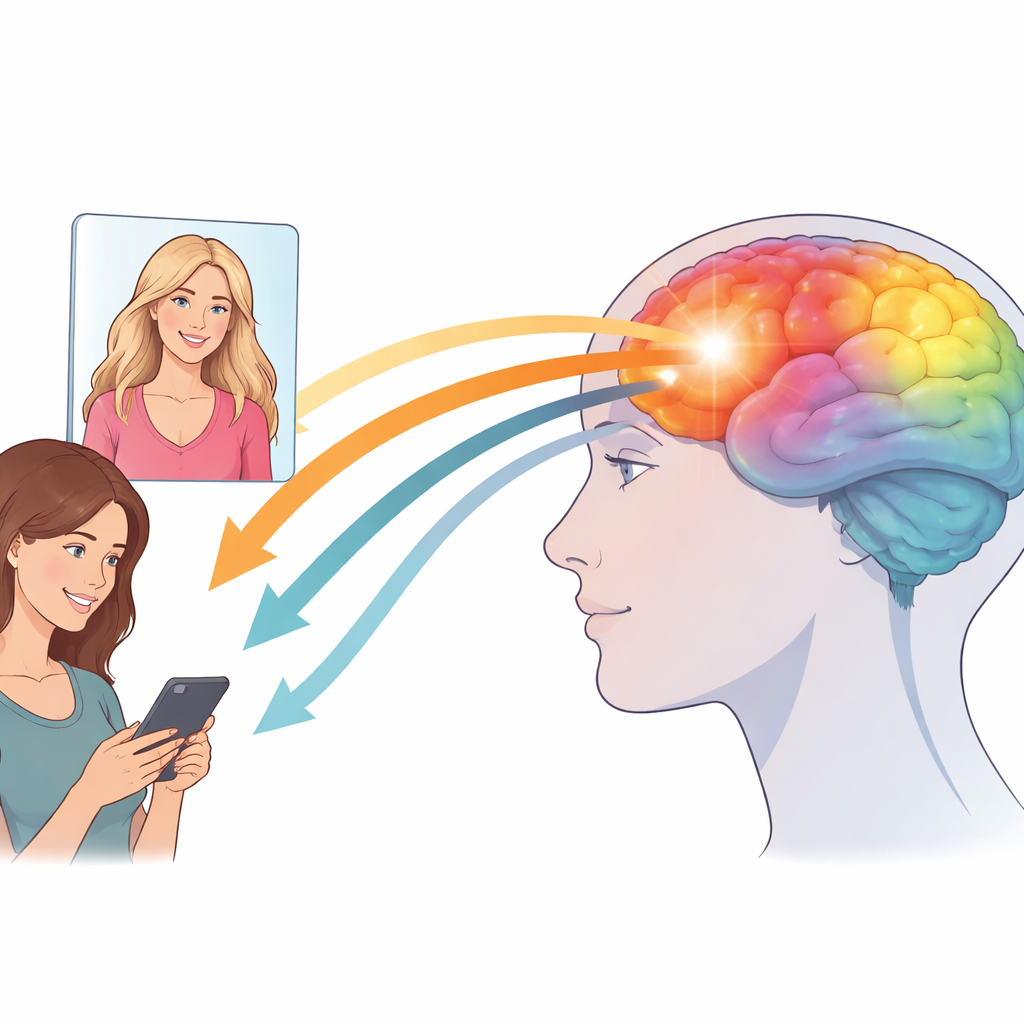
Brain activity patterns suggested that interaction quality changes how “real” AI romance feels. Under high interactivity, areas linked to complex thinking and emotion regulation in the frontal lobes became more active, hinting that participants were investing more mental effort and emotional energy in the AI connection. Several regions involved in touch, vision, and social understanding showed smaller gaps between responses to the AI agent and to real partners when the agent was highly interactive. One region that helps distinguish self from others was actually less active with a highly interactive agent, suggesting that the boundary between “me” and “it” can blur when an AI mirrors a user’s feelings too closely.
What This Means for Everyday Life
To a layperson, the takeaway is that people can develop surprisingly intense romantic feelings for AI companions, especially when those agents are visually appealing and respond in a warm, tailored, humanlike way. In the brain, these AI romances tap into many of the same circuits that support real love, even while remaining one-sided. This mixture of comfort and illusion means AI companions could offer emotional support for some users but also tempt others into substituting simulated intimacy for real relationships. As AI grows more lifelike, designers, policymakers, and users will need to recognize both the emotional power and the potential mental health pitfalls of falling in love with something that cannot truly love back.
Citation: Jin, S., Xu, F., Yuan, Z. et al. Falling in love with AI virtual agents: the role of physical attractiveness and perceived interactivity in parasocial romantic relationships. Humanit Soc Sci Commun 13, 284 (2026). https://doi.org/10.1057/s41599-026-06613-5
Keywords: AI romantic relationships, virtual companions, parasocial bonds, human–AI interaction, digital intimacy