Clear Sky Science · en
Digital storytelling and narrative competence in English language learning: assessing the pedagogical effects of vlogging and narrative-based instruction
Why Recording Yourself Matters for Language Learning
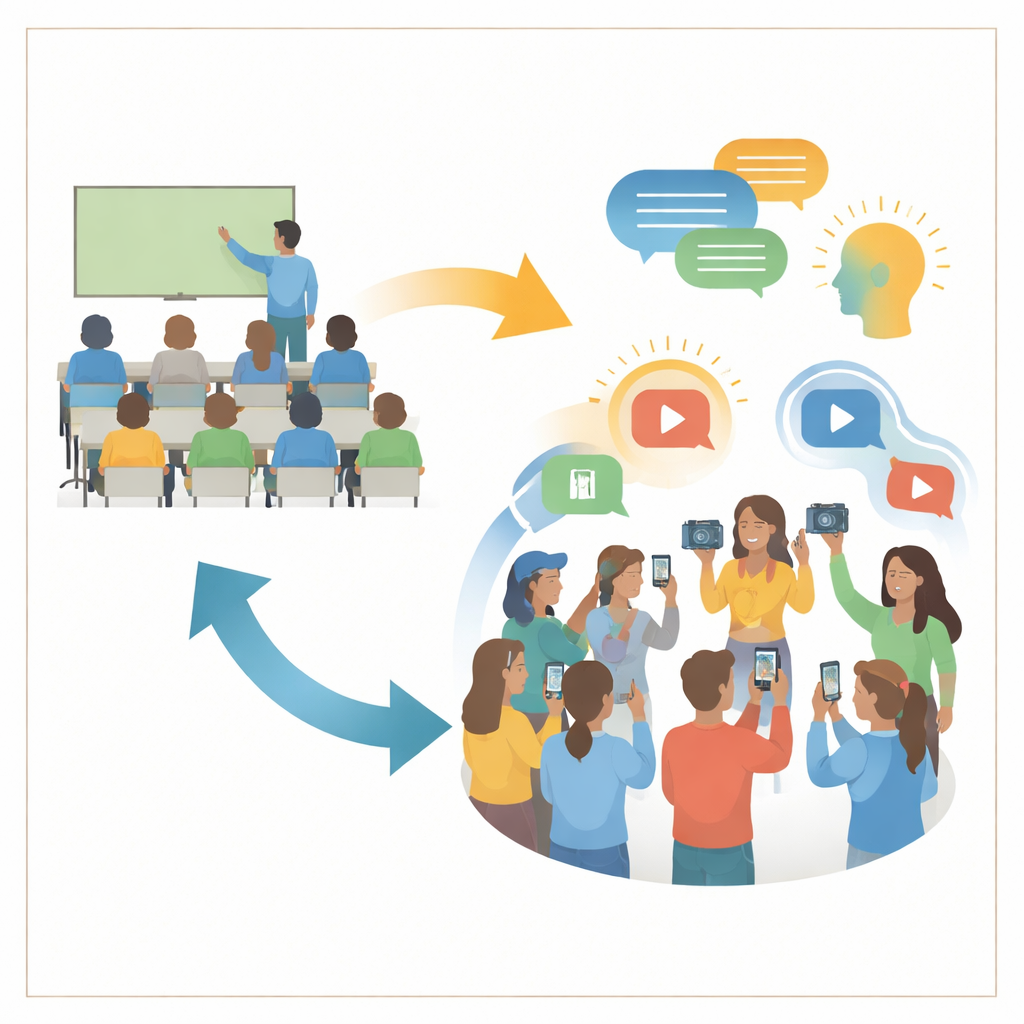
Imagine learning English not by filling in worksheets, but by filming short videos about your own life. This study explores how “vlogging” – making simple video blogs on a phone – can change the way learners develop their speaking skills. Instead of repeating textbook dialogs, students plan, record, and share personal stories, then improve them over several takes. The research asks a straightforward question: when learners tell their own stories on camera, do their language skills and enthusiasm grow more than in a traditional classroom?
From Textbooks to Personal Stories
The paper begins by describing a mismatch in English education worldwide. Many learners spend years studying grammar and reading, yet still struggle to speak clearly and confidently, especially when telling stories about real experiences. At the same time, millions of young people already use platforms like YouTube, Instagram, and TikTok to share moments from their daily lives. The author argues that this familiar habit—recording and posting videos—can be turned into a powerful learning tool. By asking students to create short narrative vlogs, teachers can connect language practice with genuine self-expression, rather than test preparation alone.
What the Study Actually Did
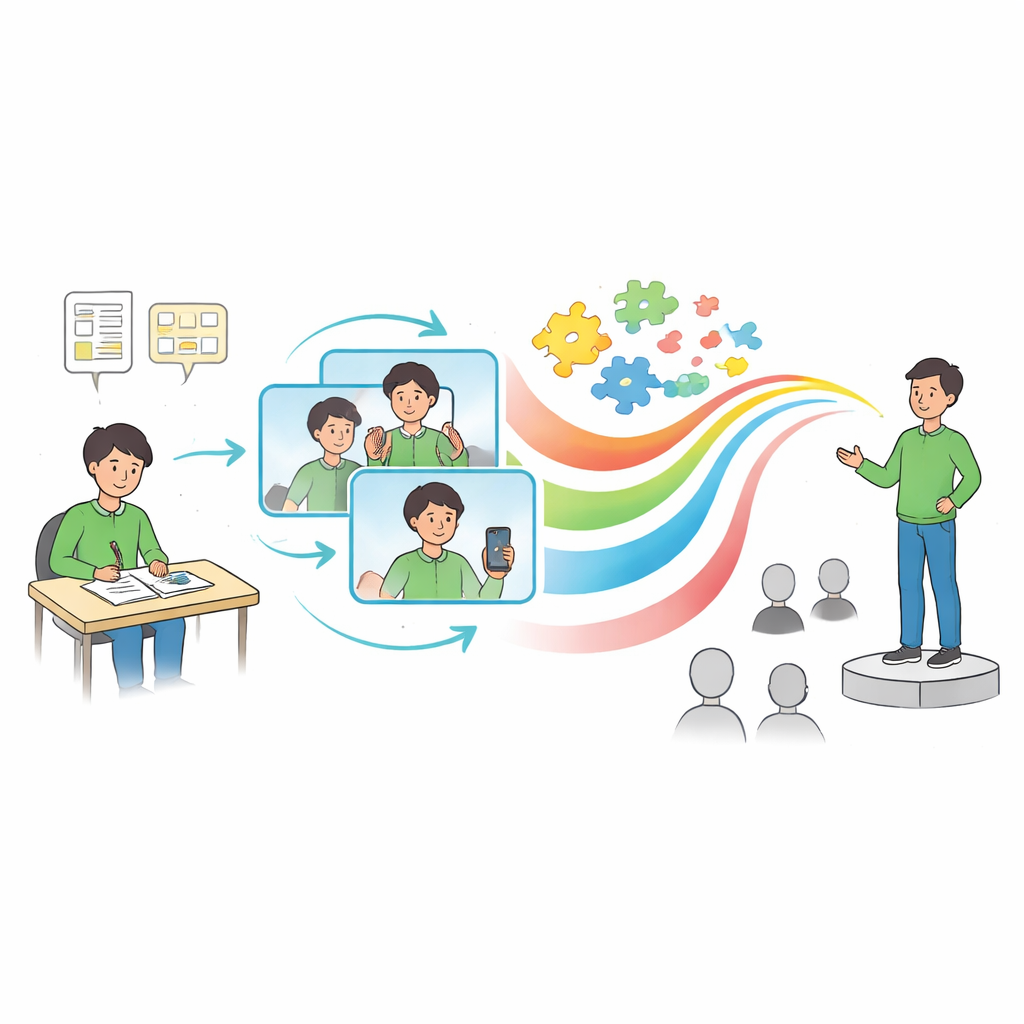
To test this idea, the researcher worked with 160 intermediate English learners taking a communication course. Half followed a traditional program centered on lectures, grammar explanations, reading passages, and written assignments. The other half spent eight weeks on carefully guided vlogging tasks. Each week, these students received a story prompt, drafted a script, exchanged feedback with classmates, and then recorded short videos telling their stories. Their work was judged before and after the course on four language qualities—how well they structured a story, how accurate their grammar was, how rich their vocabulary became, and how smoothly they spoke—as well as on how emotionally involved they felt in learning.
How Vlogging Changed Learners’ Skills
The results were striking. Students in the vlogging group improved significantly on every measured skill. Their stories became more clearly organized, with a stronger sense of beginning, middle, and end. They made fewer grammatical mistakes and used a wider range of words. Their speech became faster and more fluid, with fewer awkward pauses. The biggest change, however, was in engagement: learners reported feeling more motivated, more emotionally invested, and more willing to put in extra effort. Statistical analyses showed that improvements in grammar, vocabulary, and fluency helped fuel this involvement—and that engagement, in turn, played a key role in producing more structured and expressive spoken stories.
Voices Behind the Numbers
Interviews with participants bring these numbers to life. Many students said that talking to a camera felt less intimidating than speaking in a formal classroom, because it was more like telling a story to friends. Being able to re-record until they were satisfied pushed them to notice and correct their own mistakes and to search for more vivid words. Seeing that classmates would watch their videos gave the activity a real sense of audience and purpose. Some did face hurdles—such as weak internet connections or limited skill with editing apps—highlighting the need for technical support and equal access to devices. Still, most described the process as enjoyable, confidence-building, and very different from routine exercises.
What This Means for Classrooms
The study concludes that vlogging is not a magic replacement for traditional teaching, nor is it identical to classic storytelling with carefully crafted plots. Instead, it serves as a rich rehearsal space where learners experiment with language, practice speaking repeatedly, and connect emotionally with what they say. When teachers provide narrative prompts and some structure, these video tasks can lay the groundwork for stronger storytelling skills in a second language. For everyday readers and educators, the takeaway is clear: inviting students to share their own lives on camera can turn English practice into a more active, personal, and effective experience.
Citation: Zhang, F. Digital storytelling and narrative competence in English language learning: assessing the pedagogical effects of vlogging and narrative-based instruction. Humanit Soc Sci Commun 13, 250 (2026). https://doi.org/10.1057/s41599-026-06610-8
Keywords: vlogging, digital storytelling, English speaking, language learning, student engagement