Clear Sky Science · en
Excessive screen time is associated with mental health problems in US children and adolescents: physical activity and sleep as parallel mediators
Why Screens and Kids’ Minds Matter
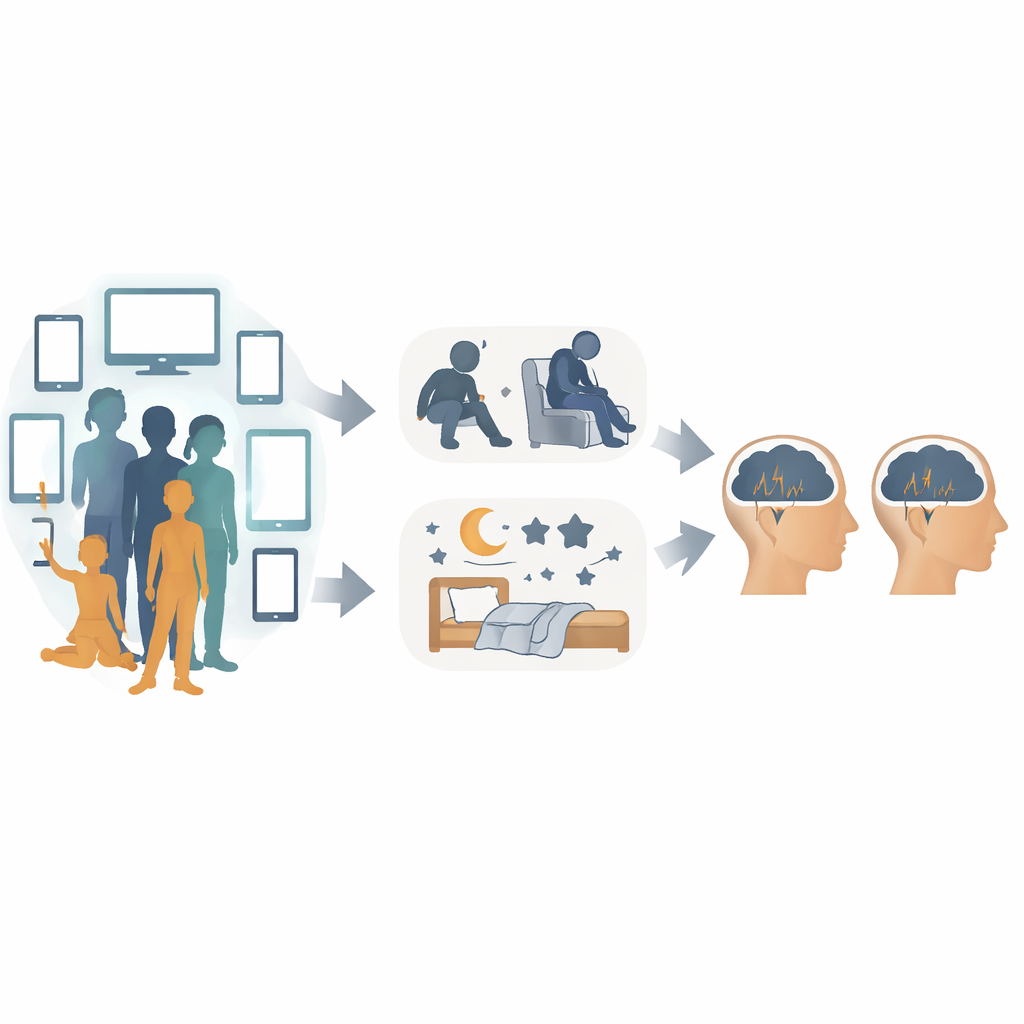
Parents today often worry that their children spend too much time on phones, tablets, and computers. This study looks closely at that concern using a huge national survey of more than 50,000 U.S. children and teenagers aged 6 to 17. The researchers asked a simple but pressing question: when kids spend many hours a day on screens, does it relate to problems like anxiety, depression, behavior issues, and ADHD—and if so, is that partly because screens push out exercise and disturb healthy sleep?
More Than Just Extra Entertainment
The team worked with data from the National Survey of Children’s Health collected in 2020–2021, during the COVID-19 pandemic when screen use surged and routines were shaken. Parents reported how many hours their child typically spent on screens for non-school activities on weekdays, how often the child was active for at least an hour, how long they slept, and whether they went to bed at roughly the same time each night. They also reported whether a doctor or educator had ever told them their child had anxiety, depression, behavior or conduct problems, or ADHD. This allowed the researchers to see how screen time, daily habits, and mental health fit together in real families’ lives.
When Screen Time Crosses a Line
The analysis showed that heavy screen use—defined as four or more hours a day—was consistently linked with higher odds of mental health problems. Compared with lighter users, kids in the heavy-use group were more likely to have anxiety and depression, and also more likely to have diagnosed behavior problems or ADHD. These links held even after accounting for many other factors, such as age, gender, race and ethnicity, family income, insurance status, and measures of family resilience. In other words, for many children, long stretches of daily screen time go hand in hand with emotional and behavioral difficulties.
How Moving Less and Sleeping Worse Fit In
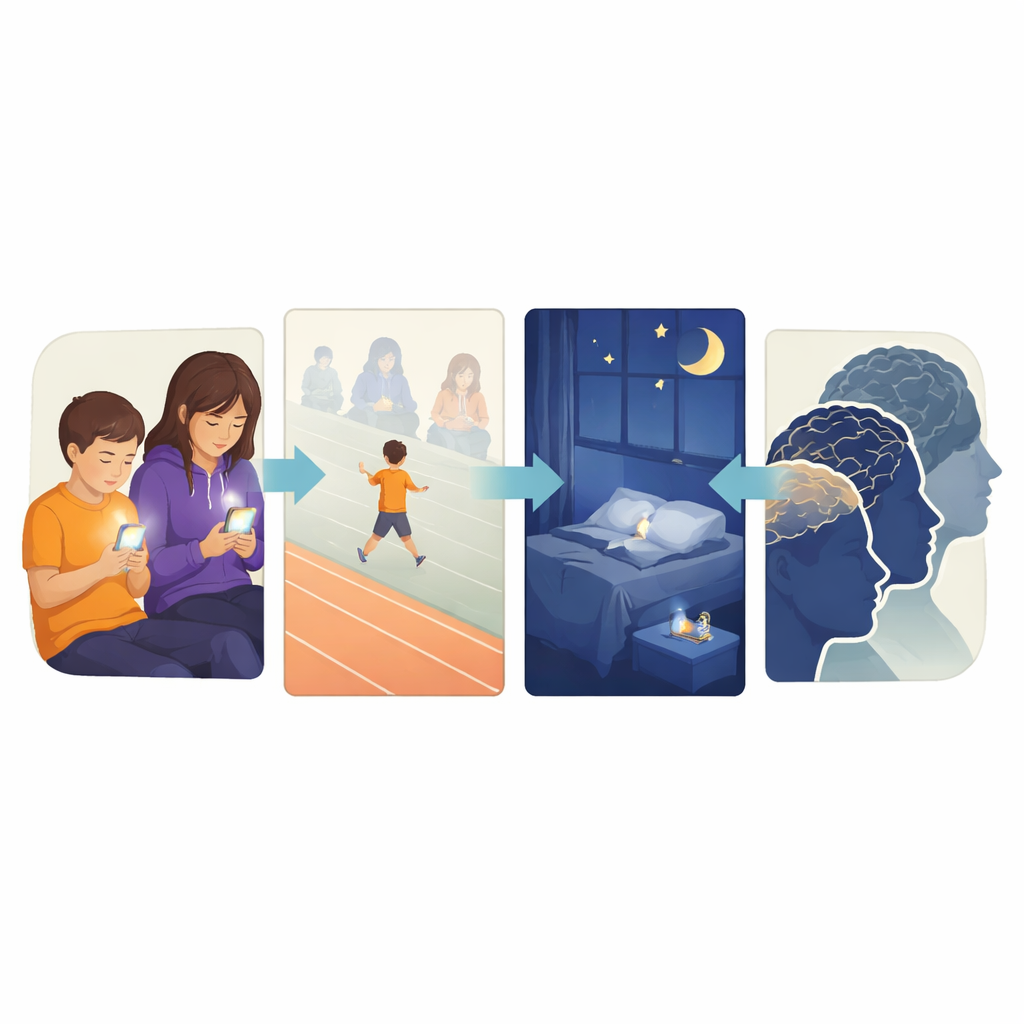
To understand why screens might relate to mental health, the researchers examined three everyday behaviors that screens can easily disrupt: physical activity, sleep duration, and having a regular bedtime. They found that kids who spent more time on screens tended to move less, sleep for shorter periods than recommended, and have less consistent bedtimes. In turn, all three of these behaviors were linked to worse mental health. Using advanced statistical models, the study estimated how much of the connection between heavy screen time and mental health problems could be explained by each of these pathways. Physical activity turned out to be the strongest bridge, accounting for roughly one-third of the association. Irregular bedtimes explained almost one-fifth to one-quarter, while short sleep duration played a smaller but still noticeable role.
Different Ages, Different Vulnerabilities
The study also looked at three age groups: 6–10, 11–13, and 14–17 years. Across all groups, more screen time was tied to less movement and more disrupted sleep. But the impact on mental health was not the same at every age. Among teenagers, heavy screen use showed the clearest direct links to depression, behavior issues, and ADHD, suggesting that older youth may be particularly vulnerable. For younger children, sleep routines—especially going to bed at a consistent time—played a more central role, while physical activity became more important as kids moved into early and later adolescence. These patterns hint that solutions should be tailored to a child’s stage of development rather than one-size-fits-all.
Practical Takeaways for Families
The authors emphasize that screens are not all bad; they can help kids learn, stay in touch with friends, and relax, especially during stressful periods like the pandemic. The problem arises when screen use grows so large that it crowds out play, exercise, and steady sleep routines. Their results suggest that families and communities do not need to ban devices outright. Instead, they can focus on keeping recreational screen time from becoming excessive, building in at least an hour of active movement most days, and protecting a regular bedtime with enough sleep for each age group. By reshaping daily routines around movement and sleep, it may be possible to soften the mental health impact of a digital world on today’s children and teenagers.
Citation: Dai, Y., Ouyang, N. Excessive screen time is associated with mental health problems in US children and adolescents: physical activity and sleep as parallel mediators. Humanit Soc Sci Commun 13, 256 (2026). https://doi.org/10.1057/s41599-026-06609-1
Keywords: screen time, child mental health, physical activity, sleep habits, ADHD and behavior