Clear Sky Science · en
Coupling coordination of human settlements environment and residents’ well-being in China’s mega-cities and its influencing factors
Why City Life and Happiness Belong Together
For anyone who has ever felt that a city can be both exciting and exhausting, this study speaks directly to that tension. It asks a simple but powerful question: as China’s biggest cities build more roads, homes, parks, and services, are their residents actually becoming better off in a balanced way? By tracking how living conditions and quality of life move together over more than a decade, the authors show where progress is real, where it lags, and what ingredients matter most for making mega-city life both livable and fulfilling.
How the Study Looks at City Life
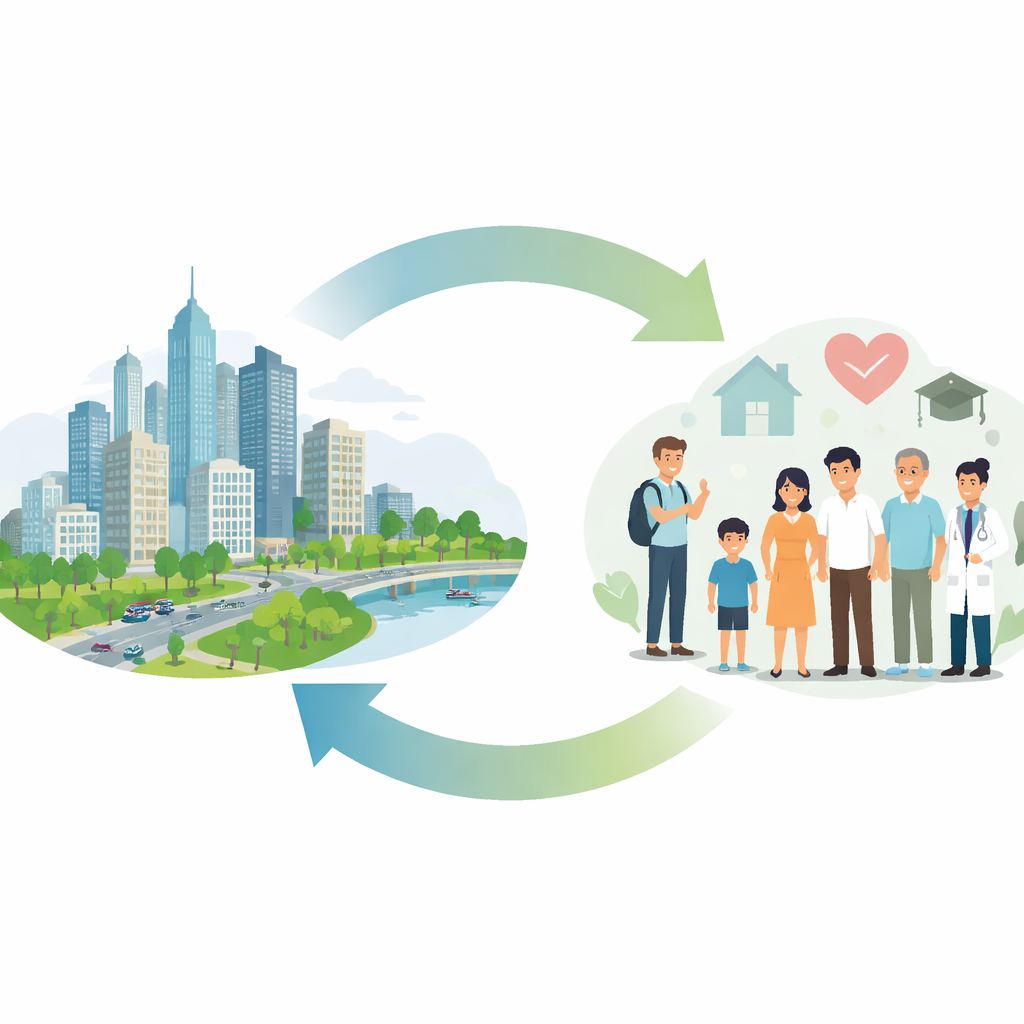
The researchers examine seven of China’s mega-cities—Beijing, Shanghai, Tianjin, Guangzhou, Shenzhen, Chengdu, and Chongqing—from 2011 to 2023. They treat the city as two linked systems. One is the “human settlements environment,” which covers housing space, transport, green areas, air quality, and the strength of the local economy. The other is residents’ well-being, captured through concrete features people depend on every day, such as roads and buses, schools and libraries, hospitals and insurance, pensions, income, and even family stability. Using official statistics, they combine dozens of individual indicators into overall scores for each system, then measure how closely the two move together over time.
Tracking Progress in City Conditions
Across all seven cities, the physical and ecological side of city life clearly improved. On average, the index for the human settlements environment rose steadily, reflecting better housing conditions, more complete basic services like water and waste treatment, and cleaner air, especially after national campaigns against pollution. Cities such as Guangzhou and Chengdu stayed above the overall average almost every year, suggesting that their investments in infrastructure and green spaces paid off. Other cities, like Tianjin, still showed progress but remained at the back of the pack, indicating that their built and natural environments have more room to grow.
How People’s Well-Being Has Changed
Residents’ well-being also advanced, but not as quickly or as evenly. Shanghai and Shenzhen, powered by strong economies and rapid upgrades in services, climbed to the top of the well-being rankings, while Beijing remained solidly above average. In contrast, Chengdu and especially Tianjin lagged, with lower scores that hint at gaps in public services, social security, or income compared with the sharp improvements in their physical environment. Overall, the average well-being index increased substantially, showing that better services, cleaner surroundings, and expanding social programs have made big-city life more comfortable and secure for many urban Chinese.
How Closely Places and People Move in Step
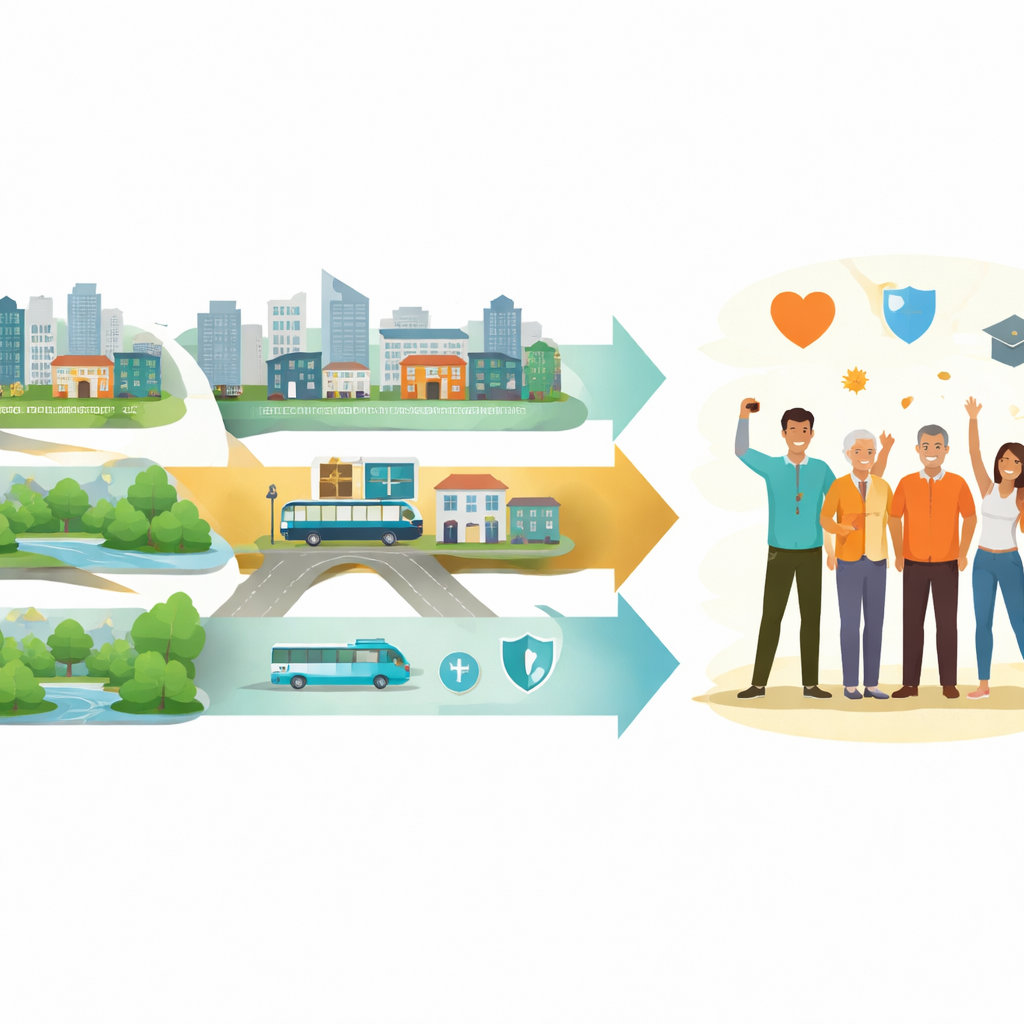
The heart of the study is the idea of “coupling coordination,” which describes how smoothly city conditions and residents’ well-being develop together. Using a model borrowed from physics, the authors calculate how strongly the two systems interact and whether that interaction is well balanced. Between 2011 and 2023, the average coordination score rose from a level the authors call “basic coordination” to “moderate coordination.” Cities like Beijing, Shenzhen, and Guangzhou show the strongest harmony between environment and well-being, while Tianjin and, to a lesser degree, Shanghai trail the average. Yet in every city, the same pattern emerges: the physical environment has generally advanced faster than people’s lived benefits, meaning that residents are not fully reaping the rewards of new infrastructure and cleaner surroundings.
What Matters Most for Better City Living
To uncover what really drives this balance, the study examines how each individual indicator relates to the coordination score. Several factors stand out. High population density can be a double-edged sword, straining resources when mismanaged but boosting service efficiency when handled well. Strong consumer spending hints at higher material comfort but may push up resource use. Most strikingly, education-related measures—the average years of schooling among adults and the share of government budgets devoted to education—show the tightest links with good coordination. A dense bus network, generous social spending, and ample health care capacity also prove important. Together, these results suggest that it is not enough to pave roads and plant trees; cities must invest deeply in people, knowledge, and fair access to services.
What This Means for the Future of Mega-City Life
In plain terms, the study concludes that China’s major cities are getting better at building places to live, work, and play, and that these improvements are gradually lifting people’s quality of life. But it also warns that the “software” of the city—schools, health care, pensions, and everyday services—still trails the “hardware” of buildings and transport. Closing this gap will require policies that treat education, social security, and public transport as central pillars of urban development, not afterthoughts. If city leaders build not only cleaner streets and greener parks but also more educated, secure, and connected communities, they can turn rapid urban growth into lasting well-being for millions of residents.
Citation: Zheng, W., Chen, Z., Liu, X. et al. Coupling coordination of human settlements environment and residents’ well-being in China’s mega-cities and its influencing factors. Humanit Soc Sci Commun 13, 263 (2026). https://doi.org/10.1057/s41599-026-06607-3
Keywords: urban well-being, megacities, liveability, sustainable cities, China urbanization