Clear Sky Science · en
The influence of body image self-discrepancy on impulsive buying behavior: the moderating role of body malleability beliefs
Why our feelings about our bodies matter when we shop
In a world saturated with filtered photos, ultra-thin models, and perfectly posed influencers, many people quietly worry that their own bodies do not measure up. This article explores how that uneasy gap between how we see our bodies and how we wish they looked can spill over into our wallets—pushing some of us toward spur-of-the-moment purchases of clothes, diet foods, and beauty products—and why certain beliefs about whether our bodies can change may protect us from these impulses.
When the mirror and the ideal do not match
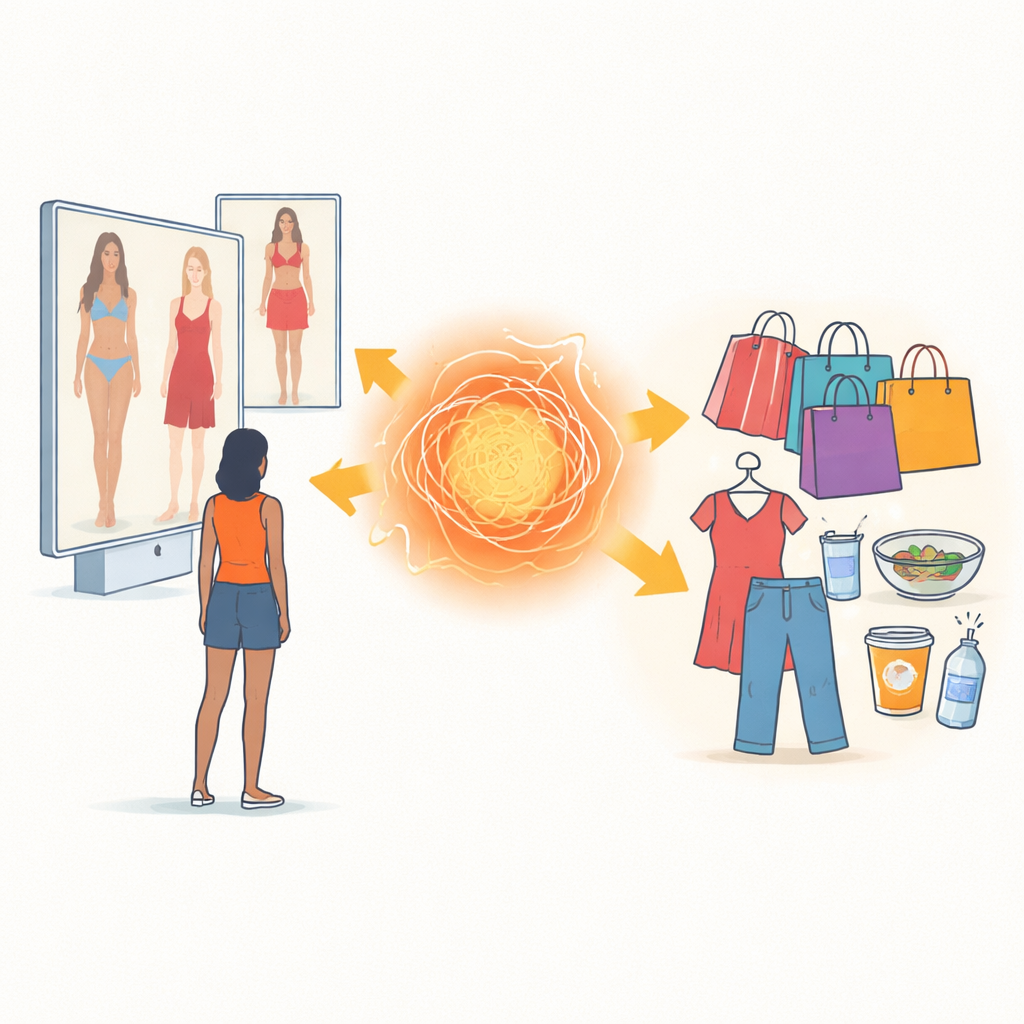
The researchers focus on what they call a body image “gap”: the mismatch between our real body and the body we wish we had. Constant exposure to narrow beauty standards—especially very thin, flawless figures—encourages people to compare themselves upward, often leaving them dissatisfied and self-conscious. Earlier work has shown that people sometimes try to soothe this discomfort by shopping, using products as symbols of the self they want to present to the world. This study zooms in on that process, asking how body-related worries connect specifically to sudden urges to buy and snap decisions at the checkout.
What students’ shopping habits reveal
In the first study, the authors surveyed 157 university students about how they currently felt about their appearance and how likely they were to impulsively buy four kinds of body-related products: low-calorie foods, clothing, skin-care items, and fitness products. They found a clear pattern for women: the more negative their body image, the stronger their tendency to buy all of these products on impulse, especially clothing and low-calorie foods. For men in the same setting, however, body image did not meaningfully predict impulsive buying in any category, possibly because the male group was smaller and generally more satisfied with their appearance.
From sudden urges to actual purchases
The second study dug deeper into cause and effect with an experiment involving 160 young women. Some participants were first shown images of very slim models, designed to heighten the sense that their own bodies fell short; others saw more ordinary figures. All then read a simple shopping story about choosing between a needed, practical item and a tempting dress that stretched their budget. The researchers measured both how strongly participants felt a sudden urge to buy and what they said they would actually do. Women whose sense of body mismatch had been stirred up did report stronger urges to buy appearance-related items. Yet this feeling did not automatically translate into more impulsive buying decisions, suggesting a psychological gap between wanting and acting.
Believing your body can change makes a difference
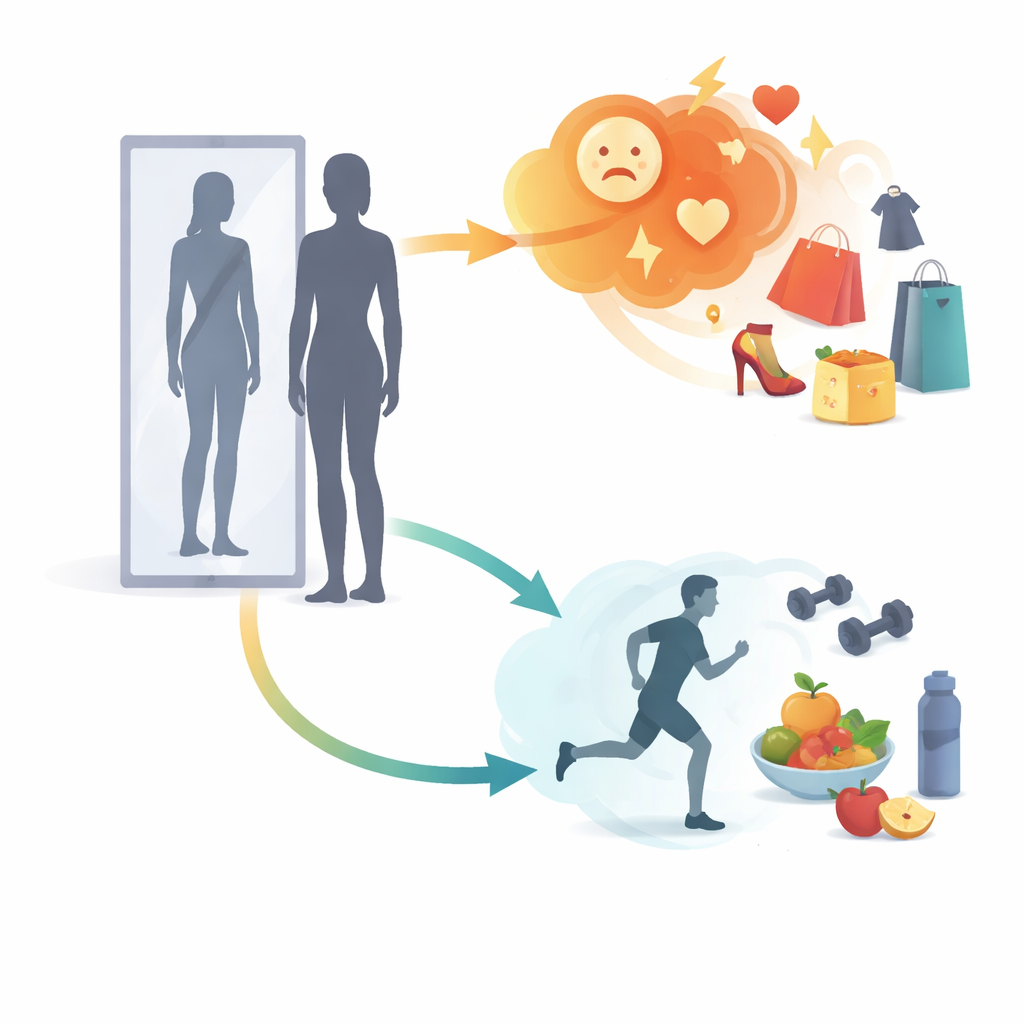
A key twist in the study is the role of “body malleability beliefs”—the extent to which people think their bodies can be changed through effort such as exercise or diet. Those who believed their bodies were relatively fixed reacted more strongly to body-related threats: when their body gap was triggered, they experienced larger buying urges and were more likely to lean toward impulsive purchases. In contrast, women who believed their bodies could change seemed more buffered. For them, the same unsettling images did not significantly increase urges to buy, and in some cases even related to fewer impulsive choices, hinting that they might turn toward active coping (like exercise) rather than quick shopping fixes.
What this means for consumers and society
The authors conclude that worries about not matching beauty ideals mainly fuel impulsive urges, not guaranteed buying sprees—and that what we believe about our ability to change our bodies can dial those urges up or down. Recognizing this can help individuals pause between feeling a spike of desire and tapping “buy now,” and may guide educators, marketers, and policymakers to promote healthier, more realistic views of body and beauty. By encouraging acceptance of diverse body shapes and confidence that change, when desired, can come from personal effort rather than products alone, society can reduce both appearance anxiety and the financial and emotional fallout of impulsive shopping.
Citation: Sang, H., Wang, X., Liu, H. et al. The influence of body image self-discrepancy on impulsive buying behavior: the moderating role of body malleability beliefs. Humanit Soc Sci Commun 13, 310 (2026). https://doi.org/10.1057/s41599-026-06606-4
Keywords: body image, impulsive buying, consumer psychology, social media influence, body positivity