Clear Sky Science · en
Earnings pressure and firm value: the shifting moderating effect of corporate social responsibility
Why this study matters for everyday investors
When a company disappoints Wall Street, its stock price often falls fast. At the same time, many firms now spend heavily on being "responsible" toward employees, communities and the environment. This study asks a timely question for anyone who cares about both profits and principles: when earnings fall short of expectations, does a company’s good behavior help protect its value, or does it actually make the market reaction worse—and has that answer changed over time?
When profit targets are missed
Public companies live under constant earnings pressure. Analysts regularly predict how much money a firm will make, and investors watch closely to see whether those targets are hit. In this study, the authors track more than 19,000 annual observations of firms listed in China from 2010 to 2020. They focus on what happens to stock prices around the release of annual reports when actual earnings come in below forecasts. The key outcome is the “abnormal” stock return—how much a share price moves beyond what the broader market would predict—right after those reports come out.
Good behavior: shield or burden?
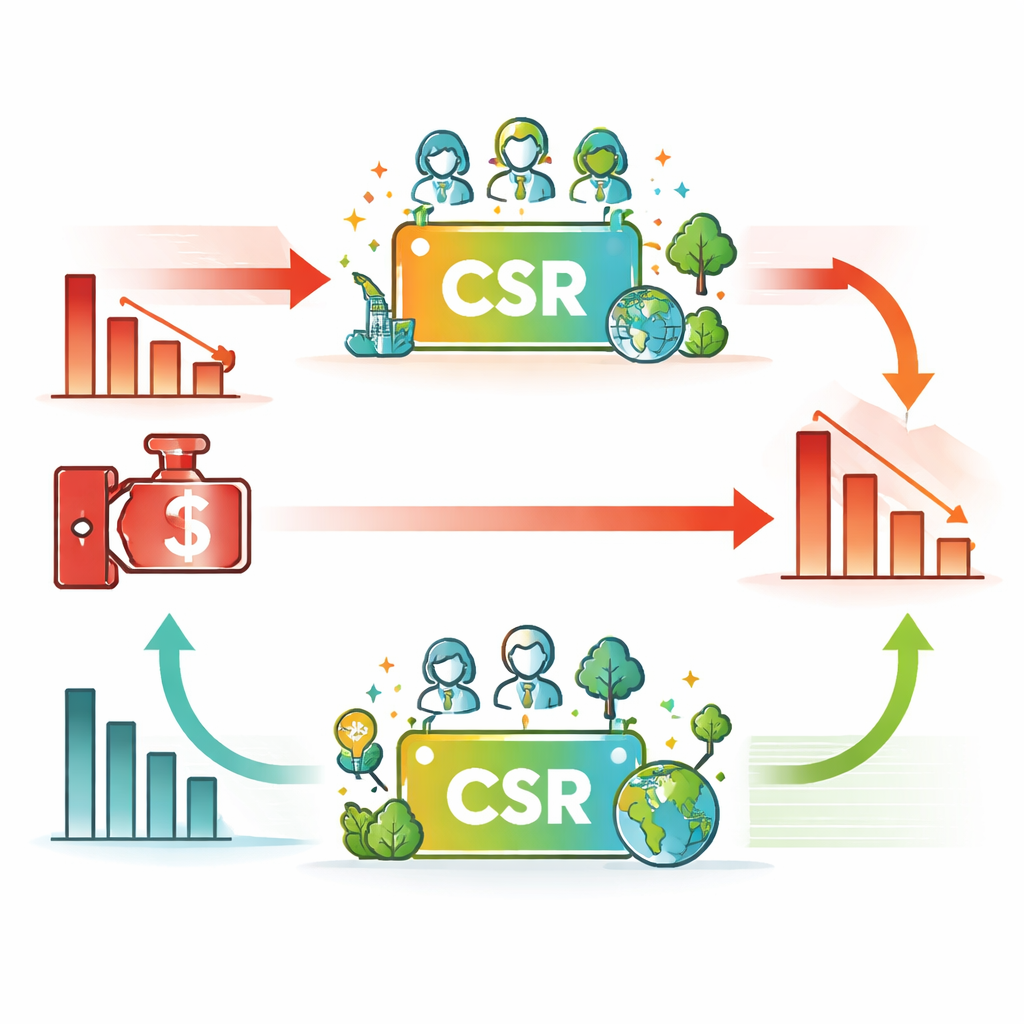
Corporate social responsibility (CSR) covers a wide range of activities, from protecting the environment to looking after workers and contributing to society. In theory, strong CSR can act like insurance: a firm that is trusted and seen as responsible may be forgiven more easily when bad news hits. But the opposite may also happen. If a company builds a caring image and then underperforms, investors may feel that management spent too much time and money on “doing good” and not enough on the bottom line. The authors measure CSR using widely used Chinese ratings that score firms on their responsibilities toward shareholders, employees, customers, the environment and society at large.
A decade-long shift in market thinking
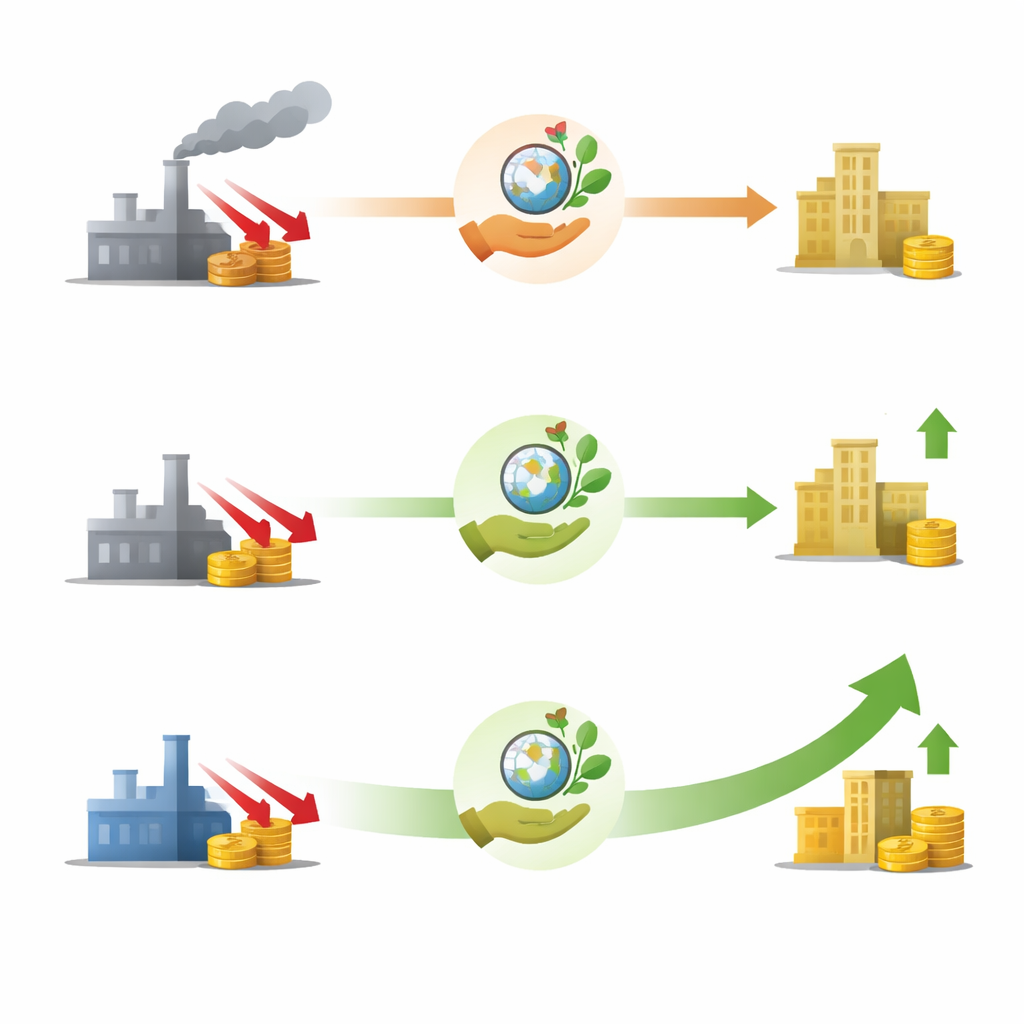
The central finding is that the stock market’s reaction to CSR under earnings pressure has changed direction over the past decade. In the early 2010s, companies with higher CSR scores were punished more harshly when they missed earnings forecasts. Investors operating under a "shareholders first" mindset seemed to treat CSR spending as wasteful when financial performance slipped, so good deeds amplified the pain of bad earnings news. Over time, however, this pattern weakened and then reversed. By the late 2010s, firms that combined strong CSR with disappointing earnings actually saw milder, and eventually more positive, stock reactions compared with firms that did not invest in CSR. This suggests that investors increasingly viewed CSR as a long-term asset rather than a drain on profits.
Not all companies are treated the same
The turnaround was strongest in certain kinds of firms and regions. Non‑polluting companies, privately owned businesses, and firms based in areas with relatively light environmental regulation saw the clearest move from punishment to protection. For these firms, responsible behavior is more likely to be viewed as a voluntary signal of long-term commitment rather than a box-ticking exercise. In contrast, heavily polluting industries, state-owned enterprises, and companies located in tightly regulated regions gained less benefit. For them, CSR is often expected or required, so extra spending on social or environmental projects sends a weaker positive signal to investors when earnings disappoint.
What the results mean in plain terms
Put simply, the study shows that the stock market’s rulebook is changing. A decade ago, investors tended to penalize companies that both missed profit targets and spent heavily on being responsible, seeing those efforts as a distraction from making money. Today, many investors—especially in China’s more market-driven segments—are starting to reward firms whose social and environmental actions signal resilience and alignment with broader societal goals, even when short-term earnings fall short. For everyday savers and managers alike, the message is that responsibility and value are no longer on opposite sides of the scale; under the right conditions, strong corporate citizenship can soften the blow of financial setbacks and may even support a company’s long-run worth.
Citation: Liu, C., Yang, G. & Wen, X. Earnings pressure and firm value: the shifting moderating effect of corporate social responsibility. Humanit Soc Sci Commun 13, 253 (2026). https://doi.org/10.1057/s41599-026-06600-w
Keywords: corporate social responsibility, earnings pressure, firm value, China stock market, stakeholder orientation