Clear Sky Science · en
Cherishing the Earth’s ‘Eywa:’ The impact of cinema-based EFL instruction on high school students’ ecological consciousness
A Movie Class That Changes How Teens See Nature
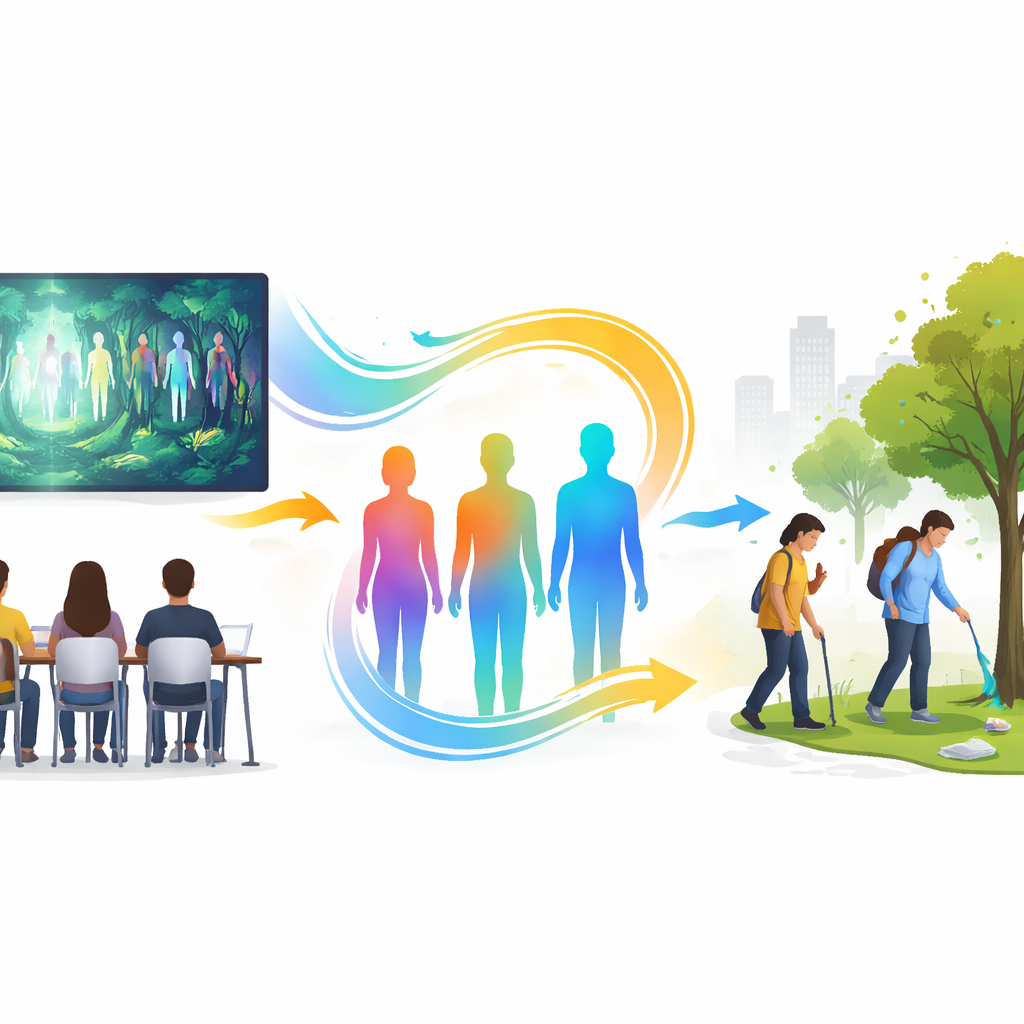
Most of us first meet environmental problems through screens, not in forests or fields. This study asks a simple but powerful question: can a blockbuster-style movie, used in an English-as-a-foreign-language (EFL) class, actually make teenagers care more about the planet—and act on that concern? By turning James Cameron’s Avatar into the backbone of a month-long teaching unit in a Spanish high school, the authors tested whether cinema can move teens from casual viewers to more thoughtful, eco-aware citizens.
Why Nature Lessons Need a Makeover
Traditional environmental education often lives in science textbooks and lab reports, even though young people now spend much of their time with digital media. Research shows that many teenagers know little about local ecosystems, see nature mostly as a storehouse of raw materials, and feel that only governments and big companies can fix the climate crisis. English classes, which already mix language and culture, rarely tackle these issues. The authors argue that this is a missed opportunity: if teens are already drawn to stories on screens, why not harness those stories to explore our relationship with the Earth?
Turning Avatar into a Language and Nature Lab
The researchers worked with 48 students aged 15 to 17 in an urban public school in Spain. Over one month, the teens followed an 11-lesson "cinema-based" unit built around short clips from Avatar rather than the full film. Alongside grammar, vocabulary, and writing practice, every activity pointed back to two big ideas from the movie: that humans are deeply connected to the living world, and that nature has value beyond money or convenience. Students filled out questionnaires before and after the unit, their teacher kept a detailed journal of classroom moments, and the teens ended by writing an opinion essay about their own environmental habits and responsibilities.
What Changed Inside the Classroom
At the start, many students could name only a couple of environmental problems, such as pollution and animal extinction, and they struggled to explain what caused them or how these issues touched their own city. They tended to see humans as separate from, and more important than, other living things. Most believed that individual actions—beyond basic gestures like recycling—did little to help. After the film-based lessons, questionnaire scores rose sharply on every measure the researchers tracked. Students said the use of cinema in English class helped them understand environmental problems, appreciate the importance of nature, and grasp the idea that all living systems are intertwined.
From Screen Worlds to Street Trees
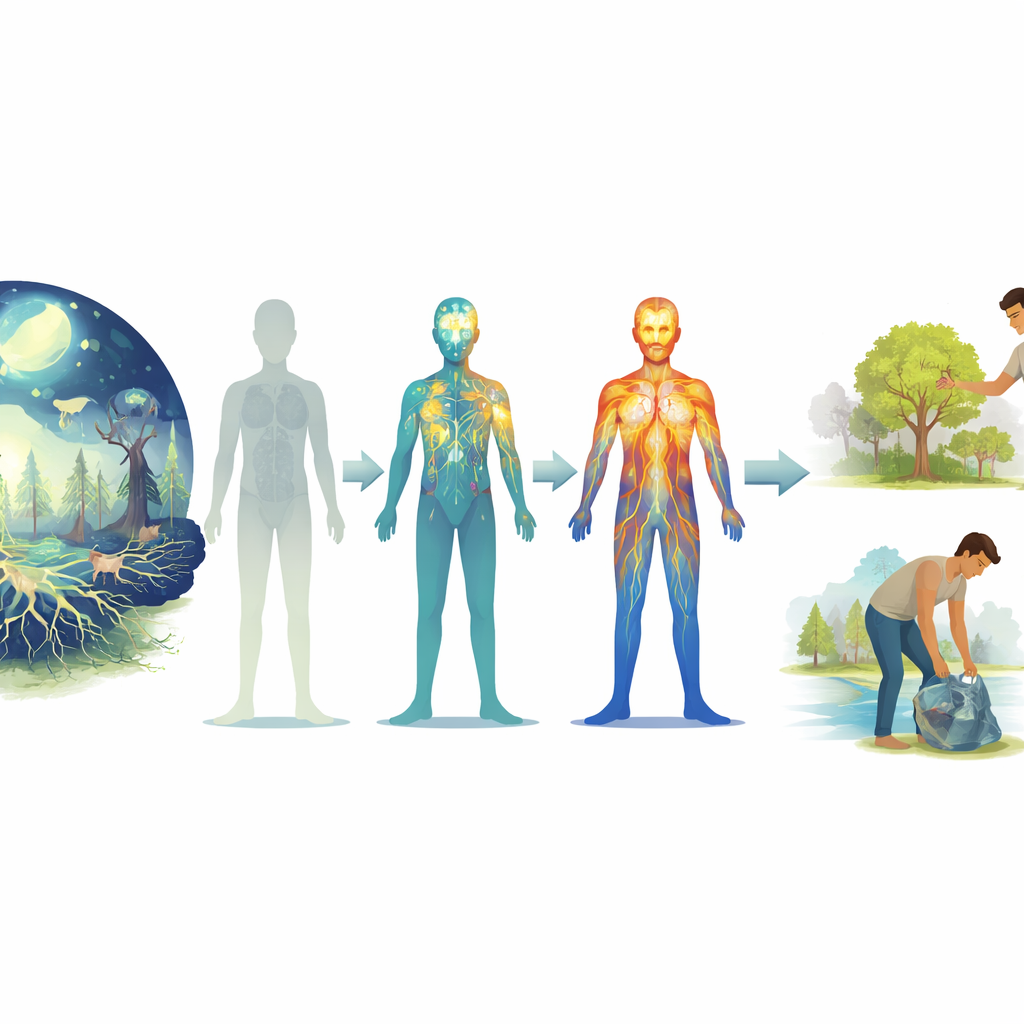
Qualitative evidence showed how this shift unfolded. Scenes of Pandora’s glowing forests and sacred trees helped students visualize a world where every creature and plant is linked, making an abstract idea feel concrete. An assignment asking each teen to choose a real elm tree in their city as their personal “Eywa” became a turning point: students photographed, described, and presented "their" tree with enthusiasm. In their essays, many now spoke of local paths, streams, and trees with new affection, and argued that nature matters because our own survival and identity depend on it. They listed more varied and specific ways to help, from keeping public spaces clean and opposing tree cutting to using creative media—such as short films and social networks—to spread awareness.
New Attitudes, But Action Still Growing
By the end of the unit, students described feeling more responsible for the environment and more confident that their choices matter. However, most still focused on simple, home-based habits and admitted they were unsure how to make deeper lifestyle changes. The authors conclude that cinema-based EFL is a promising way to raise ecological consciousness: it broadens knowledge, challenges the idea that humans stand above nature, and boosts motivation to act. To turn this awakening into lasting behavior, they recommend adding more action-centered tasks—such as student-made environmental films and local projects—so that the emotional power of stories is matched by practical skills for living more lightly on the Earth.
Citation: Sánchez-Auñón, E., Férez-Mora, P.A. Cherishing the Earth’s ‘Eywa:’ The impact of cinema-based EFL instruction on high school students’ ecological consciousness. Humanit Soc Sci Commun 13, 283 (2026). https://doi.org/10.1057/s41599-026-06595-4
Keywords: environmental education, green cinema, teen ecological awareness, English as a foreign language, Avatar film pedagogy