Clear Sky Science · en
Bridging human judgment and AI precision: a step toward intercultural competence in text refinement
Why Polished Writing Across Cultures Matters
In a world where emails, reports, and social media posts regularly cross borders, sounding polite and clear in another culture can be surprisingly hard. A sentence that is perfectly correct in grammar may still feel flat, clumsy, or even rude to someone from a different background. This paper explores how artificial intelligence (AI) and human judgment can work together to turn ordinary sentences into more elegant and culturally sensitive ones—without changing what they mean. The authors show how to build smarter writing assistants that not only fix errors, but also help people communicate with more grace and respect across cultures.

From Plain Sentences to Refined Messages
The authors focus on “text refinement”: taking a sentence that is already understandable and rewriting it so that it flows better, sounds more polished, and fits its context. Unlike simple grammar correction, there is no single “right” answer—many good rewrites are possible, and what sounds refined in one culture may feel odd in another. That makes it hard to create the large, reliable datasets that AI systems need for training. Instead of asking experts to rewrite every sentence from scratch, the researchers design a clever way to generate pairs of sentences automatically: one ordinary version and one more elegant version that says the same thing.
How Back‑and‑Forth Translation Helps
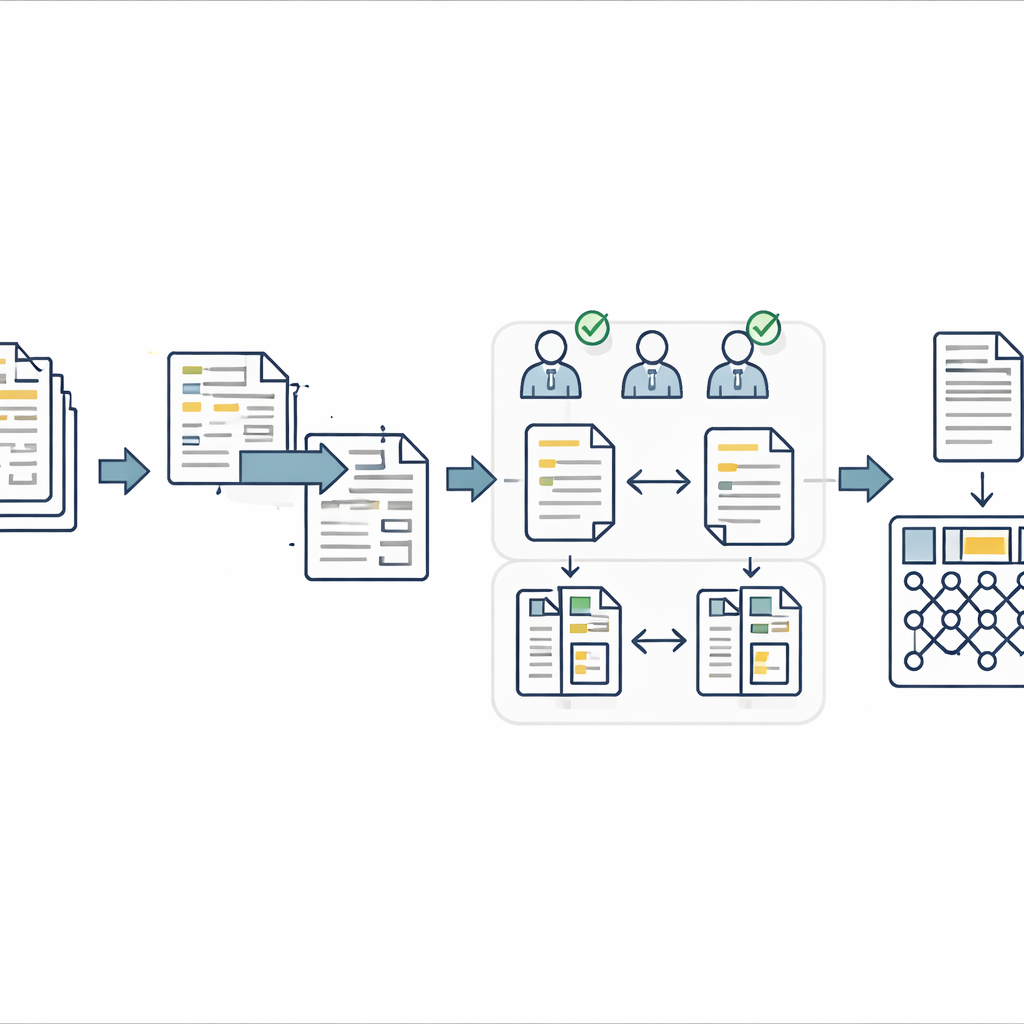
The heart of their method is a technique called back‑translation. First, the team collects naturally elegant writing from best‑selling English books, official United Nations documents, and university essays. In each short passage, they treat the middle sentence as the “polished” version and its neighbors as context. They then send that polished sentence through a two‑step translation: from English into Chinese, and back into English again. Because machine translation tends to favor simpler, more common wording, the returned sentence keeps the original meaning but usually sounds more neutral and less stylish. This gives them a pair: an elegant original and a plainer twin, both sitting in the same surrounding paragraph.
Humans as Careful Referees
Automatic translation is far from perfect, so the next step is quality control. The authors filter out obviously flawed examples—for instance, where parts of the sentence are dropped, added, or too short or too long. Then trained language experts compare the sentence pairs in context. For each case, they ask two questions: does the plainer sentence still mean the same thing, and is it clearly less elegant than the original? Only when both answers are “yes” does the pair qualify as good training material. Through repeated rounds of filtering and sampling, the team builds three large datasets covering literary, diplomatic, and academic writing, with tens of thousands of training examples and carefully checked test sets.
Teaching AI to Rewrite with Finesse
With these datasets in hand, the authors train modern AI language models to perform refinement as a “sequence‑to‑sequence” task: given the original plain sentence and its surrounding context, the model must generate a more polished version. They compare two ways of training. In the “fill‑in‑the‑blank” approach, the plain sentence is hidden and the model only sees the surrounding text. In the “paraphrase” approach, the model sees the plain sentence itself plus its context and learns to rewrite it. Across many tests and statistical checks, the paraphrase approach wins: it produces rewrites that stay closer to the original meaning, sound smoother, and adapt better to different domains, from creative prose to formal reports. Human judges also consistently prefer the paraphrase‑trained outputs, especially for tone and cultural fit.
What This Means for Everyday Writers
The study’s main message is that combining human judgment with AI precision can create writing assistants that do more than correct spelling. By using real examples of refined language, smart translation tricks, and carefully guided human review, the authors construct a robust foundation for systems that can suggest clearer, more graceful, and more culturally aware wording. For everyday users, this could mean tools that help a student polish a scholarship essay, a diplomat fine‑tune a statement, or a professional adapt a message for an international partner—while keeping their original intent intact. In short, the work points toward AI helpers that respect both meaning and manners, supporting more thoughtful communication across cultures.
Citation: Sun, Y., Yang, H., Wang, Y. et al. Bridging human judgment and AI precision: a step toward intercultural competence in text refinement. Humanit Soc Sci Commun 13, 274 (2026). https://doi.org/10.1057/s41599-026-06593-6
Keywords: text refinement, intercultural communication, human-AI collaboration, natural language processing, back-translation