Clear Sky Science · en
Do employees with dark personality traits review their jobs unfavorably? Textual content analysis of online employee reviews
Why Some Job Reviews Feel Harsher Than Others
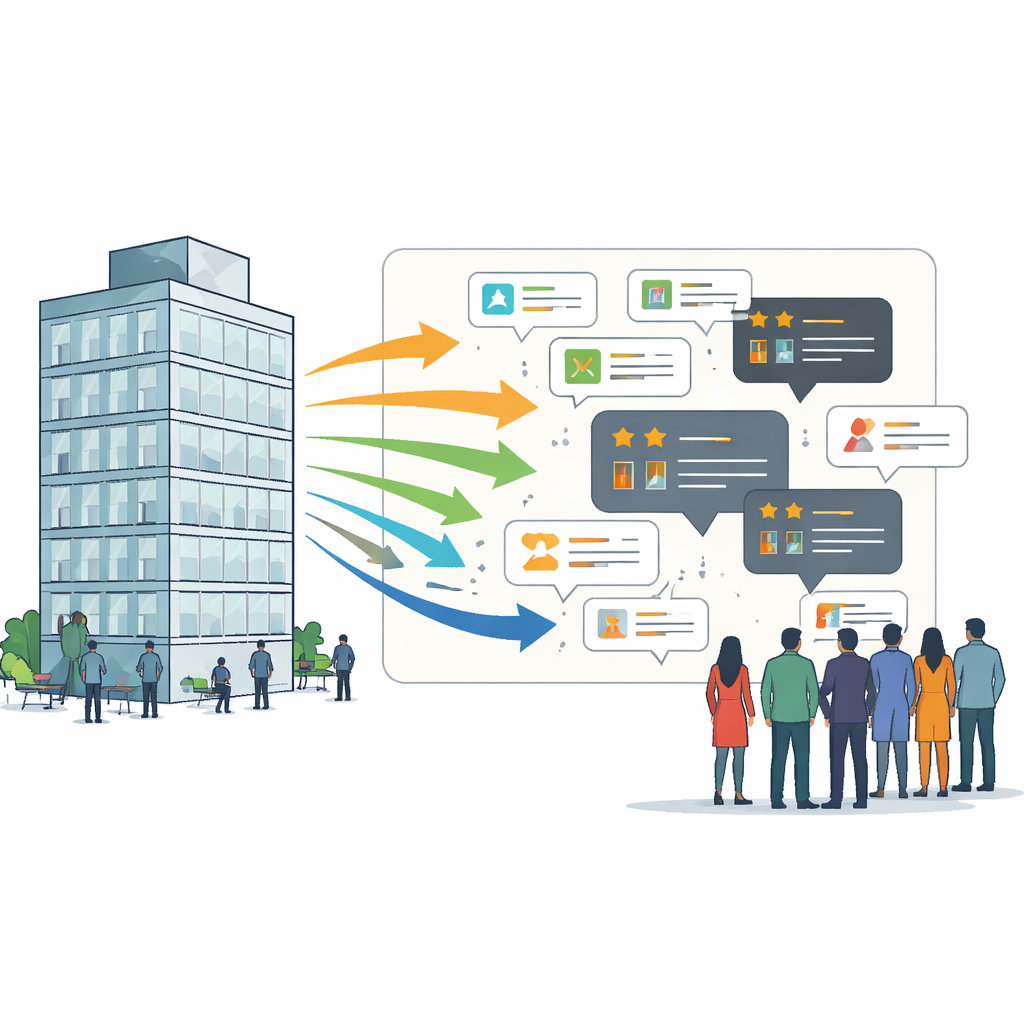
Anyone hunting for a new job has probably scrolled through anonymous employee reviews, trying to separate honest warnings from unfair rants. This paper asks a simple but important question: do people with "darker" personality tendencies write systematically different reviews of their employers, and do readers respond to those reviews differently? By probing the language of more than half a million online comments, the authors explore how hidden personality traits might subtly shape the reputations of companies—and the choices of job seekers who rely on these platforms.
Hidden Traits Behind Harsh Opinions
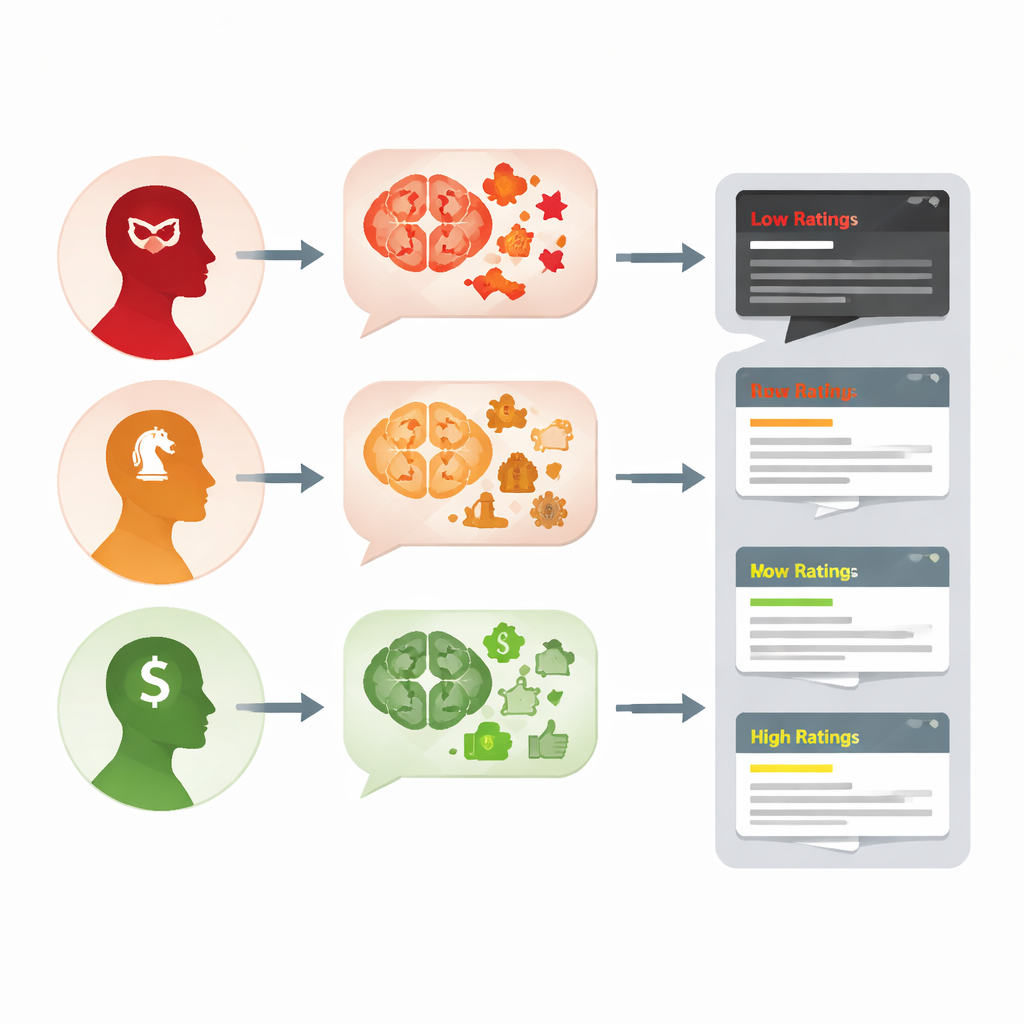
The study focuses on three well‑known “dark” personality patterns: narcissism (self‑importance and need for admiration), Machiavellianism (cold, strategic manipulation), and psychopathy (callousness and impulsivity). People who score higher on these traits tend to be more antagonistic and less bound by social norms. The authors reason that on anonymous review sites, where users feel less observed and less responsible for their tone, these tendencies may come through more strongly. If so, job seekers reading the reviews may be seeing not just the workplace, but also the reviewers’ personalities reflected back at them.
Reading Personality From Words
To investigate this idea, the researchers collected 533,007 reviews of S&P 500 companies posted on Glassdoor between 2008 and 2022, plus a large subset with data on how many “helpful” votes each review received. Instead of surveying the reviewers directly, they used a tool called Linguistic Inquiry and Word Count (LIWC). LIWC categorizes words into psychological and emotional groups, such as first‑person pronouns, anger words, profanity, or positive and negative emotion. Drawing on earlier work that links specific language patterns to dark traits, the authors built composite indices: for example, certain second‑person references and swear words were used as markers of narcissism; combinations of negative emotion, reduced positive emotion, and message brevity were used for Machiavellianism; and anger, temporal focus, and inconsistency markers were used for psychopathy.
How Dark Traits Color Ratings and Helpfulness
With these language‑based indicators in hand, the team examined two sides of the review process. On the “generation” side, they asked whether higher levels of dark‑trait language predicted lower star ratings, after taking into account six job aspects such as work‑life balance and pay, as well as company and time effects. On the “consumption” side, they asked whether those same traits predicted how helpful other users found a review, measured by helpful‑vote counts. Across hundreds of thousands of reviews, the results were consistent but modest: all three traits were linked to slightly lower ratings. For helpfulness, narcissistic and psychopathic language patterns tended to reduce how useful readers found a review, whereas Machiavellian patterns were associated with a small increase in perceived usefulness—perhaps because strategic, calculating writers craft sharper, more information‑dense critiques.
Small Signals in a Noisy Online World
Despite using a very large dataset, the authors emphasize that these effects are statistically reliable but small. Dark‑trait language explains only a sliver of the variation in ratings and helpful votes compared with factors like actual job conditions or company differences. In other words, personality leaves a detectable fingerprint on reviews, but it does not dominate them. Still, the work shows that anonymous, low‑consequence settings allow antagonistic tendencies to seep into public evaluations. It also demonstrates that personality can be studied at scale through everyday language rather than only through formal questionnaires, adding a behavioral–linguistic lens to the study of workplace attitudes.
What This Means for Job Seekers and Employers
For a general reader, the main takeaway is that not all online employee reviews are created equal. Some of the especially harsh or hostile ones may reflect the reviewer’s personality at least as much as the workplace itself—and some sharply critical but well‑structured reviews may come from calculating writers who know how to sound useful. The authors do not suggest trying to diagnose individuals, nor using these tools to screen employees. Instead, they argue that employers and job seekers should treat personality‑colored reviews as one ingredient in a much larger mix of information. The study’s conclusion is reassuringly balanced: dark traits do nudge reviews toward more negativity and, in some cases, toward being more or less helpful, but context, job realities, and platform design still do most of the work in shaping what we read about workplaces online.
Citation: Yousaf, S., Hyun, S. & Kim, J.M. Do employees with dark personality traits review their jobs unfavorably? Textual content analysis of online employee reviews. Humanit Soc Sci Commun 13, 273 (2026). https://doi.org/10.1057/s41599-026-06592-7
Keywords: online employee reviews, dark triad personality, workplace satisfaction, Glassdoor ratings, organizational reputation