Clear Sky Science · en
How does the provision of feedback influence teachers’ cooperation? A moderated chain mediation model
Why Feedback Between Teachers Matters
In schools, we often focus on how teachers give feedback to students, but far less on how feedback to teachers shapes what happens behind classroom doors. This study explores a simple yet powerful question: when teachers regularly receive feedback about their work, are they more likely to help one another, share ideas, and work as a team—and under what conditions does that happen? Using data from more than two thousand teachers in Hong Kong, the researchers unpack how feedback, feelings, trust, and freedom at work come together to either support or stall cooperation among teachers.

Feedback as a Spark for Working Together
The authors start from a widely accepted idea: when teachers cooperate—by sharing materials, observing each other’s lessons, or planning together—students and schools benefit. Yet we know surprisingly little about what pushes teachers toward or away from such cooperation, especially in non-Western settings. The study treats feedback as a possible spark. Feedback here means information teachers receive about their teaching from principals, managers, or colleagues, ranging from occasional comments to regular, structured input. The key question is not only whether more feedback relates to more cooperation, but also how that connection unfolds inside teachers’ minds and relationships.
Feelings, Trust, and the Role of Freedom
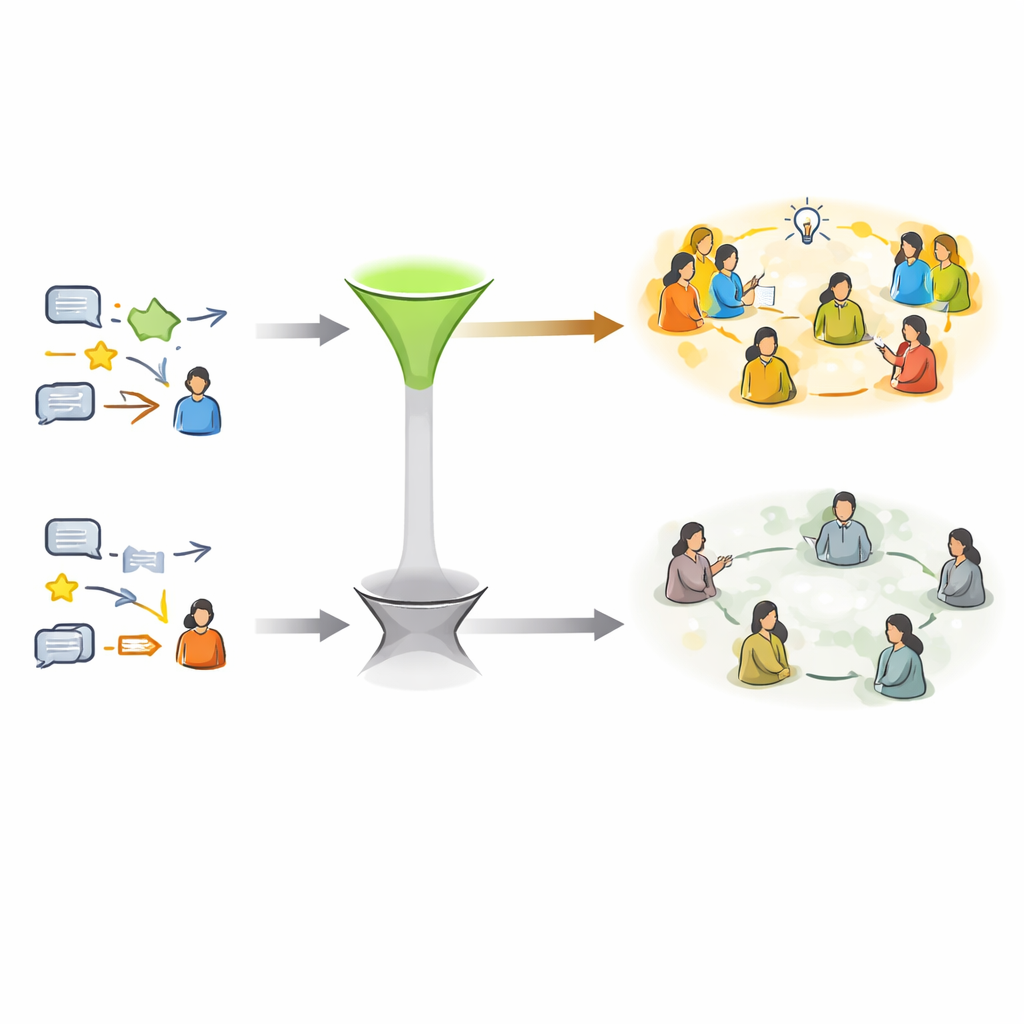
To explain this process, the researchers draw on a psychological framework that says people thrive when three basic needs are met: feeling capable, feeling connected, and feeling in control of their own actions. Feedback can strengthen a sense of capability by highlighting what teachers do well and where they can grow. It can also signal recognition from others, supporting a sense of connection. In theory, these experiences should stir up pleasant feelings and deepen trust among staff, which then make it easier and safer to work together. But the study argues that this chain only really works when teachers feel they have enough freedom in their day-to-day work—such as control over course content and teaching methods—so that feedback is seen as helpful information rather than as pressure from above.
What the Data from Hong Kong Teachers Reveal
Using survey responses from 2,126 Hong Kong teachers in the 2022 PISA study, the authors tested a detailed statistical model. They measured how often teachers received feedback, how frequently they felt positive emotions during school days, how much they trusted their colleagues, how much control they felt over their work, and how often they cooperated with others in teaching-related tasks. Overall, teachers who received more feedback were more likely to report higher levels of cooperation. This link was not only direct: feedback also boosted trust, and trust in turn was strongly tied to cooperative activities such as exchanging materials or working on joint projects.
Why Trust Beats Good Feelings Alone
The findings paint a more layered picture than “feedback makes people feel good, and feeling good makes them help each other.” Positive emotions by themselves did not significantly explain why teachers cooperated more. Instead, pleasant feelings mattered mainly when they fed into stronger trust between colleagues. In other words, a warm glow from supportive feedback is not enough in the structured, time-pressed world of schools; what really shifts behavior is the sense that coworkers are reliable, fair, and have one another’s best interests at heart. Trust becomes the bridge that turns the benefits of feedback into real-world collaboration, while positive emotions act as part of the foundation underneath that bridge.
When Freedom at Work Changes the Story
Teacher freedom at work—how much say teachers feel they have over what and how they teach—emerged as a crucial “gatekeeper.” For teachers with high autonomy, more feedback was linked to more positive emotions; they seemed to interpret feedback as supportive guidance. For teachers with low autonomy, feedback did not reliably boost positive feelings, and could even be felt as controlling or stressful. Because positive emotions feed into trust, and trust feeds into cooperation, this early difference in how feedback is experienced can ripple through the whole chain. The study therefore highlights that simply increasing feedback, without respecting professional independence, may fail to produce the hoped-for gains in teamwork.
What This Means for Schools and Teachers
To a lay reader, the conclusion is straightforward: feedback can indeed help teachers work together more, but only when it strengthens trust and is offered in a climate of professional respect and autonomy. School leaders who want more collaboration should focus less on the volume of feedback and more on how it is delivered and how much say teachers have in their work. Constructive, autonomy-supportive feedback that recognizes teachers’ expertise can lift mood, build trust, and in the end make it easier for teachers to share ideas and support one another—benefiting students, staff, and the wider school community.
Citation: Pang, C., Xie, Z. How does the provision of feedback influence teachers’ cooperation? A moderated chain mediation model. Humanit Soc Sci Commun 13, 251 (2026). https://doi.org/10.1057/s41599-026-06582-9
Keywords: teacher collaboration, feedback in schools, teacher autonomy, trust among teachers, educational psychology