Clear Sky Science · en
On the origins and consequences of natural play and performing arts practices
Why fun and art matter to our lives
From puppies wrestling in the yard to children inventing make‑believe worlds, play is everywhere. This article explores how such everyday playful behavior may be the deep root of some of humanity’s most cherished cultural activities: singing, dancing, and acting. It asks a simple but powerful question: how did carefree play turn into organized performing arts, and what does that transition mean for our health and wellbeing today?
What play really is
Scientists who study animals and children generally agree that natural play is voluntary, joyful, and done for its own sake. It follows simple rules, happens when there is no severe stress, and is often repeated with endless variation. Young mammals chase, wrestle, and vocalize; children mimic adults, tell stories, and pretend to be someone else. These activities help bodies grow stronger, sharpen thinking, and build social skills. Play lights up the brain’s reward systems, making it feel good and encouraging us to come back to it again and again throughout life.
From playground to stage
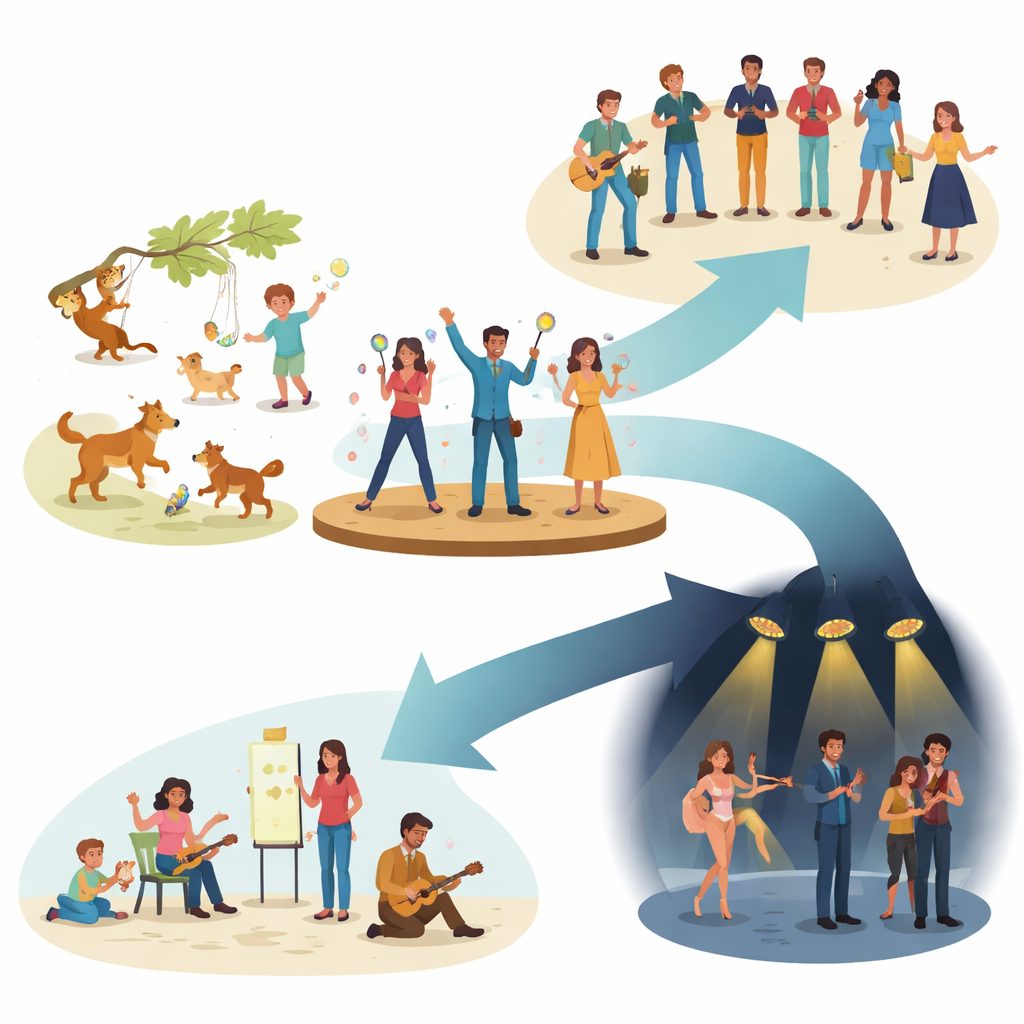
The article argues that many performing arts practices are cultural offshoots of this natural play. Vocal play such as babbling and cooing can blossom into singing, lullabies, and later complex music. Locomotor play—running, jumping, and moving in sync with others—can grow into dance and even organized sports. Pretend play, where children take on roles and act out scenes, can develop into theater and drama. A simple mapping shows how these strands of play become recognizable arts that appear in every known human society, often without needing any tools beyond the body and voice.
How rewards and effort reshape play
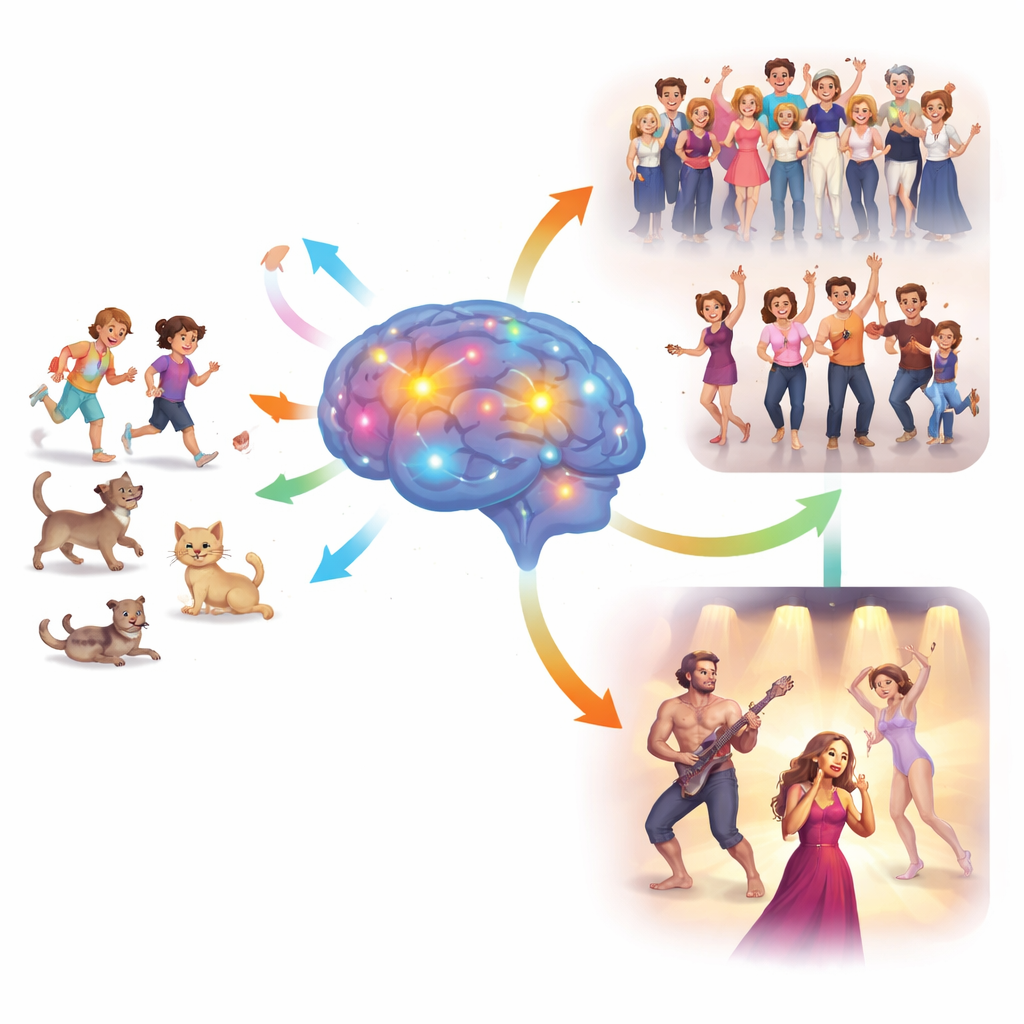
As playful behaviors are formalized into lessons, rehearsals, and performances, the forces that drive them begin to change. Natural play is mostly fueled by inner motivation: we play because it feels good and helps us explore the world safely. In contrast, performing arts are increasingly shaped by outer rewards—praise, status, money, or admission to elite schools. Deliberate, intensive practice becomes necessary to reach high standards. The article proposes a model in which the adaptive, low‑risk benefits of natural play gradually fade as arts practice becomes more specialized, while the risk–benefit balance slowly shifts from optimal in free play to less favorable in high‑pressure cultural settings.
When art turns costly
At one extreme, history offers a stark warning: the era of the castrati, when boys were mutilated to preserve a unique singing voice, shows how the pursuit of artistic ideals can override basic human rights. Modern forms are less shocking but still worrying. Research on professional musicians and dancers reveals high rates of hearing problems, pain, injuries, and mental health struggles, while many never secure stable careers. Meanwhile, amateur singers and dancers often gain clear benefits for mood, social connection, and general health, with only modest risks. The same arts that nurture community at the grassroots can become selective, competitive, and even harmful at the professional peak.
Finding a healthier balance
In conclusion, the article suggests that natural play is generally safe, broadly accessible, and likely to support survival and healthy development, whereas high‑level performing arts, built on heavy, long‑term practice, tend to offer little evolutionary benefit and can carry substantial personal costs. The challenge for researchers and policymakers is to better understand this trade‑off and design cultural environments that keep the joy, inclusion, and health advantages of play while limiting the toxic side effects of extreme competition. Safeguarding the playful roots of our arts may be essential for protecting the wellbeing of artists, audiences, and especially future generations.
Citation: Kreutz, G. On the origins and consequences of natural play and performing arts practices. Humanit Soc Sci Commun 13, 241 (2026). https://doi.org/10.1057/s41599-026-06581-w
Keywords: natural play, performing arts, wellbeing, deliberate practice, cultural evolution