Clear Sky Science · en
Does achieving the sustainable development goal of forest carbon sinks need to come at the expense of the stakeholders’ benefits?—Global perspective through systematic literature review
Why Forests and People Are at the Heart of Climate Solutions
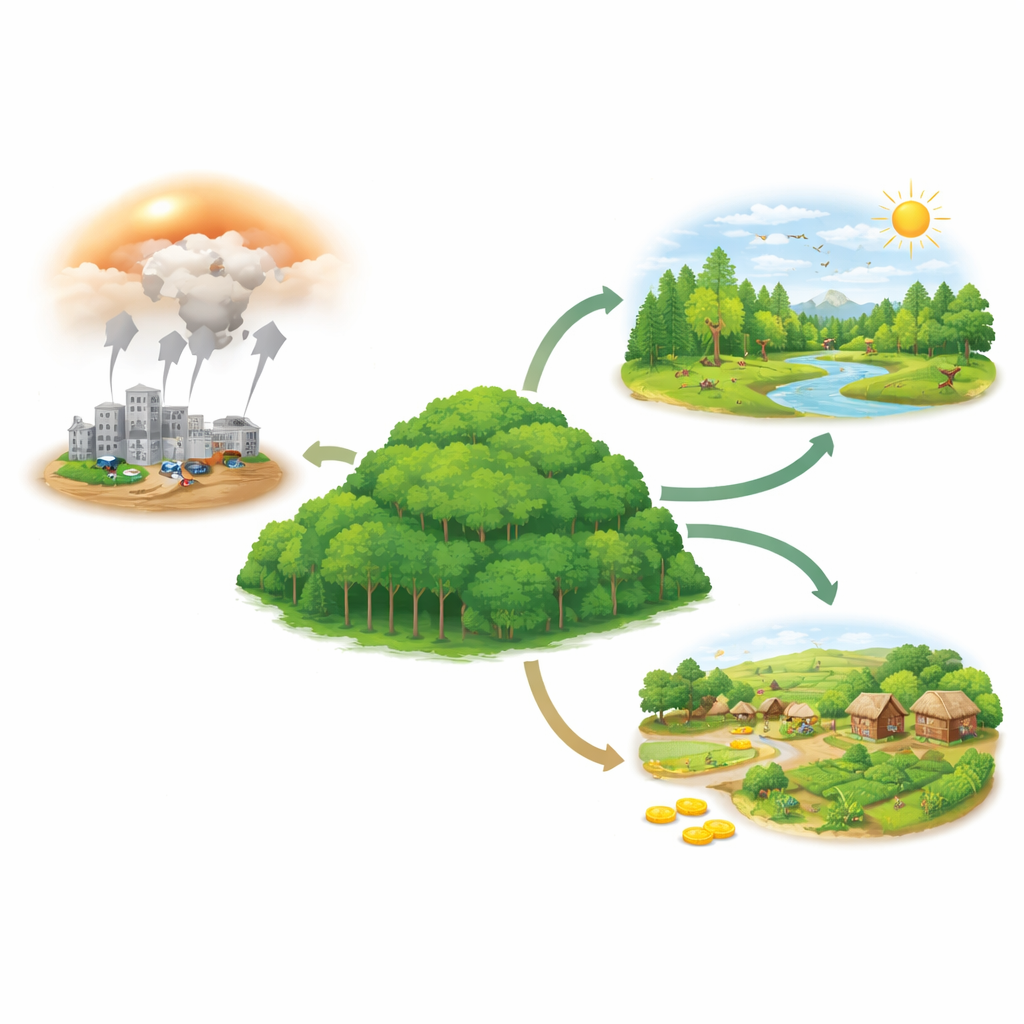
As the world searches for ways to slow climate change, forests have emerged as one of our most powerful natural allies. Trees pull carbon dioxide out of the air and store it, acting as vast “carbon sinks.” But protecting and expanding these forests often affects the lives and incomes of farmers, rural communities, and other groups who depend on the land. This article asks a hard question: can we use forests to fight climate change without sacrificing the well-being of the people who live in and around them?
How the Study Looked Across the World
The authors combed through 465 research papers published between 2002 and 2024 to understand how forest carbon projects have played out in practice. These projects range from large international efforts to smaller local schemes that pay landowners to protect or restore forests. Using ideas from stakeholder theory, they examined how different groups—farmers, local communities, companies, governments, and non-profit organizations—gain or lose from these projects. Cost–benefit thinking helped them trace who pays, who earns, and whose voices shape decisions. By bringing together studies from many countries and methods, they built a global picture of what is working and what is not.
From Counting Carbon to Building Markets
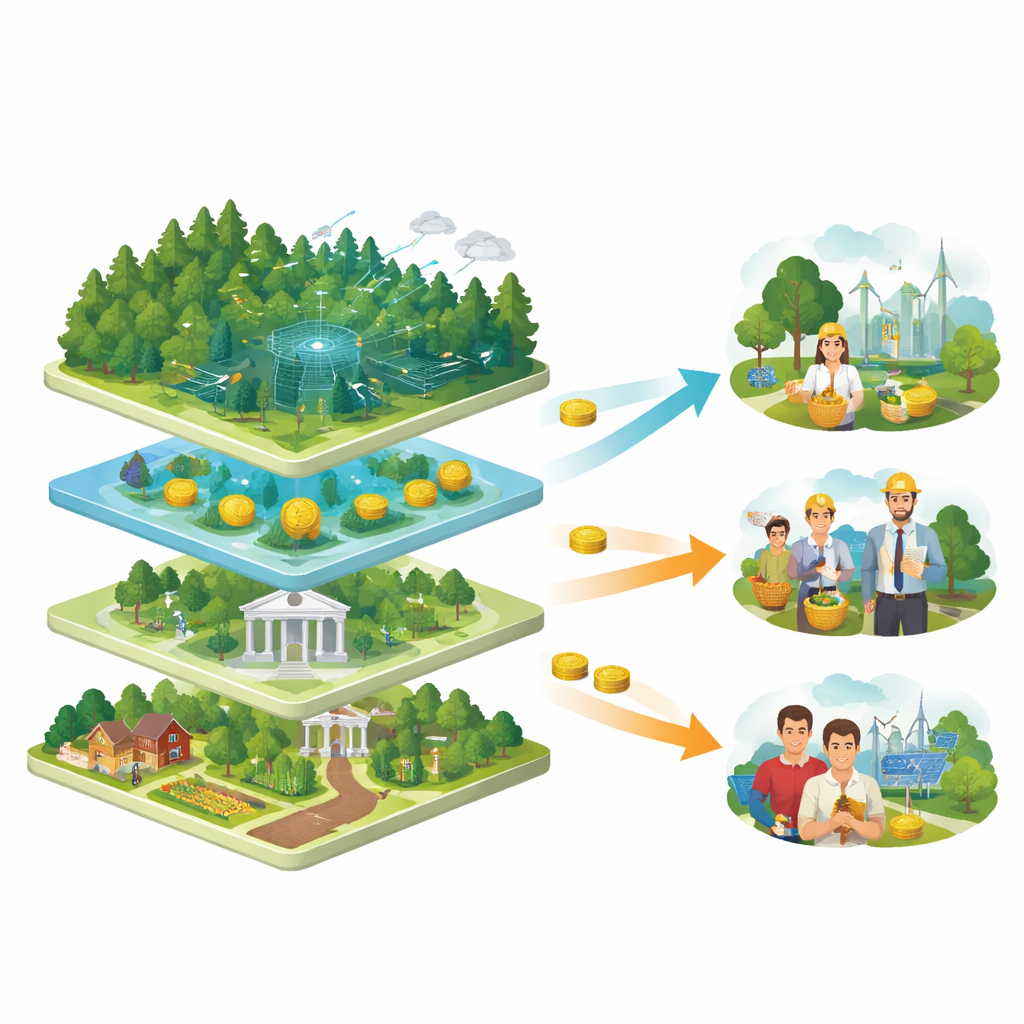
The review shows that most research has centered on three big themes. First is measuring how much carbon forests actually store. Advances in satellite images and computer models have made these estimates more accurate, giving a better basis for putting a price on forest carbon. Second is designing markets that allow companies or governments to pay for this stored carbon through taxes, credits, and trading systems. Third is crafting policies that link forest protection to broader economic development. The authors describe this as a “measurement–market–policy” chain: you must measure carbon well, build fair markets around it, and support those markets with smart rules and public oversight.
When Climate Goals Clash with Local Livelihoods
Despite this promise, the studies reviewed reveal a recurring tension: environmental gains often come with social costs. In many projects, powerful actors such as governments and firms capture most of the rewards, while farmers and local communities shoulder restrictions on land use, complex rules, and uncertain payments. In richer countries, landowners may simply see too little financial benefit to bother with carbon programs, especially when paperwork is heavy and contracts are long. In poorer regions, weak land rights, opaque decision-making, and low or delayed compensation can leave people worse off, deepening poverty and stirring local conflicts. Top-down evaluations that focus on national income or total carbon stored often miss these ground-level struggles.
Why Better Governance Matters
The authors argue that markets alone cannot solve these problems. Many current schemes assume that if you put a price on forest carbon, benefits will naturally trickle down to all involved. The evidence suggests otherwise. Fair outcomes depend on clear land ownership, transparent sharing of benefits, accessible information, and genuine participation by local people. Governments play a crucial role in setting and enforcing these rules, but they must also adapt policies to local conditions, support smallholders with technical help, and monitor who actually gains or loses over time. Blending market incentives with public oversight and community involvement emerges as the most promising way to make forest carbon projects both effective and fair.
Finding a Path Where Forests and People Both Win
Overall, the review concludes that using forests as carbon sinks can support both climate goals and local livelihoods—but only if projects are designed with people, not just carbon, in mind. Accurate measurement and well-functioning markets are necessary, but they are not enough. Equally important are fair rules, tailored support for vulnerable groups, and careful tracking of social impacts. When these pieces come together, forest carbon projects can help reduce global warming while creating new opportunities for rural communities, rather than forcing them to choose between protecting nature and making a living.
Citation: Yan, Y., Zheng, Q., Miao, X. et al. Does achieving the sustainable development goal of forest carbon sinks need to come at the expense of the stakeholders’ benefits?—Global perspective through systematic literature review. Humanit Soc Sci Commun 13, 238 (2026). https://doi.org/10.1057/s41599-026-06578-5
Keywords: forest carbon sinks, climate policy, rural livelihoods, carbon markets, environmental justice