Clear Sky Science · en
Analysis of instructors’ oral feedback practices and contextual constraints in the EFL classroom: a qualitative study
Why the Words Teachers Say Matter
Imagine trying to learn a new language in a large university classroom where one teacher speaks and dozens of students listen. The small comments that teacher makes—“good job,” “try again,” or a quick explanation—may seem minor, but they quietly shape whether students become confident, independent learners or stay dependent on the teacher. This study, carried out at Hawassa University in Ethiopia, looks closely at how English-language instructors talk to their students during lessons and how the classroom conditions around them help or hinder truly reflective, self-directed learning.
How Feedback Can Build Independent Learners
Not all feedback is equal. The researchers draw on modern learning theories that see students as active builders of their own knowledge. In this view, oral comments from teachers are not just corrections; they can spark thinking, guide strategies, and encourage students to monitor their own progress. Feedback can describe what a student did, gently steer them toward a better way, motivate them to keep trying, or invite classmates to respond to each other. When these different approaches are used well, they help learners move from asking, “Did I get it right?” to asking, “Why did this work? How can I improve next time?” 
What Happens in Real Classrooms
To find out what really happens, the researchers observed ten instructors teaching a common Communicative English Skills course, and interviewed them afterward. They listened carefully to every exchange and sorted teacher comments into different types: descriptive (saying what was right or wrong), facilitative (asking questions or giving hints), directive (telling students exactly what to do), motivational (offering encouragement tied to effort), and peer-to-peer (students responding to each other). They also noted whether comments focused only on the task at hand, on the way students approached the task, or on helping students manage their own learning over time.
Patterns of Talk: Praise, Directions, and Missed Chances
The study found that instructors used a wide range of feedback, but not in a balanced way. Descriptive and directive comments dominated. Teachers often praised students—saying things like “yes,” “correct,” or “good job”—and sometimes repeated the right answer. While this can boost confidence, it rarely explained why an answer was right or helped students think more deeply. Directive feedback, such as “go to this page” or “you must write a topic sentence,” kept lessons moving and clarified tasks, but tended to position the teacher as the sole authority and left little room for students to explore alternatives or reflect on their choices. Facilitative feedback—questions that invite students to reason out grammar rules or reading strategies—did appear, yet teachers frequently cut short moments of silence by supplying the answer themselves, closing down opportunities for students to articulate their thinking.
Motivation, Peer Voices, and Classroom Realities
Motivational comments were used in about half of the classes and proved especially helpful in writing and reading activities. Some teachers reassured students that imperfect language was acceptable and encouraged them to express ideas in their own words, which reduced anxiety and supported risk-taking. However, these moments were uneven across instructors. Peer-to-peer feedback—students responding to one another’s work—was the rarest pattern of all. When it occurred, it was usually brief and loosely structured, with teachers quickly stepping back in to confirm the “right” answer. Interviews revealed why: large classes, tight syllabi, limited time, and students’ strong expectations that only the teacher’s judgment really counts all work against sustained, reflective dialogue among students. 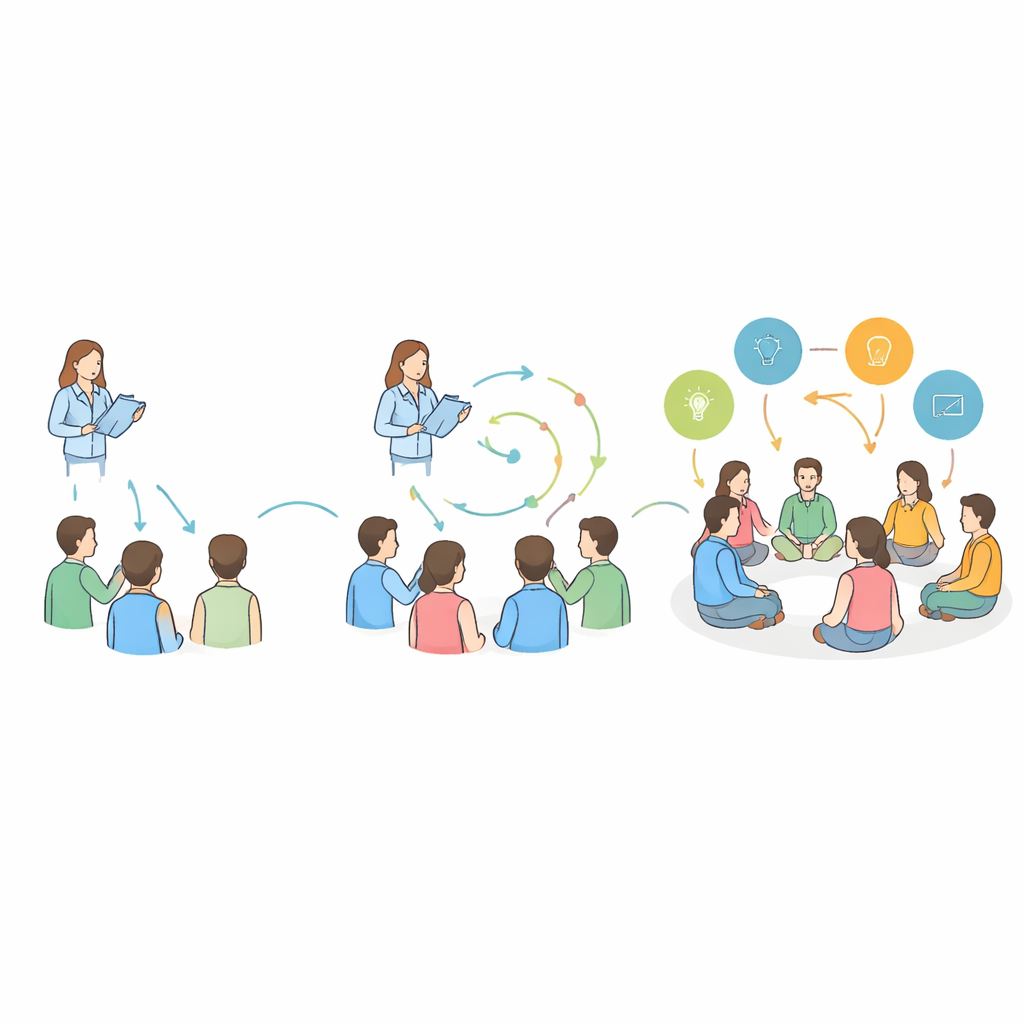
What This Means for Language Learners and Teachers
In everyday terms, the study shows that the way teachers talk in class often keeps students leaning on the teacher instead of learning to stand on their own. Quick praise and step-by-step directions help cover material, but they do not always help students understand how they learn, or how to check and improve their own work. The authors argue that, especially in large and demanding university settings, instructors need support and training to shift their feedback from mostly correcting and directing toward more questioning, encouraging, and structuring of peer interaction. In simple terms, the goal is for oral feedback to act less like a scorecard and more like a flashlight, helping students see their own path as independent users of English.
Citation: Woreta, K., Gebremariam, T. & Abera, M. Analysis of instructors’ oral feedback practices and contextual constraints in the EFL classroom: a qualitative study. Humanit Soc Sci Commun 13, 279 (2026). https://doi.org/10.1057/s41599-026-06576-7
Keywords: oral feedback, EFL classroom, reflective learning, self-regulated learning, teacher–student interaction