Clear Sky Science · en
Can household inclusive finance alleviate the relative poverty of rural residents? Evidence from static and dynamic perspectives
Why Rural Finance Matters for Everyday Life
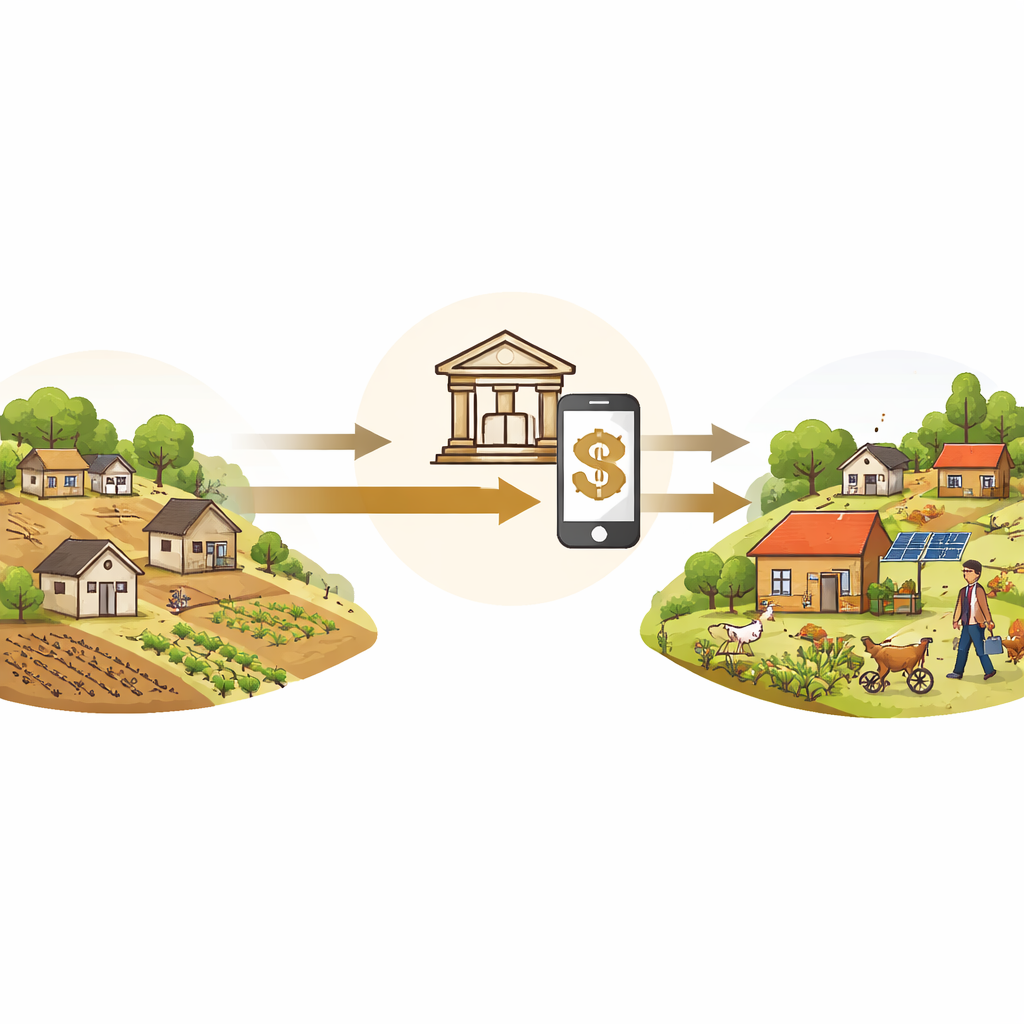
Poverty is no longer just about having too little to eat. Around the world, many families hover uneasily above the poverty line, one illness, drought, or lost job away from slipping back down. This study looks at rural China to ask a simple but powerful question: when ordinary households gain easier access to savings accounts, small loans, insurance, and digital payments, does it really help them escape this constant risk? The answer, based on tens of thousands of families, is yes—and in ways that matter for long‑term security, not just short‑term income.
A New Look at Poverty Risk
The researchers focus on “relative poverty,” which compares a family’s income and living conditions to typical standards in their society. They distinguish between two faces of poverty. One is static: families that are already poor today. The other is dynamic: families that are not currently poor but face a high chance of becoming poor in the coming years because of shocks or instability. Using detailed data from over 38,000 rural households across 29 Chinese provinces, the authors build measures of both current poverty and future vulnerability, allowing them to see not only who is struggling now, but who is walking a tightrope without a safety net.
What Inclusive Finance Looks Like at Home
Instead of counting bank branches or national statistics, the study zooms in on what happens inside each household. It constructs an “inclusive finance” score based on three down‑to‑earth questions: can families actually reach financial services; do they actively use them; and do they benefit from newer digital tools such as mobile payments, online shopping, and internet‑based savings or credit? Having a bank card, using formal loans instead of informal high‑interest lenders, paying for commercial insurance, and engaging in digital finance all contribute to a higher score. This approach makes it possible to see how financial life on the ground is tied to everyday well‑being.
Evidence That Finance Lowers Today’s Poverty and Tomorrow’s Risk
With statistical models that account for age, education, debt, local economic conditions, and more, the authors find that stronger household‑level access to finance is clearly linked to lower poverty. It reduces both current relative poverty and the risk of falling into poverty in the future, with an even bigger effect on future vulnerability. In other words, finance works not only as a ladder out of hardship but also as a guardrail against sliding back. The depth of use—how much households actually borrow, save, insure, and invest—matters more than mere access. Digital finance helps too, but its impact is weaker where the “digital divide” limits people’s ability to use online tools. The benefits are not uniform: poorer central and western regions gain more than richer eastern ones; households headed by middle‑aged or older adults, families with children or elders to support, and those without heavy debt loads all tend to benefit more.
How Finance Strengthens Livelihoods from the Inside Out
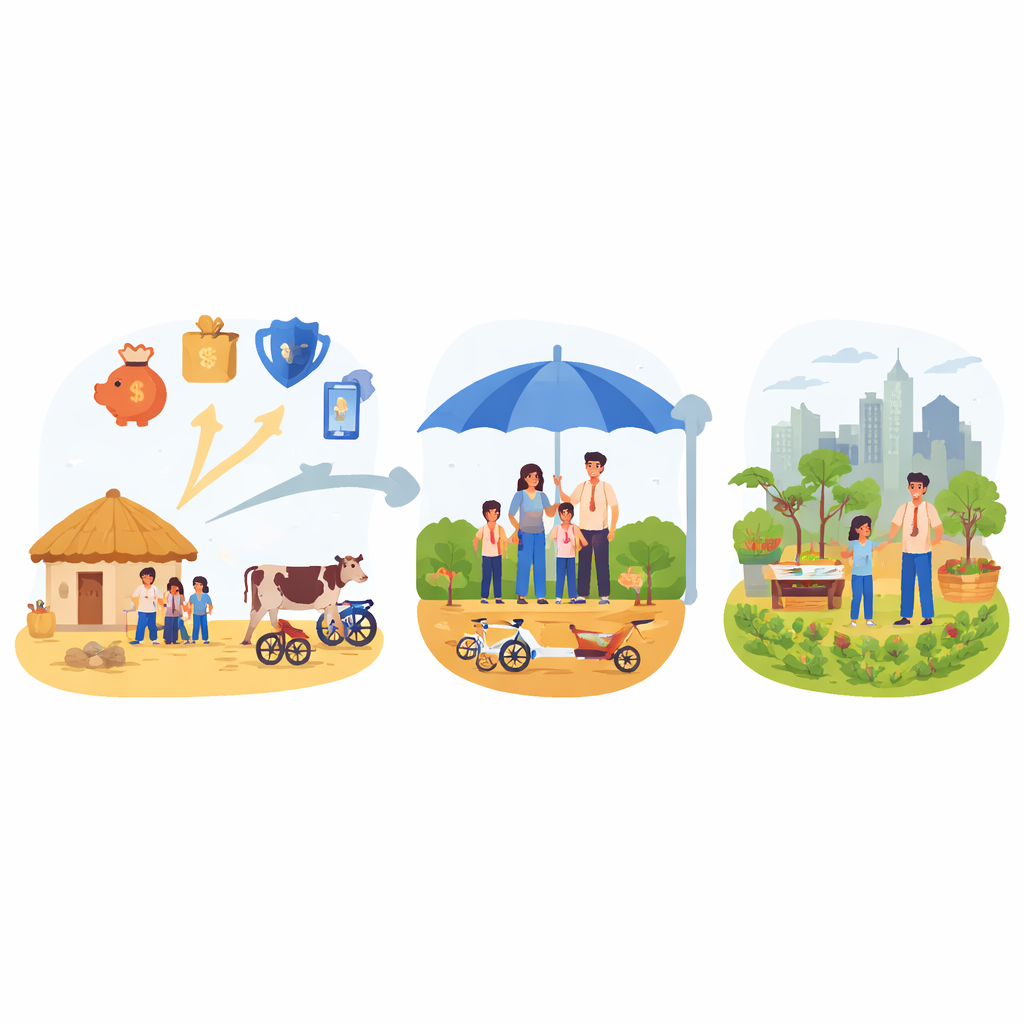
To understand why finance helps, the study looks beyond income to the building blocks of a secure life—what it calls “livelihood capital.” This includes land and housing, education and skills, savings and other financial assets, social ties and mutual help, and even psychological well‑being such as confidence and a sense of hope. Households that tap inclusive finance tend to accumulate more of these assets: they invest in better tools or homes, build up savings, support education and health, and expand social networks. These improvements, in turn, are strongly linked to lower poverty and especially to reduced vulnerability later on. Finance also enables families to diversify their livelihoods. Instead of relying only on farming, they combine agriculture with wage work or small businesses. This mix of income sources cushions them against bad harvests, price swings, or local downturns, particularly cutting down the risk of remaining stuck in long‑term poverty.
What This Means for Beating Poverty
For a lay reader, the message is straightforward: giving rural families practical financial tools—bank accounts, affordable loans, insurance, and user‑friendly digital services—does more than pad their wallets. It helps them build sturdier lives, with assets, skills, and varied income sources that can weather future storms. The study shows that inclusive finance works best when it is tailored to local conditions, reaches vulnerable groups, avoids pushing households into excessive debt, and is closely linked to real livelihood needs like farming, schooling, and health. Used wisely, such household‑level finance can turn fragile escapes from poverty into lasting progress.
Citation: Liu, J., Ren, Y. Can household inclusive finance alleviate the relative poverty of rural residents? Evidence from static and dynamic perspectives. Humanit Soc Sci Commun 13, 277 (2026). https://doi.org/10.1057/s41599-026-06569-6
Keywords: inclusive finance, rural poverty, China households, digital finance, livelihood strategies